
Latin America. In Mexico, half of children between the ages of 6 and 11 have access to the internet, while among adolescents, the percentage varies between 80% and 94%. In this context, the question arises: how can we, as a society, establish a safety net for minors in the digital environment?
What may seem like a simple online game or a new connection on social networks could be transformed into a path to digital dangers for children and adolescents. In this sense, and on the occasion of Children's Day in Mexico, which highlights child rights and protection, it is crucial that we adopt cybersecurity practices as a shared responsibility between families, governments, and technology companies.
"Children have a more fragile and less monitored digital identity, which makes them attractive targets for scammers," says Daniel Mazzucchelli, Director of Expansion at Sumsub Latin America. "Protecting your online presence is a collective responsibility that starts with optimal identity verification and age verification."
The Growth of Deepfakes in Mexico Calls for Advances in Age Verification
Deepfakes, which are images or videos generated by artificial intelligence that imitate reality in a hyperrealistic way, constitute a growing risk for children. These can facilitate impersonation, access to inappropriate content, or contact with malicious individuals.
According to Sumsub's 2024 Identity Fraud Report, deepfakes have increased considerably globally, quadrupling between 2023 and 2024, accounting for 7% of all fraud attempts. In Mexico, this phenomenon increased by 164% in the same period.
This problem does not only affect adults with illicit intentions; Teens also turn to generative tools to modify their appearance or falsify documents in order to evade age controls.
In this context, digital verification using sophisticated biometrics emerges as an essential solution. For example, technologies that use artificial intelligence to calculate a user's age, detect irregularities, and differentiate authentic images from those produced by artificial intelligence.
The Internet: A New Opportunity for Identity Theft
Virtual games represent another area of danger for children, since they enable real-time interaction with other participants. Despite being seen as places of recreation, they can be used by stalkers, identity misrepresenters or adults for the purpose of exploitation.
According to the Sumsub report, the video game sector exhibits a 2.3% rate of identity theft, placing it among the five sectors most impacted by this type of fraud worldwide.
"In an increasingly automated environment, verification technology becomes a crucial obstacle to preventing malicious actors from impersonating or interacting with minors without authorization," says Mazzucchelli.
Effective Methods for Age Verification
To address these risks, fraud prevention technology has become an essential tool for responsible digital platforms. They implement robust filters from enrollment to ongoing monitoring, with the goal of ensuring security and preventing false identities from escaping age checks or internal regulations.
According to information from Sumsub, these are some of the most effective methods to increase the protection of children on the Internet:
• Validation through artificial intelligence and biometrics: Through facial recognition and artificial intelligence technologies, the user's age is determined without storing sensitive information or putting their privacy at risk.
• Verification by identification documents: This involves the live verification of official documents to verify age, without revealing additional data.
• Parental authorization: This is about obtaining the verifiable permission of a legal guardian before collecting personal information from minors, a procedure that is regulated in nations such as the United States.
Tips for Parents and Guardians
Although technology plays a fundamental role, the most effective defense begins at home. Here are some steps families can take to prevent cybercrimes against children:
• Supervise and monitor children's use of the internet, especially on social networks and video games.
• Install parental control tools and content filters to limit access to inappropriate sites or features.
• Encourage digital education at home, teaching children to identify suspicious behavior, protect their data and report uncomfortable situations.
A linked but reliable childhood
Digitalization is an essential component of contemporary childhood. According to INEGI figures, among children between 6 and 11 years old, 50% use the internet or computers. Among young people aged 12 to 17, this percentage increases considerably, fluctuating between 80% and 94%.
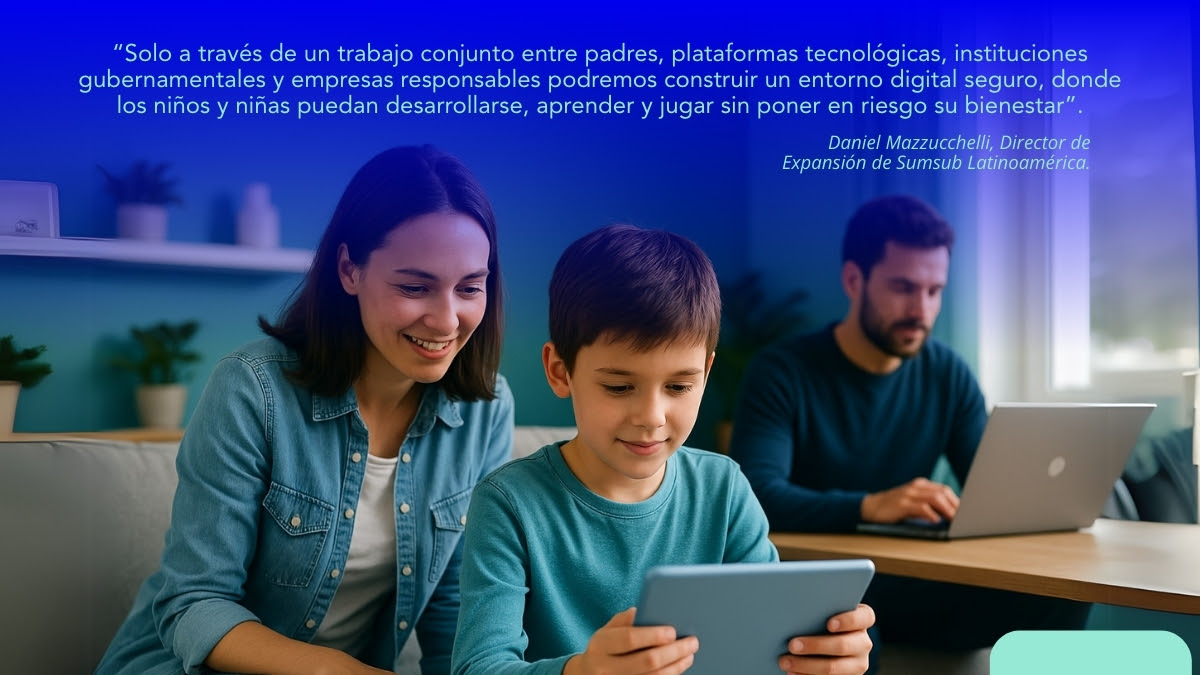
Therefore, to ensure the protection of children online, it is crucial to raise awareness, implement prevention technologies and strengthen surveillance from home. "Only through a joint collaboration between parents, technology platforms, government entities and committed companies will we be able to build a safe digital environment, in which children can grow, learn and have fun without compromising their well-being," concludes Mazzucchelli.