Peru. The district of Villa María del Triunfo has launched an intelligent video surveillance system that already shows results in terms of citizen security and that will be expanded in a second phase.
The initiative, promoted by the municipal administration, integrates high-definition cameras, automatic license plate recognition, facial analytics and IP speakers for 24-hour active surveillance.
The project, which began in 2024, includes the installation of nearly 650 network cameras and 300 IP loudspeakers at strategic points such as main avenues, educational centers, markets and public transport areas. The technological solution is provided by Axis Communications and seeks to respond to the challenges of urban security in one of the largest districts of the Peruvian capital.
According to Manuel Ramírez Ortiz, director of Citizen and Road Safety of the district, the first results are already visible. "We lived with a constant feeling of insecurity. Since the implementation of the cameras in key areas, we have seen positive results and are already preparing to significantly expand the number of devices," he says.
Implementation and territorial coverage
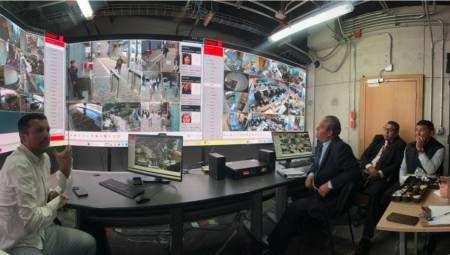
The execution of the system was carried out after a public bidding process led by the integrator Tactical IT, which developed the technological architecture and the commissioning. The platform includes a centralized video management system that allows real-time monitoring of the operation of all devices.
The cameras were distributed in seven key areas of the district: José Carlos Mariátegui, Cercado, Inca Pachacútec, Nueva Esperanza, Tablada de Lurín, José Gálvez and Nuevo Milenio. In addition, the deployment includes specialized devices in license plate recognition (LPR) and facial analysis, strengthening the monitoring and investigation capacities of the authorities.
Real-time prevention, response, and control
Beyond reactive surveillance, the system incorporates preventive functions through the use of IP speakers, which allow direct communication with citizens. In school environments, for example, monitoring facilitates the detection of risk situations and contributes to the safety of students.
In parks and public spaces, loudspeakers are used to deter misconduct. In the event of acts of vandalism or inappropriate use of common areas, the system issues immediate alerts to those involved, promoting behavioral changes.
One of the first relevant cases after implementation demonstrated the potential of the system: license plate recognition technology made it possible to identify a vehicle linked to a fatal accident, providing key evidence for the investigation.
The infrastructure is also designed to operate in low-light conditions, using advanced capture technologies that combine infrared and image optimization. "We have full confidence in the quality of the cameras and the results they deliver. Clear images provide essential information for police investigations and decision-making in real time," says Ramírez.
Expansion underway
After the initial results, the municipality confirmed a second phase of the project that includes the installation of more than 1,000 additional cameras. With this expansion, the district will reach approximately 1,650 video surveillance devices in operation.
The initiative consolidates the use of smart technology as a key tool for urban security, by integrating video surveillance, data analytics and real-time communication on a single platform. With this, the authorities seek to strengthen the capacity to respond to incidents and move towards a more preventive and efficient management model.