

Latin America. Faced with the accelerated growth of the retail sector and the challenges arising from vulnerability in stores and staff shortages, entrepreneurs are betting on artificial intelligence (AI) as a strategic ally to strengthen security and protect both their assets and consumers.
According to the research firm Imarc Group, the Mexican market for video surveillance systems reached 1,116 million dollars in 2024 and is projected to reach 3,382 million dollars by 2033. This growth drives the adoption of technologies that detect suspicious behavior and proactively respond to potential risks.
Although the private sector generates about 50% of total revenues in Mexico, only 30% of companies have electronic security coverage, according to data from the National Institute of Statistics and Geography (INEGI). This gap, experts warn, makes it clear that economic expansion is not always accompanied by protection strategies, so video analytics solutions with AI are consolidated as key tools.
"Artificial intelligence is transforming video surveillance into a physical and tangible tool that is positioned not only as a monitoring tool, but its implementation makes it a highly protected resource that efficiently adds to the operational strategy of businesses," explained José Arellano, Area Sales Manager at Genetec.
The expert added that "its impact lies in reinforcing security to strengthen each of the areas, from risk management and prevention to the immediate relationship in an establishment between the consumer and the place of purchase, this, through the identification of behavior patterns to avoid incidents as well as the anticipation of needs in real time."
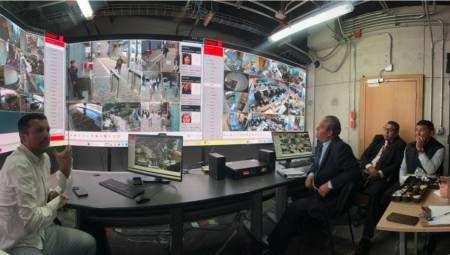
According to Genetec, the use of AI in video surveillance systems allows security teams to identify real risks in seconds, without the need to manually review hundreds of hours of footage. This streamlines responses, streamlines internal investigations, and improves collaboration with authorities through digital evidence sharing.
Modern electronic security solutions that integrate AI offer 360° protection, but they also provide operational value: they can detect busier times and areas, as well as identify vehicles or people linked to previous incidents. This approach not only protects assets, but also ensures the integrity of customers by creating safer and more organized spaces.
Other complementary tools, such as automatic alerts, help recognize potential threats—for example, people loitering in high-value areas—and trigger review or immediate intervention protocols. This proactive approach reduces false alarms and improves responsiveness to credible threats.
To maximize the potential of AI, experts recommend that retailers adopt security platforms with built-in AI capabilities, where this technology is not an add-on, but part of the software that powers video analytics and decision-making. However, they warn that success does not depend only on technology, but on the balance between innovation and human supervision.
More and more retailers are using AI to automate processes and optimize security investments, but specialists emphasize that this is not a standalone solution. Principles of data privacy, transparency and human control in decision-making must be maintained. In the words of the experts, "AI is a support tool, not a replacement".