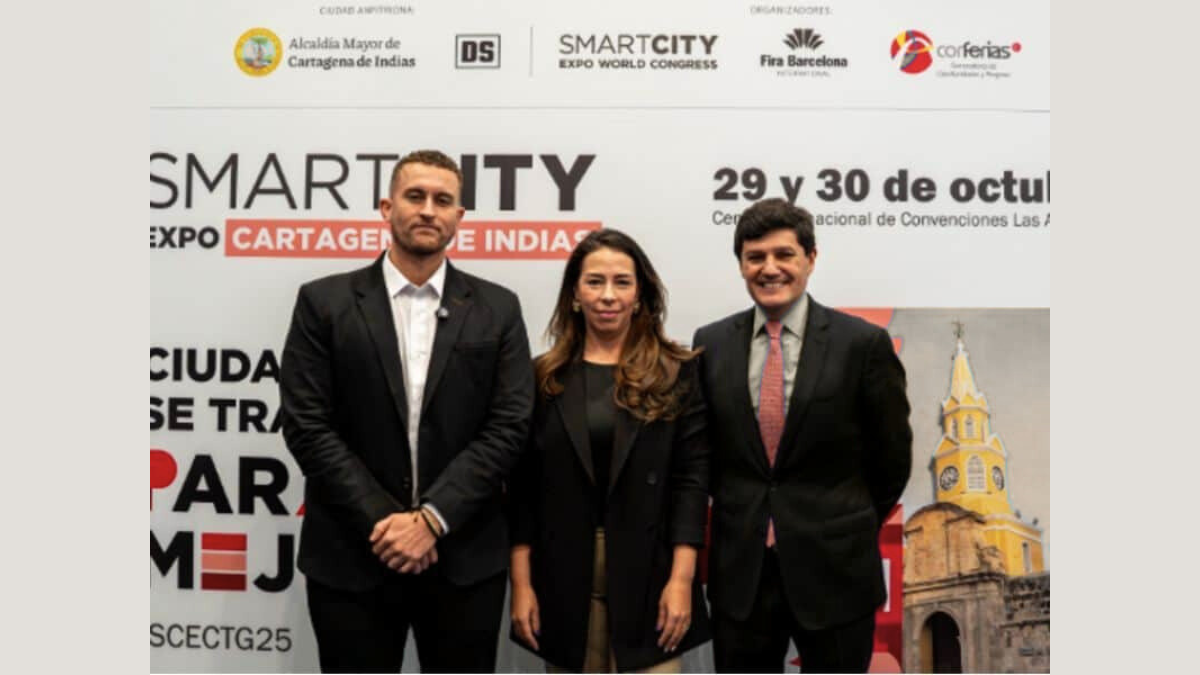
On October 29 and 30, Cartagena will host for the first time Smart City Expo, an international event that will bring together more than 4,000 attendees, 70 speakers and 50 exhibitors to discuss the present and future of smart cities in Latin America.
The meeting will take place at the Convention Center of the Hotel Las Américas and will discuss issues of innovation, mobility, security, sustainability and governance. The purpose, according to the organizers, is that the ideas do not remain on paper, but that they become tangible projects for the city and the region.
Santiago Murillo, director of the event, said: "Without smart citizens there is no smart city. This is not just technology; it is a call for the inhabitants to actively participate in the transformation of their territories."
Along the same lines, Andrés López Valderrama, president of Corferias, explained that the meeting seeks to have long-term effects: "We want what is talked about here to be translated into projects and public policies that remain alive long after the event."
For her part, Marcela Sánchez, project manager at Corferias, indicated that the central message will be focused on urban transformation as a tool to improve the quality of life: "The great headline of the Smart City Expo Cartagena 2025 is that a city that transforms allows its citizens to live better. We want attendees to take away applicable learning and, at the same time, for Cartagena to position itself as a global benchmark."
Topics for discussion
The debates will be organized around five main axes:
Digital economy: artificial intelligence, the internet of things and open data.
Blue economy: sustainable use of the sea and the coast.
Sustainable present: clean mobility, renewable energies and urban planning.
Governance: digital governments and citizen participation.
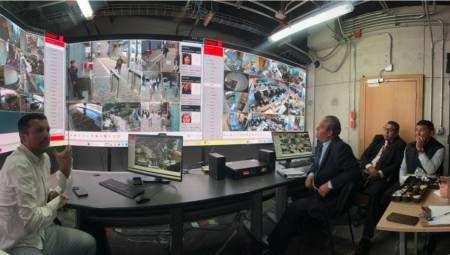
Security and quality of life: urban environments that reduce crime and promote development.
Cartagena as a stage
The choice of Cartagena responds both to its challenges in mobility, infrastructure and urban planning as well as to its cultural, tourist and business potential. The city seeks to become a laboratory of solutions for smart cities in Latin America.
The estimated economic impact of the event is estimated at $12,000 million in sectors such as hospitality, gastronomy and transportation. However, the organizers emphasize that the main objective is for the results to be reflected in actions and commitments beyond the two days of discussion.
Smart City Expo Cartagena 2025 is proposed as a space for cities in the region to move towards more sustainable, inclusive and participatory urban models.