The 2026 World Cup will test Mexico's ability to manage the security of one of the world's biggest sporting events. In this scenario, advanced technology will be key to anticipating risks and protecting millions of attendees.
By: Johana Arias, Director of Sales at Milestone Systems for Latin America.
The 2026 World Cup will be the first to be held in three countries – Mexico, the United States and Canada – and is projected as one of the most attended sporting events in history. For Latin America, and in particular for Mexico as the official venue, it represents an opportunity to demonstrate state-of-the-art security and protection with operational capacity, institutional coordination and technological maturity in the management of mass events.
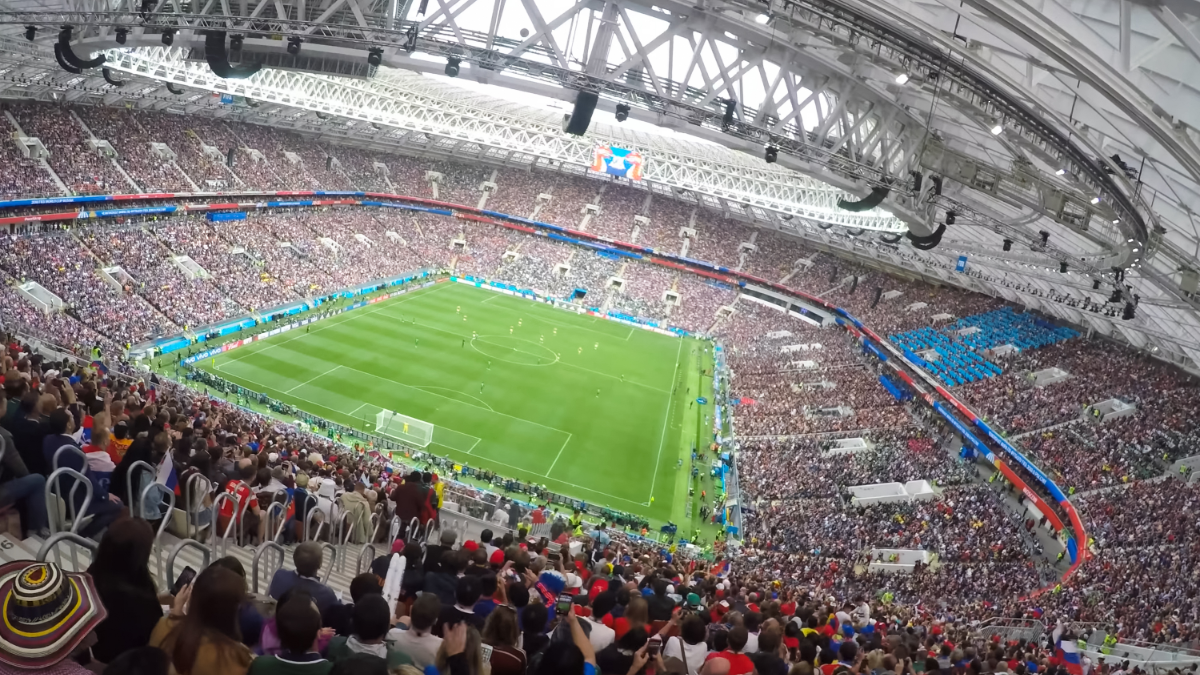
The magnitude of the tournament, coupled with the emotional toll that football takes on the region, requires security systems capable of anticipating risks, managing crowds in real time and responding accurately in high-attendance environments. The host cities – Mexico City, Guadalajara and Monterrey – will have to face unprecedented flows of visitors, vehicles, parallel activities and simultaneous events, in complex urban contexts and with accumulated logistical challenges.
Under the demands of the event, security cannot depend on physical patrols or conventional video surveillance. A technological architecture based on open video management platforms (VMS) is required, capable of integrating real-time data, acoustic sensors, thermal cameras, drones, predictive analytics and artificial intelligence. The key is not to react, but to prevent, detect anomalous patterns, anticipate crowds, coordinate institutions and activate protocols before incidents escalate.
The question is no longer whether to invest in technology, but how to design systems that adapt to the complexity of events and large audiences.
Applied technology: open architecture for real-time security
In the context of massive events, where scenarios change with each set-up and risks evolve in real time, the open architecture of video management systems, beyond being a technical feature, is an operational necessity.
The possibility of integrating security cameras with thermal capabilities (independent of the brand) to detect unauthorized fires or high-density areas, drones for aerial monitoring, acoustic sensors to identify disturbances and access control systems to validate credentials at critical points, allows for the construction of adaptive security.
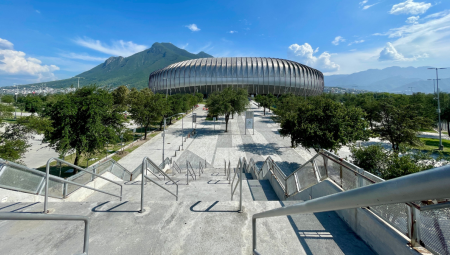
In the midst of the context of the 2026 World Cup, Mexico will face the challenge of adapting sports venues that have historically been reused with variable configurations. Stadiums such as Azteca, BBVA and Akron must comply with international standards and respond to local dynamics of influx, public behavior and urban logistics.
In this sense, having modern video management systems becomes essential, since these solutions allow, for example, to overlay specific maps per event, incorporate devices from different manufacturers and scale without compromising the stability of the system.
In addition, the reduction of false alarms – thanks to contextual analytics and data correlation between sources – frees up human resources for critical tasks. And the intuitive interface, with differentiated role assignment, facilitates joint operation between security forces, organizers and local authorities.
In these cases, the technology applied is not measured by the number of connected devices, but by their ability to generate informed, coordinated, and timely decisions. In that sense, open systems manage video and operational trust.
From passive monitoring to proactive risk management
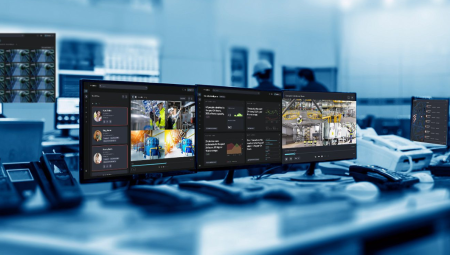
In massive, high-impact scenarios, intelligent video management has ceased to be a tool of record and has become a decision system. The advanced analytics integrated in the VMS allow you to interpret large volumes of audiovisual data in real time, transforming images into alerts, patterns into predictions and noise into risk signals.
Today's smart security systems for high-traffic scenarios are comprised of an integrated architecture that combines high-definition IP cameras, advanced analytics modules, acoustic and thermal sensors, managed through open video management platforms (VMS). The cameras, equipped with object detection and pattern recognition algorithms, make it possible to identify abandoned items, unauthorized vehicles, unregistered drones, unplanned crowds, and unusual movements within the enclosure. These images are processed in real time by analytical engines that transform the video into data, capable of generating automatic alerts and activating protocols defined by the operator.
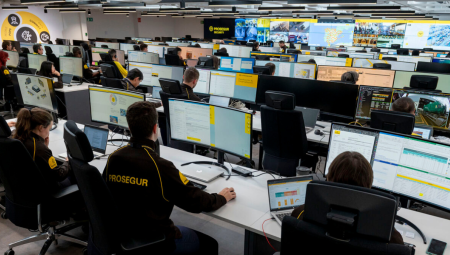
In addition, acoustic sensors complement this capability by identifying anomalous noises—such as screams of aggression, panic, or stampedes—that are not always visible in the video. By correlating these events with visual and thermal information, the system can anticipate risky situations before they escalate. This entire ecosystem is managed from the VMS, which acts as a centralized interface for decision-making, allowing the operational response to be visualized, segmented and coordinated in real time. This integration improves the accuracy of alerts, minimizes irrelevant ones, and optimizes the use of human resources in the field.
In addition to this, the people count and precise geolocation within the venue offer unique data for crowd management, evacuation planning and the prevention of crowds in sensitive areas.
Intelligent analytics does not replace human judgment, but it enhances it. In this type of context, where security depends on seconds, having systems that anticipate, alert and recommend actions is a strategic advantage that Latin America cannot continue to postpone.
Safety as a structural decision
The management of operations in high-density spaces in Latin America enters a new phase with the arrival of the 2026 World Cup. Beyond being the most important event in the world, the tournament represents a structural requirement for the host countries – especially Mexico – in terms of security, institutional coordination and technological capacity. It is not only a matter of incorporating new technologies, but of adopting an operational logic based on prevention, interoperability and contextual analysis. In a region where stadiums, festivals and shows are spaces for collective expression, protecting people cannot depend on fragmented systems or delayed responses.
The adoption of open platforms, capable of integrating multiple sources of information in real time, represents an opportunity to build more secure and coordinated environments and poses a responsibility: to design systems that respect privacy, strengthen public trust and adapt to the complexity of each territory.
Investing in smart technology is not a technical decision, but an ethical commitment to anticipation, transparency and effective protection of those who participate in scenarios of high collective impact.