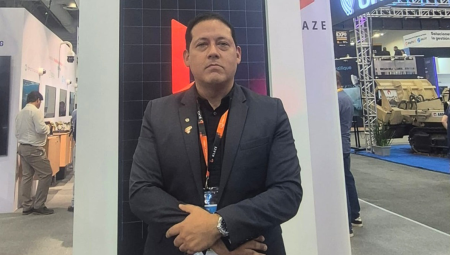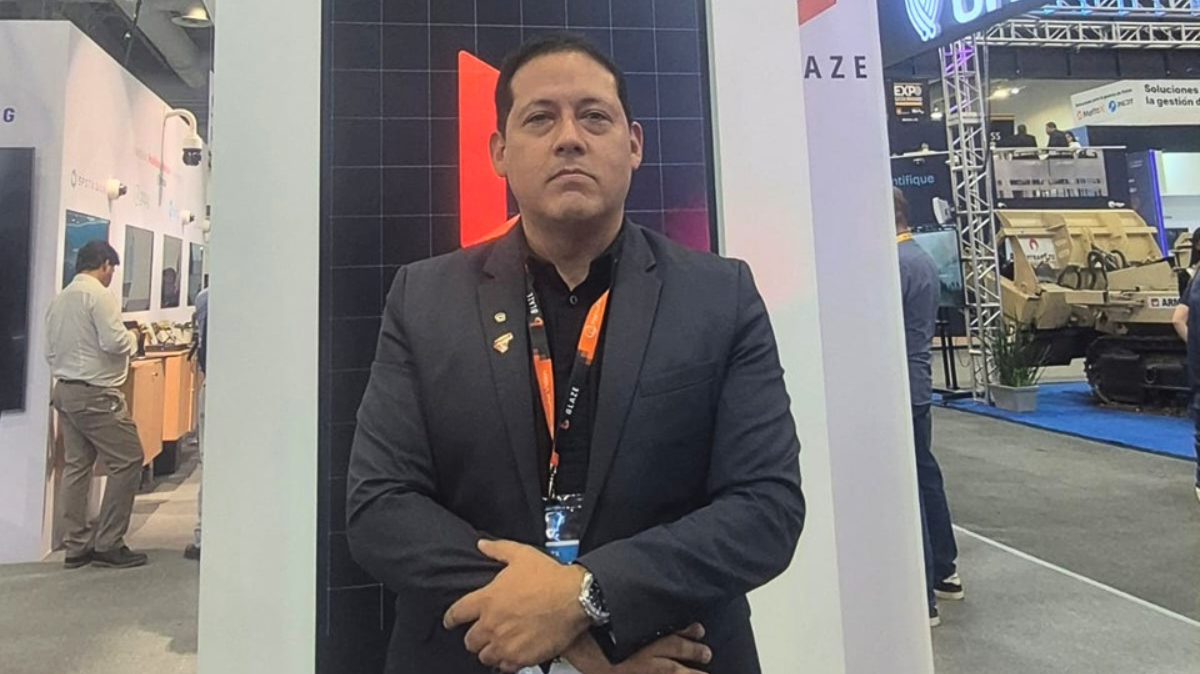
Mexico. Manuel Carlos, an executive at Hanwha Vision, details how the company is revolutionizing electronic security by consolidating generative artificial intelligence and processing at the edge.
Through the launch of its global Now You See campaign and the introduction of disruptive innovations such as its AI Box open platform, the new Blaze video management software and the Wisenet 9 processor, the Korean firm uses open architectures and real-time scenario analysis to solve challenges in key vertical markets such as retail, banking and smart cities.
The industry is moving towards increasingly intelligent security schemes. How is Hanwha Vision helping organizations evolve from reactive models to more preventive approaches?
Generative artificial intelligence plays a fundamental role in this process. We are no longer just talking about detecting events, but about analyzing scenarios in real time, identifying behaviors, and generating alerts before a risky situation occurs. For example, it is possible to define specific patterns within a scene and generate automatic alerts when behaviors that could pose a threat are detected. This allows us to move from a reactive model to a much more predictive and preventive one.
What are Hanwha's solutions and innovations that are currently of most interest to customers and integrators?
One of the solutions that has generated the most interest is our AI Box, a platform that many customers have even baptized as "the magic box". This solution allows you to incorporate applications developed by different technology partners specialized in different vertical markets. Thanks to this, today we can offer solutions for agribusiness, weapons detection, monitoring of personal protection elements, inventory management in retail and many other applications. Our open architecture has made it possible to build an ecosystem of technological partners that considerably expands the capabilities of our solutions and helps us respond to very specific customer needs.
Hanwha Vision has recently launched the Now You See campaign. What are the objectives of this initiative and what does it seek to convey to users? ends?
Now You See is a campaign we launched this year during ISC West in Las Vegas. The goal is to get closer to the end user, so that they can get to know us directly and recognize how our solutions can help them solve their needs. We currently have solutions for different vertical markets, incorporating generative artificial intelligence and advanced AI capabilities at the edge. The idea is that end users can learn first-hand about the different solutions we have available to them.
In which sectors are you seeing the greatest opportunities for the adoption of these technologies?
Our strategy includes different vertical markets, although retail remains one of the most important both regionally and globally. We have relevant clients in this segment, such as Walmart in Mexico and companies such as TJ Maxx, Marshalls and Walmart in the United States. We also have an important presence in sectors such as industry, oil & gas, banking and government, especially in projects related to smart cities and citizen security.
From your perspective, what trends are currently marking the conversation with customers who visit industry fairs and events?
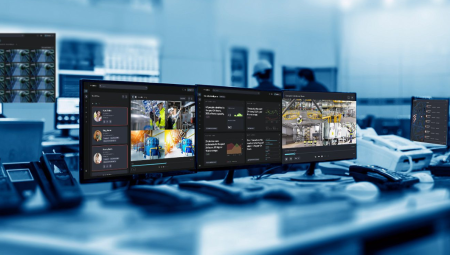
For us, trade fairs are a platform that allows us to be close to our customers, showcase our launches and present the new technologies we are developing for different vertical markets. One of the elements that is currently most differentiating us is generative artificial intelligence. Thanks to the joint work we have done with Nvidia, we have developed capabilities that allow us to respond to increasingly advanced needs of our customers. In addition, we are introducing Blaze, our new video management software developed in-house. This platform allows users to not only view live or recorded video, but also to perform attribute-based searches, identify behaviors, and gain much more valuable insights from video. We are also showcasing Wisenet 9, our new processor, which represents an important step forward in our technology strategy.
How does Hanwha Vision envision the future of the electronic security market in Latin America?
The region continues to evolve rapidly and one of the factors that is driving our growth the most is the strengthening of our STEP channel program. This program seeks to provide greater commercial, engineering, and marketing tools to our integrators to help them grow together with us. On the other hand, we are seeing an increasingly accelerated adoption of IP technologies and artificial intelligence. Today it is very rare to have a conversation with an end user without them asking about AI capabilities. Customers are looking to reduce risks, reduce false alarms and obtain more valuable information for decision-making. For that reason, we have incorporated artificial intelligence capabilities into virtually our entire product line, including cost-effective entry-level solutions.
Finally, what message would you like to share with professionals and organizations that closely follow the evolution of the industry?
Hanwha Vision continues to consolidate itself as a technological benchmark within the industry. We will continue to bet on innovation, artificial intelligence and open architectures to help our customers solve real problems and generate greater value through technology.