Public safety today demands solutions that go beyond the traditional: interoperable technology, actionable data, and tactical capability.
By José Brito*
Currently, video surveillance makes it possible to move from reactive observation to action in real time and even predictive, integrating evidence and better prevention.
Latin America has a critical concentration of violence that far exceeds global averages. According to data from the Inter-American Development Bank (IDB), in terms of perception, 51% of the population does not feel safe in their environment, an X-ray that shows both the seriousness of the problem and the urgency of responses.
In this context, the good news is that urban security management no longer needs to operate solely with reactive approaches or fragmented tools; It is possible to have scalable, interoperable and strategic solutions that integrate prevention, analysis and action.
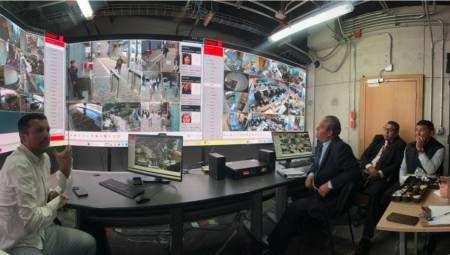
In response to this scenario, the command and control centers known as C4 and C5 are functioning as tactical units that combine technology and predictive analytics, enabling more accurate and connected security management.
Operational capabilities of command and control centers
In the urban environments of Latin America, where the concentration of crime is high, the Command, Control, Communication and Computing Centers (C4) – and the C5, which also incorporate citizen contact – are consolidating themselves as strategic nodes. Their function goes beyond simple observation: they allow them to anticipate, coordinate and act based on actionable evidence.
Using open-platform video management software like Milestone Systems' XProtect® VMS, these centers can integrate thousands of security cameras and third-party devices—from acoustic sensors and license plate readers to real-time video analytics algorithms—without the need to replace existing infrastructure. This flexibility allows scaling from small installations to critical infrastructures, adapting to new demands without losing efficiency or traceability.
The C4 and C5 centers operate as tactical coordination nodes and are designed to transform urban safety management through the strategic use of visual evidence, but their predictive capacity depends directly on the tools they use.
With intelligent video management platforms, they can adopt, for example, predictive logic: real-time analysis that allows them to detect unusual patterns, atypical trajectories or vehicles with previously registered license plates. These signals trigger automated alerts that trigger protocols, sometimes even before the incident occurs.
Likewise, the interoperability of these video management systems with storage platforms such as AWS, Azure or Google Cloud enables hybrid schemes that combine processing on protected local servers with secure cloud capabilities, facilitating the centralized management of multiple sites from a single interface, improving research efficiency and strengthening inter-institutional coordination.
According to a study by the University of Pennsylvania, cases that have relevant video are four times more likely to be solved than those without visual material.
In this sense, beyond surveillance, the C4 and C5 centers also function as digital forensic laboratories, managing video under hybrid schemes that allow the preservation of critical evidence, supported by periodic audits that guarantee the reliability of the system. At the same time, coordinated workflows share visualizations and trigger protocols to optimize operational deployment.
Tlaxcala: an example of operational modernization
In Mexico, the state of Tlaxcala has demonstrated how the technological upgrade of a command and control center can translate into concrete improvements in public safety. Faced with the increase in crimes such as vehicle theft and attacks on carriers, the Executive Commission of the State Public Security System (CESESP) decided to expand its video surveillance network, going from 400 to more than 1,200 cameras integrated into an open-platform video management system.
With Milestone Systems' intelligent video management software at the heart of the project, the new command center infrastructure reduced response times and improved coordination between operators, analysts and law enforcement.
After just two months of implementation, the incidence of crime decreased by 30%, and robberies of carriers were reduced by more than 90%. The center now operates as a comprehensive system that combines real-time monitoring, digital forensics, and tactical visualization, integrating tools to accelerate investigations, generate intelligent alerts, and optimize operational deployment.
Similarly, in Hartford, Connecticut, United States, the C4 managed to transform its urban surveillance model by integrating more than 1,400 devices – including cameras, acoustic sensors and license plate readers – into the open-platform video management system. This infrastructure improved the evidentiary traceability and tactical response capacity of law enforcement agencies, achieving a 442% increase in gun violence resolution with visual evidence, in addition to reducing gun crime to its lowest level in nearly twenty years.
In Latin America, while cities demand greater security, many protection infrastructures remain fragmented, with closed systems and little inter-institutional coordination. It doesn't have to be this way.
Beyond the new technology itself, the real potential lies in its ability to connect information flows between public and private actors, enabling real-time action and predictive policing models, regional command centers, and evidence-based prevention strategies. In a continent where urban safety is a challenge, video management technology is emerging as a key enabler for building safer, more connected, and smarter cities.
*José Brito, Solutions Engineering Manager at Milestone Systems