Select your language

Behavioral biometrics, technology that stops organized crime in the financial sector

Latin America. Money laundering continues to be a challenge for the financial system in Latin America. According to estimates, approximately 400 billion dollars are laundered in the region each year, through activities such as tax evasion, drug trafficking, human trafficking, corruption, shell companies and the illicit use of bank secrecy.

In recent months, the U.S. Department of the Treasury, through the Financial Crimes Enforcement Network (FinCEN), pointed to several banking institutions for alleged involvement in money laundering operations linked to criminal organizations. These accusations have put at the center of the debate the capacity of the region's financial systems to prevent and detect this type of crime.

Josué Martínez, Global Advisor of BioCatch for LATAM, explained that "Latin America faces enormous challenges to curb financial crime, among the main obstacles identified are: 1) Institutional and regulatory weaknesses; 2) Corruption and infiltration of organized crime; 3) Technological complexity and volume of data; 4) Informal economies and use of cash, and 5) Limited cooperation."

According to BioCatch's global survey The Informal Economy: A Look at the Unseen, 78% of professionals working in fraud management perceive that criminal organizations have reached a higher level of sophistication in money laundering, while financial institutions remain lagging behind in detecting them. The same study indicates that 83% identify links between fraud and crimes such as human trafficking, terrorism and drug trafficking.

- Publicidad -

Behavioral biometrics to combat financial crime
Behavioral biometrics is proposed as a tool to detect networks of accounts that carry out money laundering operations through circular transactions. This technology analyzes patterns in users' interaction with digital devices and platforms, differentiating between legitimate behaviors and suspicious activities.

"The main benefit of behavioral biometrics is that it operates passively in the background during a web or mobile session, monitoring thousands of parameters, such as how a person holds the phone or scrolls and switches between fields. This allows us to minimize friction in the user experience," explained Martínez.

According to the BioCatch study, financial institutions that have implemented behavioral biometrics are, on average, less likely (46%) to lose sums of more than $10 million per year due to fraud, compared to 51% of those that do not have this technology.

Fines and regulations
The same report notes that 89% of respondents believe that effectively combating money laundering requires greater regulatory intervention. Three out of four respondents reported annual fines equal to or greater than $5 million, and 23% said that these fines exceeded $25 million.

Interbank cooperation
Martínez stressed that collaboration between financial institutions is key to addressing the problem. "The incorporation of behavioral biometrics (...) it will allow organizations to identify patterns of human behavior and differentiate between legitimate and criminal activities."

In this line, BioCatch has promoted interbank networks in countries such as Australia and Argentina, in order to share intelligence in real time and detect money laundering schemes based on networks of muletto accounts. According to Martínez, although these initiatives are still at an early stage, they offer the possibility of improving the financial sector's ability to identify and curb the illicit flow of funds.


Andrea Ochoa Restrepo
Andrea Ochoa RestrepoEmail: [email protected]
Editora
Comunicadora Social- Periodista. MSC en Economía Aplicada con énfasis en Políticas Públicas. Diplomada en Emergencia Climática. Con más de 12 años en medios.

No comments

• If you're already registered, please log in first. Your email will not be published.

Leave your comment

In reply to Some User
The Challenge of Global Instability: Towards a Comprehensive Security and Defense Response

The Challenge of Global Instability: Towards a Comprehensive Security and Defense Response

The growing convergence between physical and digital threats is forcing organizations to rethink their security strategies. Faced with this scenario, there is a need for comprehensive approaches...

AI applied to medical security

AI applied to medical security

The Directorate of the Medical Emergency System (SEM), attached to the Ministry of Health of El Salvador, strengthened its technological infrastructure with the modernization of its video...

Eight Red Dot Awards Highlight Innovation in Technology Design

Eight Red Dot Awards Highlight Innovation in Technology Design

International. The technology company Ajax Systems announced that it has won eight awards in the Red Dot Design Award, one of the most prestigious global awards in the field of industrial design....

Villa María del Triunfo reinforces its security with intelligent video surveillance

Villa María del Triunfo reinforces its security with intelligent video surveillance

Peru. The district of Villa María del Triunfo has launched an intelligent video surveillance system that already shows results in terms of citizen security and that will be expanded in a second...

Milestone Systems grows 10% by 2025 and reinforces its commitment to artificial intelligence and intelligent video

Milestone Systems grows 10% by 2025 and reinforces its commitment to artificial intelligence and intelligent video

Denmark. The company reported net income of $340 million in 2025, representing a 10% growth from the previous year. The company spent about a third of this revenue on innovation, with an emphasis on...

Micro Key Solutions Reinforces Latin America Strategy with New Key Appointments

Micro Key Solutions Reinforces Latin America Strategy with New Key Appointments

United States. In response to the growth in demand for monitoring and management software solutions in the security industry, Micro Key Solutions announced the expansion of its operations in Latin...

Grupo Multisistemas strengthens its presence in Mexico with a new office in Morelia

Grupo Multisistemas strengthens its presence in Mexico with a new office in Morelia

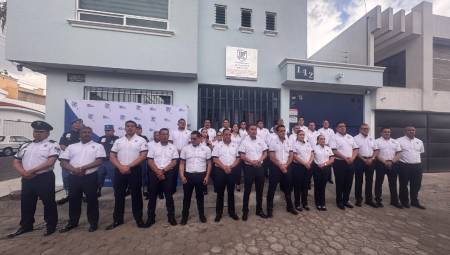
Mexico. Grupo Multisistemas de Seguridad Industrial (GMSI) advances in its national growth strategy with the inauguration of new offices in Morelia, Michoacán, with the aim of expanding its coverage...

Case study: Security system modernization with artificial intelligence and centralized monitoring

Case study: Security system modernization with artificial intelligence and centralized monitoring

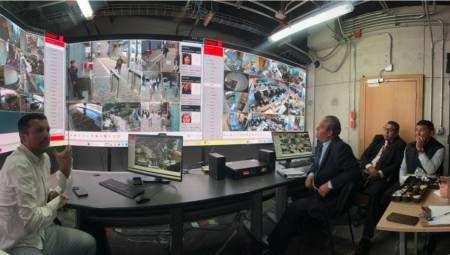
Mexico City. The Superior Audit Office of the Federation (ASF) implemented an ambitious technological renovation project in its five headquarters located in Mexico City, with the aim of...

Automated key and equipment management strengthens security in mining operations

Automated key and equipment management strengthens security in mining operations

International. Access and equipment management in the mining industry is evolving towards increasingly automated models, in response to operational complexity and occupational safety demands.

Security becomes a technological platform

Security becomes a technological platform

Mexico. Security is moving from a set of standalone systems to an integrated technology platform that combines artificial intelligence, video analytics, sensors, access control, and data platforms....

Suscribase Gratis
Remember Me
SUBSCRIBE TO OUR ENGLISH NEWSLETTER
DO YOU NEED A SERVICE OR PRODUCT QUOTE?
LATEST INTERVIEWS
SITE SPONSORS


LATEST NEWSLETTER
Latest Newsletter