
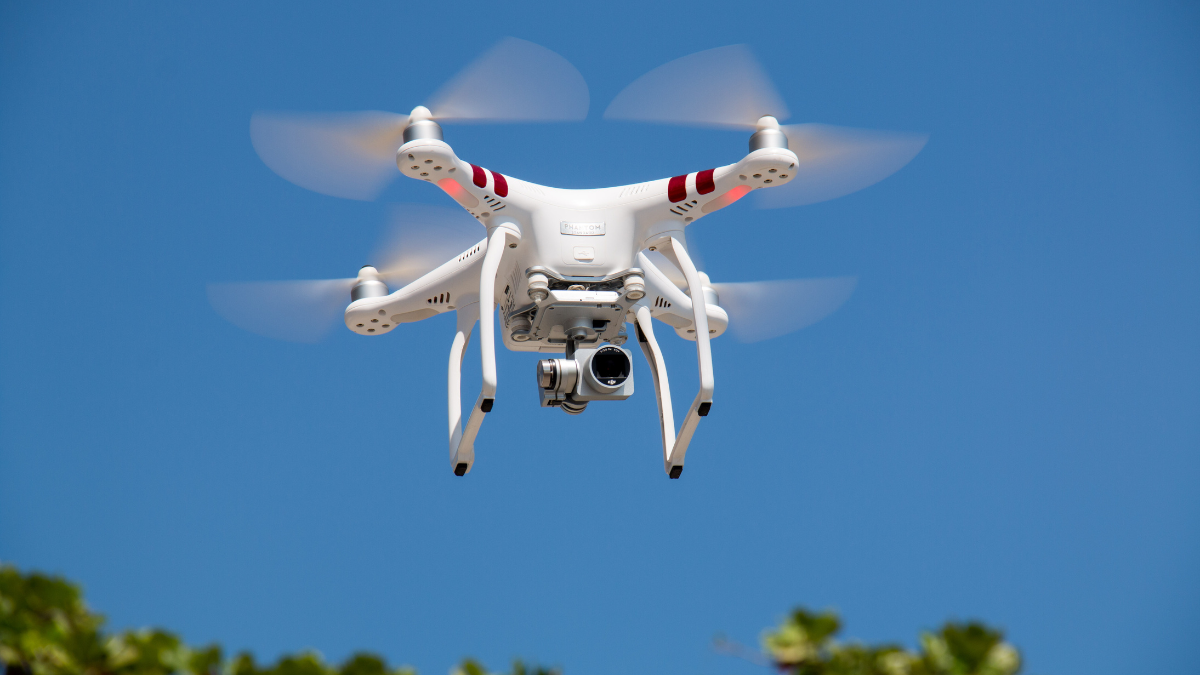
The increased availability of commercial drones in the market has led to the emergence of new threats to the security of companies and governments.
By Alejandro Rodríguez Q*
According to the Fortune Business Insights site, in 2022 the global commercial drone market was valued at $8.77 billion and is projected to grow to $54.81 billion by 2030, with a CAGR of 25.82%.
Commercial drones have many positive applications in the market: spraying fertilizers and insecticides for the agricultural sector, aerial photography and audiovisual content creation, locating people and delivering medicines in case of emergency, inspection and maintenance of industrial infrastructure, fast delivery of goods in remote areas, and many more.
Unfortunately, it is relatively simple to adapt a commercial drone to become a weapon (lethalized drone) or adapt it to perform illicit activities. Among the most frequent criminal activities, we can mention:
In prisons, they are used to introduce drugs, weapons, cell phone chips, cell phones and money.
They are frequently used for espionage and collection of information on company facilities and operations, documenting the loading of goods in vehicles, departure times of shipments in distribution centers, product manufacturing processes.
Criminals adapt drones with thermal cameras to carry out intelligence work against the armed forces. They also implement "droppers" or mechanisms to drop explosive charges or harmful materials.
The use of drones to drop radioactive material into government facilities has been documented, to cause damage to the health of the personnel working at the site. The case of a drone in Tokyo in 2015, which deposited sand with cesium on the roof of the official residence of the Japanese prime minister, is known.
It is well documented that in several Latin American countries, criminal organizations already have facilities where they train their personnel in the use of commercial drones to commit illicit activities. These "drone operators" are highly trained and efficient personnel in the operation of the equipment.
UAVs (unmanned aerial vehicles) or drones have played an important role in recent military conflicts between nations. Ukraine has a drone factory for war purposes, where a 3D printer farm is capable of producing several thousand military drones every week.
However, some security incidents are caused by drone operators who are not looking to cause harm, but rather their lack of expertise creates a problem. Some examples below:
During a concert by American singer Taylor Swift in Liverpool, three drones were seized from private individuals that flew over the concert area, putting attendees at risk.
In January 2025, an NFL game between the Ravens and Steelers was paused due to the flight of drones over the stadium's seating area.
During the fires in Los Angeles, a firefighting plane collided in mid-air with a drone flying in the area, causing the plane to be taken out of operation while a review of the damage was conducted. The drone pilot accepted responsibility for flying a drone in a restricted area and was charged with criminal charges.
In Mexico, a Boeing 737 aircraft of a national airline suffered damage to the radome when it collided with a flying object during its descent to the Tijuana airport. Fortunately, the plane was able to land without major mishaps.
Current legislation on the use of drones
Although there is no current legislation that restricts the sale of commercial drones, different Latin American countries have legislation in force regarding their use in various scenarios. For Mexico, NOM-107-SCT3-2019 regulates the operation of drones to guarantee air safety. Among other points, it indicates that:
The operator who operates or intends to operate drones (RPAS, remotely piloted aircraft system) of small size (takeoff weight greater than 2 kg and up to 25 kg) or micro size (takeoff weight equal to or less than 2 kg) must obtain a registration folio through registration on the SCT / DGAC website.
They must operate at a maximum height of 122 meters and at a maximum horizontal distance of 457 meters.
The RPAS operator and/or pilot must not use the remotely piloted aircraft to transport dangerous goods and/or prohibited substances, or to use or transport weapons or explosives.
The RPAS pilot must not drop and/or throw (even if he has a parachute) objects or materials that could cause damage to any person or property.
Persons must not be operated on unless they are directly involved in the operation of the RPA or are located under a structure that provides reasonable protection in the event of a collapse of the RPA, and must maintain a horizontal perimeter safety distance from persons not related to the operation of at least 10 meters (32 ft).
In practice, it rarely happens that the person or company that acquires a drone registers it with the SCT. And the current technology in drones allows flying more than 1 km away from the operator without any problem. The use of drones to transport drugs, cell phone chips or weapons is a common practice in prisons, already well documented by the NIJ (National Institute of Justice) of the United States of America in a June 2023 report.
Solutions to the growing problem of drones
Faced with this reality, what can citizen security institutions and private initiative do to protect themselves against the negative use of drones? The first thing is to make security personnel aware of this new risk and be attentive to reports of drones flying over their facilities or areas of interest. Keeping a record of these sightings helps to identify the recurrence of such events and assess whether further action should be taken.
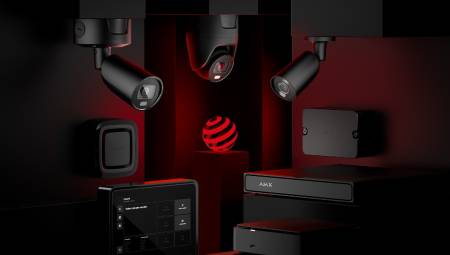
It is useful to have an electronic drone detection system that allows us to detect the presence of aircraft in a timely manner and obtain details such as manufacturer, model of the device, serial or unique identifier of the drone. This will allow us to determine if it is a drone that frequently flies over our facilities, at what times it does so and to be able to provide more information to the authorities to raise an investigation case.
There are mitigation tools on the market that allow the drone to be "moved away" from our facilities or forced to land by generating interference in the communication between the drone and the controller. In Mexico, such jamming technologies are restricted to federal or national law enforcement agencies, as well as to social reintegration centers and prisons, so they cannot be used by companies or individuals. This prohibition was published in the Official Gazette of the Federation on January 24, 2020, in the addition of Article 190 Bis to the Federal Telecommunications and Broadcasting Law.
It should be noted that the use of jammers or spoofers (generators of false GPS signals to confuse drones) will generate interference in all devices that are within range of such equipment. These technologies do not distinguish between friends and enemies, so both their own and foreign drones will suffer the impact of this mitigation mechanism.
Fortunately, there are advanced drone mitigation technologies based on analysis of communication over RF protocols (also known as Cyber over RF) that make it possible to detect the drones present in the vicinity, without false targets, and classify them by extracting crucial information such as the manufacturer, model, serial number, drone camera direction, and more. This technology can detect an unlimited number of drones simultaneously, so drone swarms are not a major problem.
These Cyber over RF technology solutions also continuously monitor and track drone movements by extracting telemetry data such as its location (with GPS grade accuracy), speed, altitude, operator location, drone base location, and additional operational data such as camera direction.
During these stages of detection, identification and tracking of drones, this type of system is completely passive, it does not transmit any signal, so it cannot be located by adversaries.
And it is in the mitigation stage where there is a great differentiation with respect to other technologies. Either manually or automatically, when the drone enters a defined exclusion area, the system disconnects it from its controller and takes full control over the craft and can perform several types of actions:
Once disconnected from the controller, the drone will naturally return to its default home location, moving away from the protected area.
The drone can be steered to land at a predefined safe landing point, without entering the protected area. Subsequently, a visual or physical inspection of the drone can be carried out to determine if it had any active load that could pose a risk.
It is very important to note that, unlike jammers or spoofers, which affect all equipment indiscriminately, during the mitigation stage the system transmits short, precise and focused signals, which can only be received by the intruding drone without inflicting any collateral damage on other drones or any other communication or navigation system. Therefore, the company's own surveillance drones will be able to continue operating and be used as a security tool.
These advanced drone detection and mitigation systems using Cyber over RF are already being successfully used in multiple installations around the world. Airports, borders, stadiums, prisons, ports, among other types of facilities, already have this technology operating in several countries around the world.
The technological future of drones
We must clarify that there are multiple drone technologies available on the market, so it may happen that a drone detection and mitigation system does not cover 100% all scenarios. We must be aware of this and adapt solutions to different contexts.
As an example, we can mention drones that are controlled by fiber optics. These drones have a cable that transmits pulses of light between the drones and the controllers, so they are not detected by systems based on signal detection over RF. This type of drone is already being used in war scenarios, where they are placed on the side of roads and are only activated when vehicles are detected in the vicinity.
As always when talking about technology, we must keep an eye on the evolution of threats and the possible solutions we can offer our customers.
*Eng. Alejandro Rodríguez Q. He has more than 20 years of experience in the electronic security market in Latin America. He is currently Commercial Director of the company SurvTech, specialized in C-UAS technologies (counter unmanned aereal systems).