In today's dynamic security landscape in Latin America, facial recognition has become a buzzword that often raises privacy and data protection concerns. However, many security professionals may not be aware that 'facial recognition' is an umbrella term that encompasses various technologies, each with specific applications and privacy implications.
By Barry Norton*
Let's take a look at what these technologies really mean for distributors, integrators, and end-users of security systems.
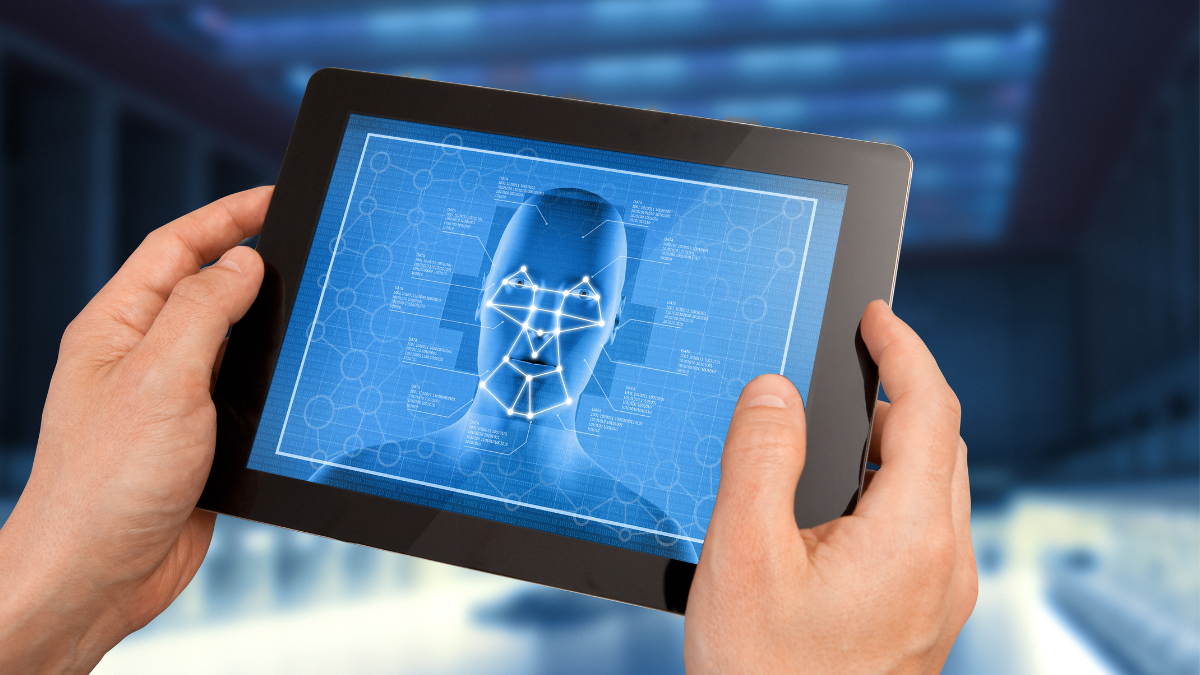
In essence, facial recognition technology re-identifies or verifies people based on their facial features, which in this case are used as biometric data. However, not all biometric systems are based on unique identifying characteristics, some analyze general attributes, such as facial hair style or distinctive markings; These traits, known as soft biometrics, can contribute to identification, but they are not specific enough to uniquely verify a person's identity on their own.
While the applications of facial recognition range from access control to crime prevention and investigation, its implementation varies widely depending on specific needs. Modern systems incorporate robust security measures, such as data encryption and strict retention policies, to ensure the responsible handling of any personally identifiable information (PII).
According to a study by Expert Reports, the biometrics market in Latin America will experience a compound annual growth of 12.30% between 2024 and 2032 and, now, with the support of artificial intelligence, it is expected to advance even further.
Understanding of key technologies and their applications
The world of facial recognition encompasses a variety of technologies, each with specific purposes. Below is a detailed breakdown of these technologies and their real-world applications.
Key Technologies:
Face verification (1:1): This is a one-to-one comparison, where a person declares an identity (e.g., by showing an ID card) and the system checks if their face matches the identity provided.
Example: in airports, facial verification is used in automated passport control. When a traveler approaches a boarding gate, their face is scanned and compared with the photo stored in the government database and if there is a match, they can pass without the need for a manual review.
Facial identification (1 to many): In this one-on-many comparison, a face captured by the system is compared to a database containing multiple faces and facial features to identify the person. This process is frequently used in security and surveillance.
Example: If a child goes missing at an airport, the system can scan the faces of all passengers passing through the checkpoints and compare them with the child's photo in the database and if it finds a match, an alert is generated.
Facial re-identification (Many to Many): these are many-to-many comparisons, where multiple faces are compared with others in different locations; Generally, it is used to anonymously track a person's movement through different areas without knowing their identity.
Example: In a retail environment, it can be used to analyse how much time an anonymous person spends in different sections of a store, recognising their face as they enter and leave the field of view of different cameras, and can be applied in both real-time and retrospective analysis.
Real-time facial recognition: This technology immediately processes the live video signal, comparing faces to a database to generate instant alerts when a match is detected.
Example: At massive public events, such as stadiums, real-time facial recognition identifies banned people (e.g., violent fans) who try to enter.
Post-event facial recognition (recorded): refers to the analysis of video recordings after an event has occurred, rather than in real time. Facial recognition is applied to this recorded data to identify or track individuals.
Example: After a crime, investigators can use facial recognition software on videos recorded by security cameras to identify suspects by comparing their faces to known databases. These definitions cover different aspects of facial recognition technology, its various applications, and how biometrics are used to identify and track people.
Biometrics: Biometric technologies use a person's distinctive physical characteristics, such as face, fingerprint, or iris, to identify them.
Example: scanning fingerprints or facial recognition to unlock a phone, or using iris recognition for secure access in high-security buildings, such as data centers.
Hard biometrics: refers to physical characteristics unique enough to unambiguously identify a person, such as a face, fingerprint, or iris.
Example: use of iris recognition at airport security checkpoints to verify the identity of travelers.
Soft biometrics: Includes general attributes, such as height or body build, that alone cannot identify a person, but can contribute to re-identification when combined with other data.
Example: Using height and build to help identify a suspect in a scene captured by cameras when facial features are not clear enough.
Similarity of appearance: distinguishes people based on their clothing or accessories rather than their biometric characteristics. It is mainly used to speed up investigations and perform statistical analysis, not for individual identification.
Example: A retail store can track customers based on the clothes they wear to analyze how long they stay in the store, without the need to record their faces or personal data.
Proof of liveness detection: A technique that determines whether the person in front of a facial recognition system is a real human being and not an image or recording.
Example: Some mobile payment systems require the user to blink or move their head slightly to verify that they are a real person and not a photo used for impersonation.
Mathematical representation: Non-reversible mathematical representations are lists of numbers generated from a person's facial image or appearance, such as clothing. These numerical values describe features, but they do not allow the original face to be easily reconstructed.
Example: When an organization stores only mathematical representations rather than actual facial images, even if the data is stolen, it is nearly impossible to recreate the person's face or use it in another system.
Privacy and Security Considerations
Modern facial recognition systems prioritize privacy through various protection measures, far exceeding traditional security protocols. Today's solutions integrate multiple layers of security designed to protect personal data without compromising the effectiveness of the system. These sophisticated privacy controls work together to ensure responsible handling of data and comply with ever-evolving security standards.
Biometric template isolation that keeps facial recognition templates separate from other personal data, with dedicated secure storage environments.
Template encryption frameworks specifically designed for biometric data, using industry-standard protocols that protect facial features during processing and storage.
Anonymization of biometric data that converts facial features into non-reversible mathematical representations (numbers), avoiding the reconstruction of the original facial images.
Cascading deletion protocols that automatically delete both raw facial data and derived biometric templates after their authorized use period.
Segmented access controls that separate facial recognition administrative functions (such as registration and template management) from the regular operation of the system.
The security industry in Latin America continues to evolve, finding innovative ways to balance effective surveillance with privacy protection. By understanding this broad spectrum of technologies, security professionals can offer better solutions to their clients, addressing specific needs while maintaining appropriate privacy standards. The key is to select the right tool for each application, ensuring that personal data is collected only when necessary and protected at all times.
The variety of applications of facial recognition shows that not all systems require storing personal information. Many modern solutions focus on statistical analysis and pattern recognition, rather than individual identification, offering powerful security benefits while respecting privacy concerns. This balance of capability and accountability defines the future of video technology for security.
 *Barry Norton, Vice President of Human-Centric AI for Milestone Systems