 Mexico. Rittal, many aspects of designing and manufacturing power control and distribution systems remain manual and time consuming. This is especially true in solutions that need to be adapted to very specific needs. However, the availability of high-quality data can streamline these engineering tasks, particularly during the initial phases of product planning and development.
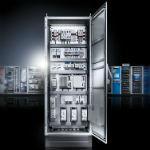
Professional engineers require accurate, detailed and validated data, which can be used directly in your CAD software. This approach can be illustrated by considering the TS 8 assembly system. Rittal offers a wide variety of 2D and 3D CAD data for TS 8 cabinets and accessories via the internet.
This information can be downloaded in more than 80 formats from the CADENAS PART community platform, or from the Rittal website using the RICAD 3D software. Users just have to choose the format that suits their purpose. Each dataset includes a product description, eCl@ss rating, and links corresponding to product content on the Rittal website.
CAD data is available in different image qualities and can be imported directly into the user's CAD design program. On the other hand, Rittal offers a TS 8 CAD configurator, which accesses data through part community, to help users select the TS 8 model they require.
This planning software allows users to add basic accessories such as bases and perforated sections to the selected TS 8 enclosure. The result is a powerful, time-saving tool for the tasks associated with the initial design phases of a bay-joined cabinet system.
The Eplan Software and the corresponding CAE data that Rittal provides through the Eplan portal offer support to electrical engineers by delivering new rich datasets for the products and components of the Rittal TS 8 system portfolio. Up to 200 attributes can be assigned to each component within a macro file. These attributes include business data, logic, 2D and 3D graphics macros, circuit diagram macros, manufacturing information, and accessory data.
As a result, the TS 8 enclosure can be configured virtually and efficiently. In other words, digital information is available end-to-end: For electrical design, for the creation of a virtual 3D prototype in Eplan Pro Panel and for automated production. The data also supports business processes, such as purchasing and logistics. Seamless access to this data accelerates all associated work tasks, increasing user productivity – not only in engineering, but also in all business and technical processes. This increases efficiency, saves time and reduces costs.