In industries where every minute counts, efficient asset and resource management has become a strategic factor to ensure operational continuity, safety, and productivity.
By: Héctor Meléndez, Technical Director, Traka Americas.
The construction, logistics, and distribution industries are growing in Latin America. According to Expert Reports, the logistics market, for example, reached a value of USD 1.5 billion in 2025 and is projected to grow at an annual rate of 7.5% until 2035, while the construction sector exceeds one trillion dollars and maintains prospects of sustained expansion in the next decade, consolidating itself as one of the most relevant economic engines in the region.
However, this progress does not depend only on expanding capacities, but also on how operations are managed and processes are optimized by reducing downtime, guaranteeing asset availability and maintaining the continuity of each stage. Efficiency becomes the most valuable resource for companies looking to stay ahead of the curve.
This is how companies are opting for a not so well-known, but effective alternative: the digitization of the management of keys, devices and critical assets, an approach that allows transforming previously manual tasks into traceable and measurable operations, where each movement is recorded and can be analyzed. This change opens the way to a management model based on reliable data, capable of improving efficiency and productivity.
Technology at the service of operations optimization
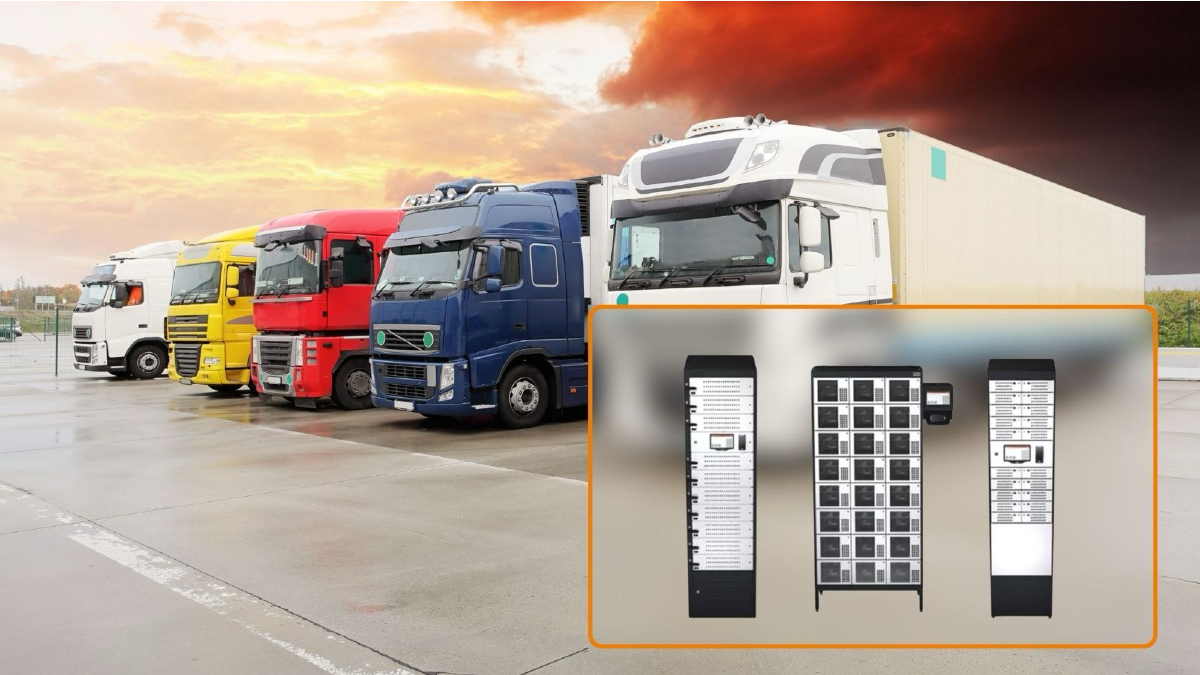
There are smart lockers and electronic cabinets that are fundamental pieces to achieve this digitization; however, their true value lies when they are integrated under specialized software that acts as a digital brain.
The market offers alternatives such as TrakaWEB, a platform that coordinates and records every access and movement linked to keys and critical devices, allowing security and operations managers to monitor in real time who accesses a resource, under what conditions and at what time.
Every move is documented in a history that can be retained indefinitely and is key for audits, compliance, and efficiency analysis. Thus, the software not only transforms previously manual processes into traceable operations, but also establishes a model of competitiveness based on data, individual responsibility and operational continuity, capable of sustaining the growth of these strategic sectors in Latin America.
Logistics with traceability and intelligent control
In the logistics industry, key and device management is a critical point for security and operational efficiency. Access to vehicles, restricted areas, and specialized equipment cannot be subject to informal practices, as any omission can lead to asset losses, supply chain disruptions, or even workplace accidents.
The incorporation of smart lockers and electronic cabinets integrated with access control systems allows you to automatically assign or restrict permissions according to the user's role, the area where they operate or the corresponding shift. Each transaction is recorded in a system that documents the movement of keys and devices, ensuring traceability and transparency.
In addition, electronic equipment – such as scanners, radios or tablets – is kept charged and available at the start of each shift, eliminating downtime and ensuring continuity in operations.
Construction with safety and responsibility on site
In construction projects where the operation of heavy machinery and the use of specialized implements are commonplace, the digital management of this type of solution becomes an essential requirement. Linking each resource to security, traceability, and compliance protocols ensures that only authorized personnel access critical tools and that each entry is documented.
This control reduces incidents, guarantees availability and sustains the continuity of large-scale works. In this sector, the incorporation of smart lockers and electronic cabinets becomes a strategic factor to maintain international standards and respond to the pressure of increasingly complex and large-scale projects.
Distribution and operational efficiency
Modern distribution demands precise control over critical assets to sustain the supply chain without interruption. Digital key and device management ensures that transport vehicles, loading areas and sensitive resources are available in optimal conditions and under individual responsibility.
In the distribution environment, we are talking about specific solutions of smart lockers and electronic cabinets managed by central software. The procedure is based on verified credentials that authorize the worker to remove only the assigned equipment and return it in the same system. Each movement is automatically recorded, generating a digital history that documents who used each resource and at what time.
This scheme guarantees immediate availability, establishes clear control over individual responsibility in the management of critical assets and turns management into a digital and traceable process.
Safety at the docks as a guarantee of continuity in distribution
Technological innovation is only one part of a broader network in distribution centers, where safety and operational continuity depend on multiple critical points, including loading docks, which occupy a central place, since vehicles, goods and workers converge there in a high-pressure environment, where any error can interrupt the logistics chain and result in serious contingencies.
Accidents resulting from premature truck departures—when a vehicle is removed before the loading operation is secured—have been a recurring cause of severe incidents, with consequences ranging from property loss to worker injuries.
To address this risk, management solutions such as DockSafe can be implemented, a system that directly links the condition of the trailer with the mechanism of the dock doors. The objective of this technology is to prevent any movement until the operation is concluded and the area is safe.
These systems have the ability to record drivers' actions, generate reports and allow subsequent audits, increasing compliance with safety regulations and reducing dependence on the human factor.
The impact is significant, as improper departures are eliminated, warehouse safety is improved and a more controlled use of towing vehicles is ensured. At the same time, the traceability of each operation strengthens the continuity of the logistics chain, reduces hidden costs associated with interruptions and contributes to regulatory compliance in an environment where the pressure for efficiency is constant.