
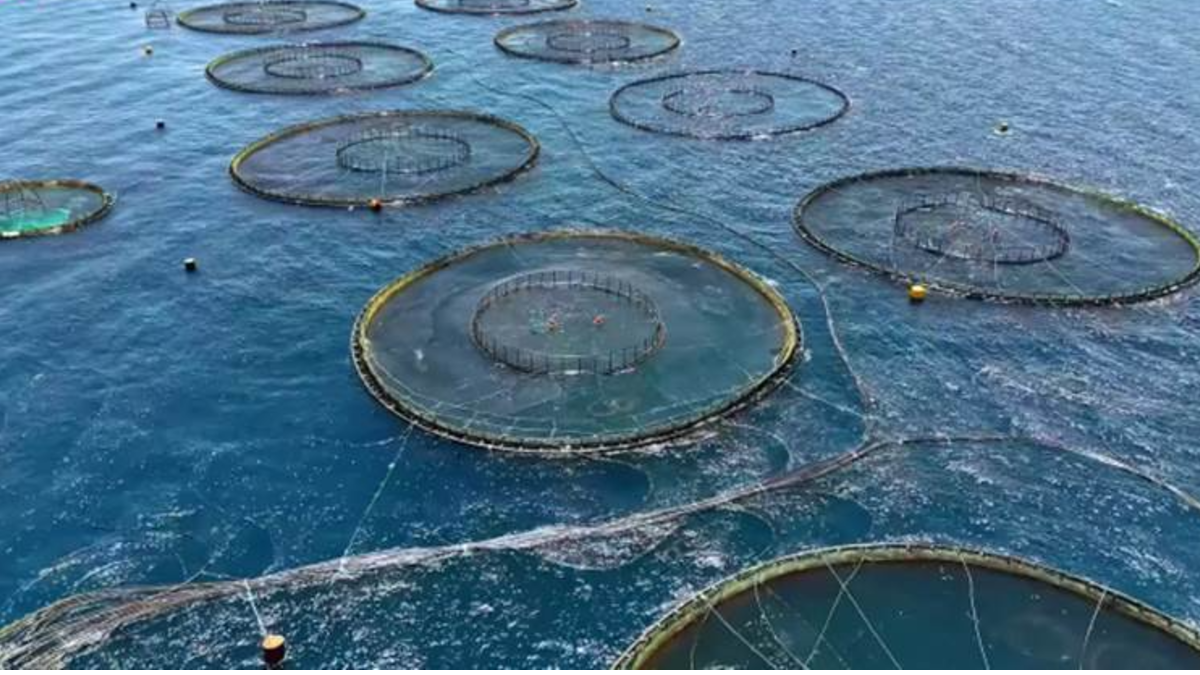
Türkiye. An open-ocean fish farming farm in Turkey implemented a smart surveillance system based on Dahua solar cameras, thermal monitoring, and wireless data transmission to improve safety and optimize its operations.
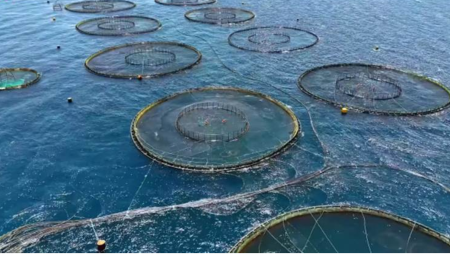
The project was developed at the facilities of Gümüşdoğa Aquaculture, an aquaculture company located on the Mediterranean coast of Turkey. The company operates several large-scale sea cage farming sites, located approximately five kilometres from the coast, where its main production activities are concentrated.
Operating in this marine environment posed significant operational challenges. These included the need for real-time monitoring of the cages, ensuring communication between offshore facilities and the onshore control center, as well as preventing theft and improving fish feed management.
To respond to these challenges, a surveillance and monitoring solution developed by Dahua Technology was implemented, integrating different technologies specifically designed for offshore aquaculture environments.
One of the main problems detected in the operation was the night robbery by unauthorized people who approached in small boats. Low visibility at night and limited response capabilities made it difficult to detect these activities.
In addition, the shore-based monitoring center lacked real-time visibility of the sea cages and no reliable backup communication links. Added to this was the irregular electricity supply at sea, which made it unfeasible to keep traditional video surveillance systems in continuous operation.
Another relevant challenge was the lack of underwater monitoring, which limited the observation of the feeding behavior of fish and generated inefficient feeding practices, with greater feed waste and increased operating costs.
Surveillance Solution for Offshore Environments
The implemented solution combines several technologies to address these challenges.
These include PTZ cameras with thermal imaging, which can detect unauthorized activity at night and improve response to potential intrusions.
The system also incorporates wireless data transmission, facilitating stable long-distance communication between the cameras located at sea and the monitoring center on land.
To solve the problem of electricity supply, solar-powered cameras were installed, allowing continuous operation 24 hours a day in offshore environments where access to the power grid is limited.
Additionally, an underwater monitoring system was implemented using cameras with professional waterproof housings that allow the behavior of the fish to be observed underwater in real time. This information allows operators to stop feeding when fish actively stop eating.
Impact on the operation
According to the company, the implementation of the system generated significant improvements in the operation of the aquaculture farm. Night robbery was significantly reduced, reducing annual financial losses by at least $10,000.
The onshore monitoring center now features stable and continuous video streaming, ensuring constant visibility of offshore facilities without data loss caused by network outages.
Likewise, the use of solar cameras made it possible to maintain the operation of surveillance systems uninterruptedly, while underwater monitoring contributed to optimizing power management.
According to the company, this improvement made it possible to reduce feed costs by more than 30% and increase the overall operational efficiency of the farm.
"This is something we can do completely thanks to Dahua. It allows us to stay connected to offshore units. Normally, this type of installation can only be done on land. Achieving this in the sea, where there is constant movement, is very difficult. We believe we have achieved this with Dahua," says Mert Deveci, supervisor of maintenance and management of security cameras at Gümüşdoğa Aquaculture.
The integration of smart surveillance, wireless communication, solar energy and underwater monitoring allowed the company to improve safety, increase operational visibility and optimize production processes in its offshore farming facilities.