
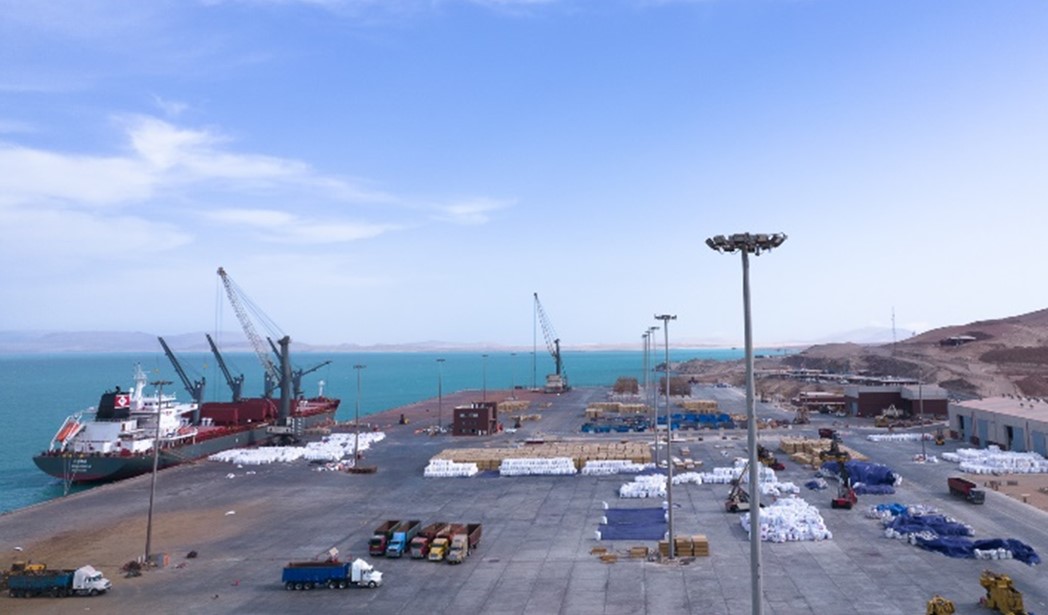
Peru. Puerto Paracas, located in the region of Ica, specializes in container cargo, rolling and bulk cargo services and in 2022, this port ranked eleventh in the ranking of cargo movement in port terminals for public and private use in this country, and at the end of the same year mobilized more than 2.5 million tons of maritime cargo (Andina, 2022), as revealed by the Biannual Bulletin of Port Statistics (APN, 2022).
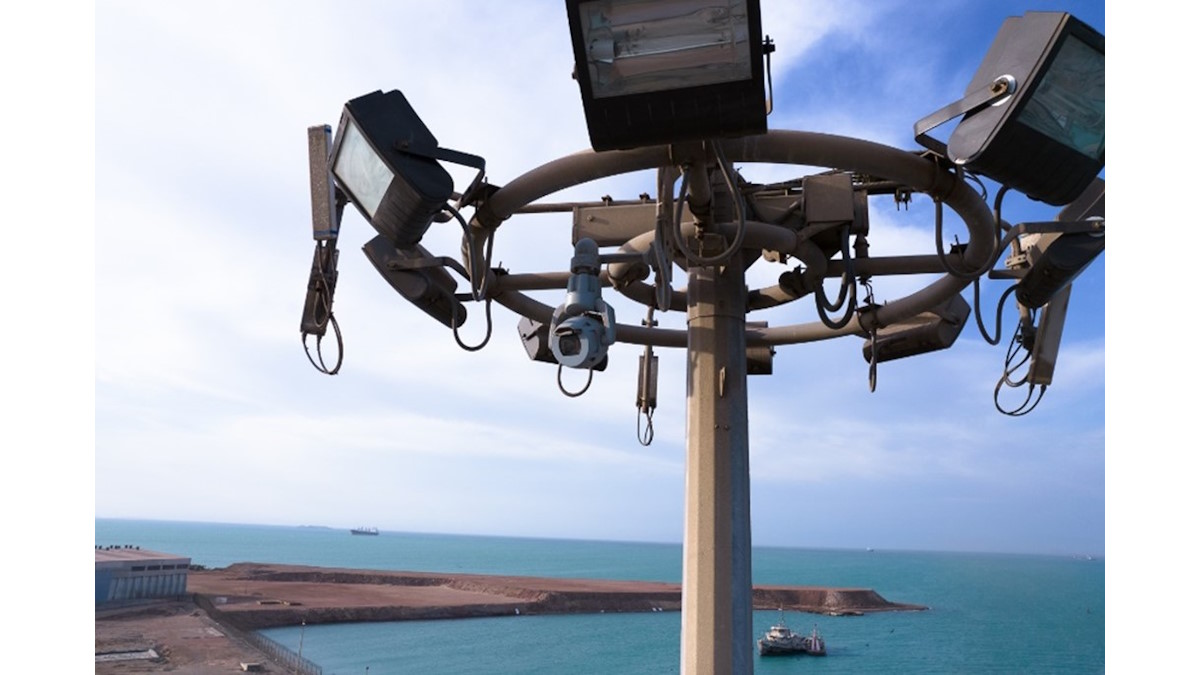
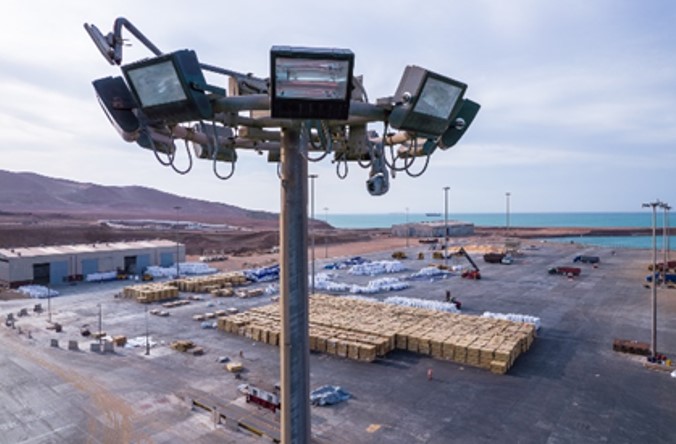
One of the main needs of this port is to detect and document attempts at criminal activities, so Bosch cameras were used on tips of poles 40 meters high, which work in adverse weather conditions such as salinity and strong gusts of wind.
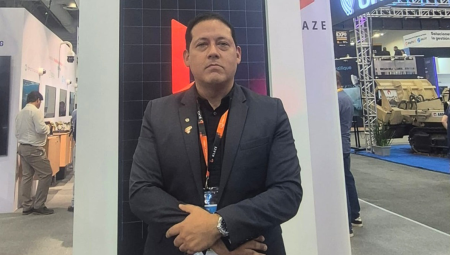
In this regard, César Rojas, Operations Manager of Puerto Paracas, stressed the importance of being able to see and protect yourself in a terminal near a high-risk area, where the intrusion of unauthorized persons is a constant concern.
‟Being in a terminal that is 70 km from the descent of the Los Libertadores highway, which is the exit of the Valley of the Apurímac, Ene and Mantaro rivers (VRAEM), the productive center of approximately 60% of cocaine in the country, we must be careful. The south side of the port is sensitive because it is closer to civilization, and it is where intruders have tried to enter," Rojas said.
According to the World Drug Report (UNODC, 2022), almost 90% of the cocaine seized in the world was trafficked in containers and/or by sea. Contamination of a container at a terminal can occur in a matter of minutes and result in criminal penalties for port managers, so a higher level of security is required.
Overcoming technical challenges
César Rojas, assured that the previously installed technology did not cover the needs that the port had in terms of technology. ‟As security we must have the greatest control capacity, there are 11 hectares that have red or sensitive spots and we have to see who is there. So if we have a camera that only sees a spot going up and down it's no use and it's not evidence of anything either. [...] The image without zoom looked stable, but as we got closer, we lost visibility. Several actions were tried to mitigate that, but nothing worked."
For that reason they opted for the installation of Bosch cameras to address security challenges and that was directly in charge of the integrating company Viditek. Cameras different from those manufactured by the German company showed distorted images that did not meet the safety standards required by the port.
The operations management comments that the first option was to position a radar that pointed towards a direction and if an intruder penetrated that beam, the PTZ camera would be directed towards that point, but being a metal fence, this alternative would always generate a distortion in the electromagnetic wave. The second was to install a jumper, but it did not achieve what was expected: stabilize the image satisfactorily.
Image stabilization was a challenge as the camera had to be positioned at a height of 40 meters on top of a metal pole without compromising image sharpness and suffering the effects of vibration. In addition, the equipment had to withstand intense wind gusts of up to 35 knots and salinity in the environment.
"Where we now have a single Bosch camera before we had three to four units of another brand on the poles. The problem was that, if a PTZ was positioned at one point, the others followed it and we ran the risk that intruders could enter where visibility was lost, that was the big security hole, "explained César Rojas.
The installed technology
Bosch installed, in almost ten poles, the MIC IP ultra 7100i, a PTZ camera with UHD resolution ("4K"), resistant to winds of up to 290 km / h and a total zoom of 144X (optical and digital). Its optical image stabilization (OIS) ensured vibration-free monitoring, allowing it to take advantage of video analytics and its integration with the port's electronic security software.
"As long as we keep the terminal without unwanted penetration we will be happy, that is the objective, that the people who are there are the ones who correspond and that those who pass through the container area are identifiable," said the port's operations manager.
In this first phase, it was sought to obtain a clear visibility of the maneuvering yard and the people who circulate in it. What is planned for the second stage? Monitoring and improvement of operations, showing customers their ability to control the terminal.
Less physical security, greater operational visibility
César concludes the interview by highlighting the success of the implementation: "The success has been that before we were blind and now we can see." This phrase reflects the positive impact Bosch has had on the operation of Puerto Paracas, and the level of protection of its facilities.