 Latin America. 5th generation mobile telecommunications networks – 5G – are a high-speed wireless connectivity technology that is capable of carrying an immense volume of data over more stable connections. In addition, it is revolutionizing communication in general, making our life evolve more comfortably in the face of the countless possibilities it will bring.
We are witnessing the transformation that 5G is building in multiple spheres: from safety, health, entertainment to the way we interact and consume media.
Its more robust bandwidth supports large amounts of data. This long-awaited speed and connectivity has been widely publicized as a game-changer, and there doesn't seem to be any exaggeration. 5G will allow an uninterrupted connection of several devices simultaneously, without fail and with greater stability, supporting the needs of the new digital era.
According to the Ministry of Science, Technology, Innovations and Communications (MCTIC), 5G is more than an improvement over previous generations. "5G mobile networks will provide advanced mobile broadband services, with higher data rates, lower latency and more capacity, enabling huge potential for new value-added wireless services." With 5G, the transfer of information will take place in real time, due to the radical decrease in latency. Thus, the use of autonomous vehicles and remote surgeries, for example, will be even more accurate.
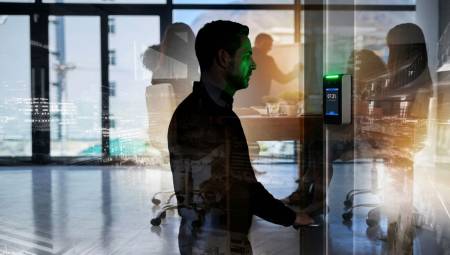
In Japan, where 5G is already a reality, the country's leading cell phone company gave a beautiful example of how to add another ingredient to this conversation: it created EasyPass ™ – an employee authentication solution that allows access control via a smartphone. The solution is the result of a partnership between RealNetworks and NTT Docomo. The technology uses Docomo's 5G and features RealNetworks' contactless SAFR facial recognition system, compatible with the recommendations of the World Health Organization (WHO) for the prevention and control of the Covid-19 pandemic.
In addition, 5G opens the door to a new category of technology: wearables. With wearables, the possibilities are endless, from 5G cameras for smart city applications, such as route and flow monitoring, to the use of a lapel camera by blind people with an "in-ear" voice assistant, recognizing the people around them. 5G brings these applications closer to reality.
With 20 times more bandwidth than 4G networks, 5G supports many more devices on the network. This means the ability to run, for example, facial recognition software with more cameras and greater connectivity. More efficient bandwidth also translates into a significant reduction in TCO (Total Cost of Ownership), making many solutions viable for a wider range of customers.
With this in mind, RealNetworks launched SAFR Inside: live video facial recognition that enables detection and facial recognition on smart cameras such as Axis Q1615 Mk III and P3255. SAFR Inside performs direct processing on the cameras and substantially reduces the infrastructure at the tip. In addition, it removes server hardware allowing the deployment of powerful computer vision, at a much lower cost of ownership, for a variety of applications: watchlist monitoring, face mask detection (alerts when no mask is detected), secure contactless access with face unlock, crowd analysis (age, gender, facial expression), occupancy count, among others. SAFR Inside facilitates complex analysis while providing real-time situational awareness for security and video analytics.
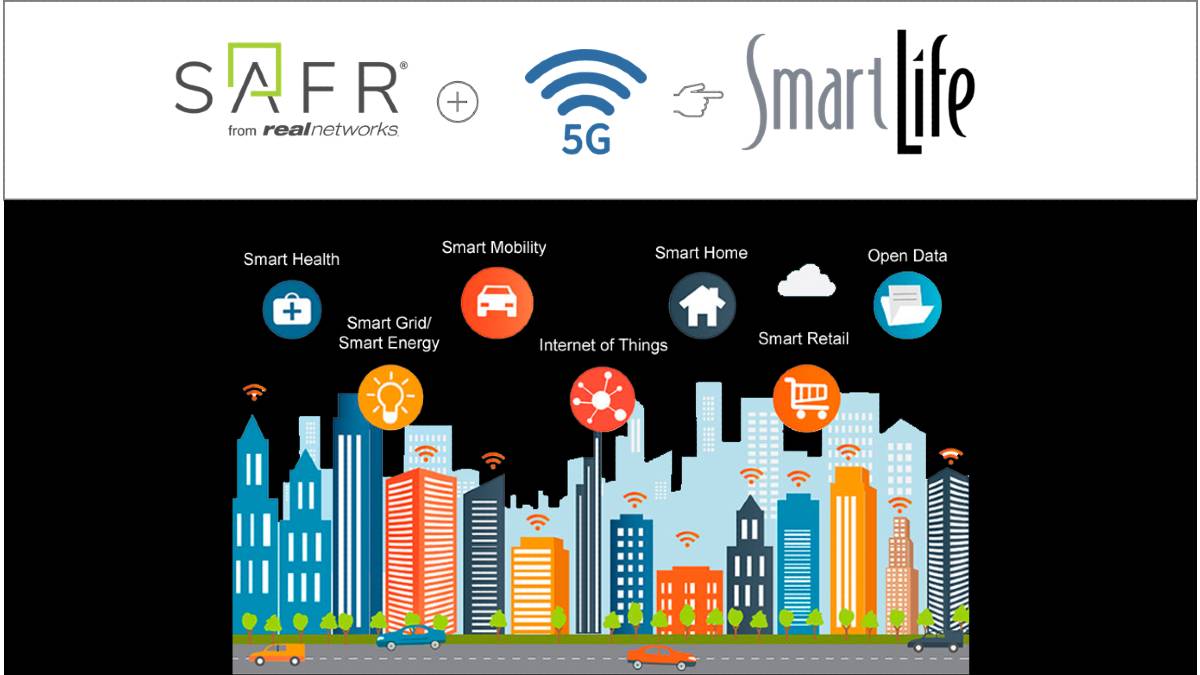
With 5G, solutions like SAFR Inside take countless theories out of paper and put them into practice: they open the way for the development of increasingly smart cities, as well as facilitating the implementation of new applications, which will allow the improvement of infrastructures ranging from urban mobility to public health and safety. Smart cities will use the power of technology and data to improve and manage life in society.
The possibilities are endless, from the creation of highly efficient digital points for KYC (Know Your Customer) services, self-service totems and robots that talk to customers and provide enriching information. It also enables the configuration of experiences across multiple connected devices, guided from multiple streams such as gateways to hospitals, schools, and transportation, to retail payments and uses ready to serve Industry 4.0. In fact, 5G will open doors to bring our reality closer to increasingly fast and convenient applications.
* Author: Jose Larrucea, Senior Vice President of International Sales at RealNetworks.