 International. An analysis highlighting the advantages and disadvantages of analog, IP and HD cameras over coaxial, mentioning a bit of history about the implementation of cameras for surveillance, was carried out by Eagle Eye Networks.
Cameras have their roots in the 1880s film business, but closed-circuit television (CCTV) cameras were not used for surveillance until mid-World War II, when the Germans used them to monitor V2 rocket fire.
The technology would be commercialized soon after and would be used heavily by governments, banks and retail operations. But camera options were limited. For years, it was analog or analog, as the first Internet Protocol (IP) camera didn't hit the market until the mid-nineties.
Fast forward a few decades to the present day, the options for powerful surveillance cameras are seemingly endless. In addition, the parity of analog, IP and HD cameras over coaxial has advanced by leaps and bounds. I probably have 25 inquiries a day with clients who are wondering which cameras to use for their video surveillance system. It's good to have these themes, because it means customers have a lot of strong options, but it can be confusing. So, how do you know which cameras are the most suitable for the implementation of your video surveillance system? Each of them has its pros and cons, and the answer depends largely on your needs. Let's take a closer look...
Analog cameras
Analog cameras capture the video and transfer it directly to a digital video recorder (DVR) via a coaxial cable.
Pros
Ease of migrating the solution to the cloud: the vast majority of current installations are analog. To synchronize a new system with the cloud, it's as simple as installing a bridge or a cloud managed video recorder (CMVR) and connecting it. Most cameras and cables are retained, and only one device is replaced. For the reseller, this is instant recurring monthly revenue, and for the end user, the existing investment is preserved and consequently money is saved.
All the advantages of the cloud: Once your analog camera is connected to the cloud, you get all the high-end enterprise-grade features fundamentally built into the product at a very affordable price, including centralization, redundancy, availability, etc.
Supports long wiring distances: Analog technology is ideal for the long wiring distances needed in areas such as car parks, schools and campus-type businesses. Most or all of this can be preserved when migrating to the cloud.
Uncompressed full frame rate: Analog technology works intrinsically at full frame rate without compression, ensuring that the video looks really smooth. This is especially useful in environments like casinos, where you need to review everything by frames to capture the quick action.
Nocs
Resolution limitations: There is a theoretical maximum resolution for analog cameras, which is a fraction of the current capabilities of IP cameras. For comparison, some IP cameras can have up to 32 times the resolution.
The industry is losing veteran technicians who know how to diagnose and repair analog cameras: newer technicians are more knowledgeable about networks, but do not necessarily have experience in the service and maintenance of existing analog cameras.
IP Cameras
Commonly used for surveillance, an IP camera is a digital video camera that receives control data and sends image data over an IP network. The IP camera revolution began in the 2000s, but at that time they were much more expensive and, consequently, the cost was prohibitive for many companies. Today, you can still get expensive and high-end IP cameras, with incredible bells and whistles, but you can also find many options on par, in terms of price, with the analog cameras of yesteryear.
Pros
Resolution – Modern IP cameras have excellent image quality and resolution. And since the number of pixels on the target is much better, you get the ability to collect forensic details more easily, such as people's faces, license plate numbers, etc.
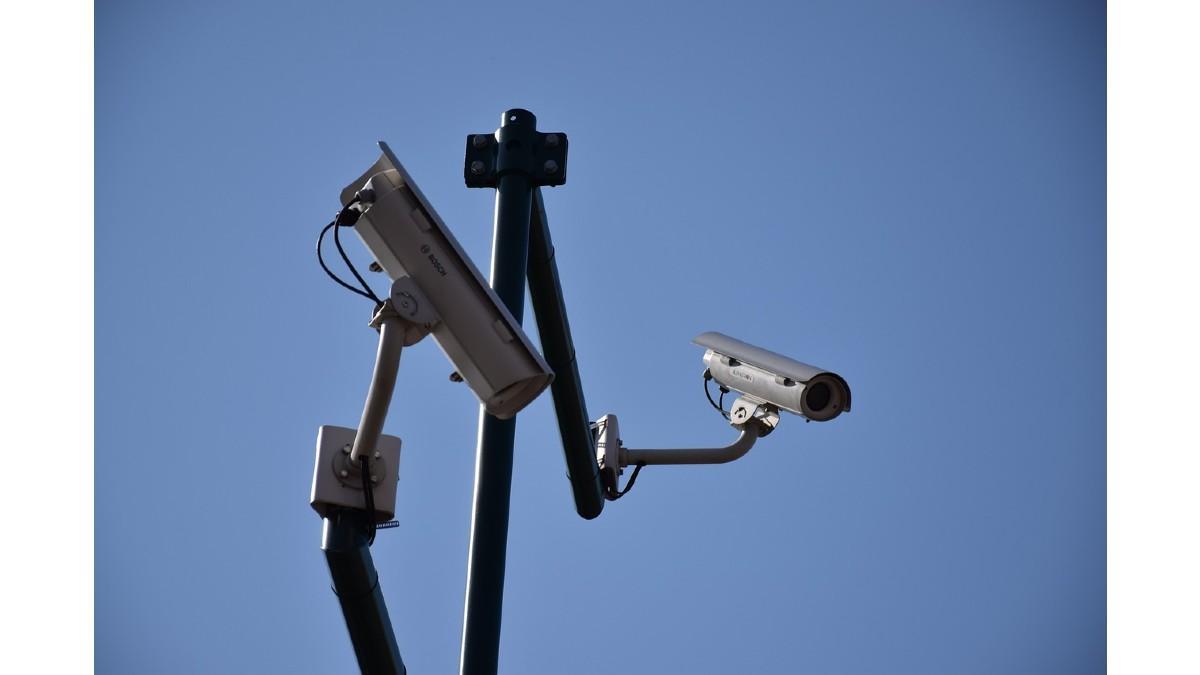
Specialized cameras: IP cameras offer the widest breadth of applications on the market. IP cameras can be multi-image, fisheye, thermal, bullet type, dome, etc.
Nocs
Technicians have to learn to network – There is a whole generation of technicians whose main competence is focused on analog. Suddenly, their abilities are altered and they have to learn to network. This is especially some of the giants that employed thousands of technicians.
A bit of the low-latency experience is lost – One aspect of networking is that data flows in all directions while devices communicate. How quickly this data can be prioritized and transferred has a limit, which generates latency. With IP, you can expect one to two seconds of latency. That is completely acceptable; however, analog is basically instantaneous. And latency is compounded by remote vision.
Recommended dedicated network: Video data is the densest form of data flowing over any network, and can wreak havoc on an existing network, occupying it so that no other data can pass through. It is recommended to create a dedicated network for the IP camera, so as not to interfere with existing networks that are used for commercial purposes. This has an inherent cost associated with it in the form of additional hardware.
Some IP cameras are really expensive: you can spend more than $45,000 on a specialized IP camera with features like thermal vision, night vision, positioning systems, etc.
HD cameras on coaxial
HD over coaxial cameras deliver uncompressed (or very slightly compressed) real-time video data directly from the camera to the recorder. The year 2014 was the turning point during which coaxial high definition began to become a thing, because suddenly you could send images with megapixel resolution through the coaxial, when before you had a limit.
Pros
You can keep your coaxial infrastructure: with high definition over coaxial you don't have to start and replace the existing cable, which can be very expensive... even more than starting from scratch. Simply replace the camera and recording devices at both ends of the cable to have a completely new system.
You'll get the best of both technologies: high definition over coaxial gives you high-resolution video and great image quality that is very cost-effective.
It makes installers very competitive: price is king, and this approach is much less expensive for the end user.
Nocs
Limited number of camera types – With HD over Coaxial, it doesn't have the breadth of products, such as dome cameras, bullet and other popular form factors that you have with IP.
Problems with the cables: you have to have a wiring with copper core. HD over Coaxial will not work with copper coating. And, it takes tribal knowledge to know which one you have. The technician has to know how to go to the cable, cut the connector and check the type of cable.