
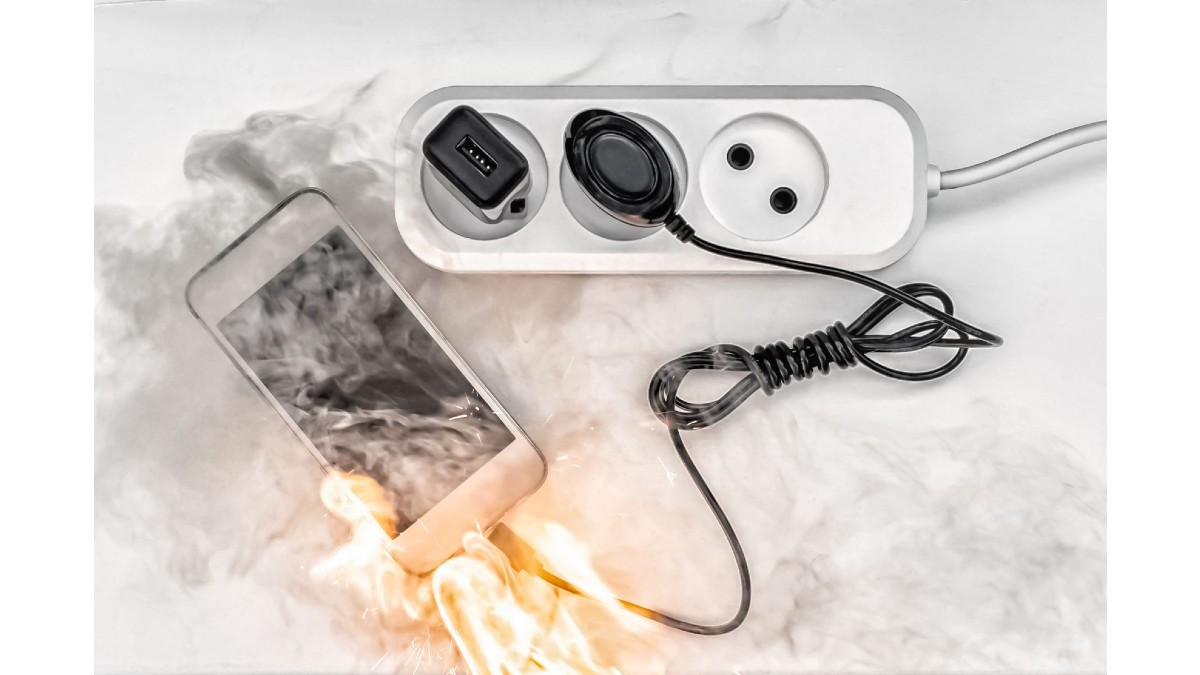
This class of products deserves an in-depth analysis of the risks and prevention actions as potential for fires.
By Jaime A. Moncada, PE*
While lithium-ion batteries are normally safe and have been designed with various safety measures in place, fire hazards can occur for a number of reasons, such as manufacturing defects, design defects; such as during compact use in a new car; inappropriate or abnormal use, such as when near a heat source; when there are problems with the chargers that allow overcharging; when they have low-quality components, or when a blow damages them.
With their increasingly widespread use from laptops and cell phones, electric bicycles (e-bikes), motorcycles (e-scooters) and electric cars to large energy storage systems, it is increasingly common for us to know of a fire incident with this type of battery.
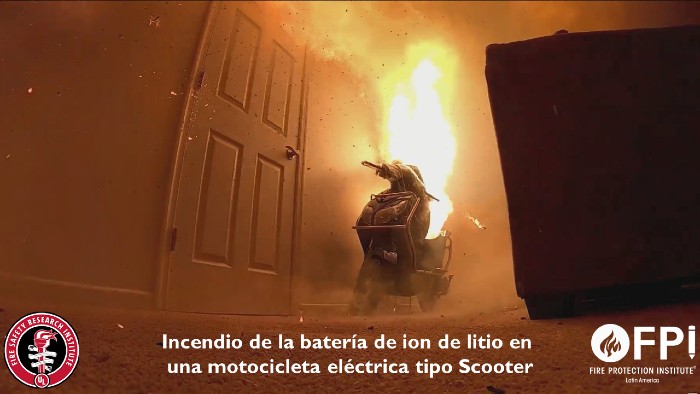
Photo 2. Fire testing of e-scooters in UL laboratories conducted by the Fire Safety Research Institute (Photo courtesy of Fire Protection Institute).
Lithium-ion batteries today account for about 90% of the rechargeable batteries on the market. One of the great benefits of lithium batteries is that a large energy density can be accumulated in a small and lightweight pack. They accumulate between 4 to 7 times more energy density than a non-rechargeable battery.
However, any time a large amount of energy is compressed into a small space, there is a risk that this energy will escape uncontrollably. When this happens, fire is a common result. Several recent incidents have demonstrated the magnitude of these types of fires, their difficulty in extinguishing them, and the risk to firefighters responding to the fire.
The risk of fire
While research and learning about lithium battery fires continues, we know that lithium batteries are highly sensitive to high temperatures and are inherently combustible. The battery's electricity-producing mechanism is embedded in electrolytes that include a high-viscosity flammable solvent. A lithium battery cell fire involves a thermal runaway, a chain reaction in which the exothermic reaction of a failed battery cell overheats an adjacent battery cell. That is, the cell quickly releases its stored energy, and the more energy it has stored in a cell, the more energetic and out-of-control the exothermic reaction will be. The adjacent battery fails in a similar way, and in turn, overheats other batteries.
Fire can occur quickly after the evolution of smoke, although the thermal runaway event can continue for hours without any flame production. During this period, large quantities of flammable vapours and gases are produced which, if contained in an enclosed area, can create an explosive atmosphere. In many cases, however, ignition occurs and a fire develops. As battery components are consumed by fire, the heat from the fire increases the rate of thermal runaway, leading to a devastating and hard-to-extinguish event.
Tests in UL's fire testing laboratories have demonstrated the speed of these fires. For example, the battery of an e-scooter inside a room in which one of its cells fails due to overcharging; This battery begins to smoke and only 15 to 20 seconds later the flame appears. A minute later the conditions in the room are already unsustainable, and shortly after there is a sudden widespread fire (flashover).
Fires in micromobility devices
There is a viral video about a fire that occurred in September 2023 in front of a residential complex in Bogotá, Colombia. In this fire, an e-scooter caught fire and could only be extinguished after multiple people downloaded approximately 20 manual extinguishers (see video here), illustrating the intensity of these fires and the difficulty in extinguishing them.

Photo 3. Fire in the electric battery of an electric scooter type motorcycle, which was finally extinguished after applying approximately 20 fire extinguishers, mainly 10 lbs of PQS (Photo courtesy Fire Protection Institute).
On this issue, the first to sound the alarm was the New York City Fire Department (FDNY), who in 2019 began to perceive this new trend. In 2023, the FDNY counted 268 fires with lithium batteries that cost the lives of 18 people and injured 150 more. On the other hand, the London Fire Brigade indicates that e-bikes are the fastest growing fire risk.
Large energy storage systems
A Battery Energy Storage System (SAEB) is a means of storing electricity in a group of batteries for later use. A SAEB can range from residential-sized systems to large commercial use arrays.
Perhaps the most popular use is the storage of excess energy production from renewable sources, such as in a wind farm or solar farm, which, during periods of low energy production, can use and bring this stored energy online.
Lithium-ion batteries together, in a casing or container, are called "cells." A SAEB can contain dozens to thousands of cells for storing energy. Cells are usually packaged in modules held in racks, and racks are typically stored in structures such as a container.
For example, in July 2021, a fire occurred in Australia at a SAEBs park called "Victorian Big Battery". This wind farm was made up of 212 SAEBs, which together had an installed capacity of 300 MW. The investigation of the fire pointed to a liquid coolant leak that caused arcing in the battery cells, thermal exhaust and a chain reaction. The fire lasted for four days and firefighters had major problems during the fire attack and were only able to cool adjacent non-burning containers, so that the fire did not grow.
To give you an idea, a lithium-powered electric vehicle fire can be a much more intense fire than a combustion vehicle fire and can last much longer. Automaker Tesla indicates that an electric car fire can take 24 hours to extinguish.
NFPA recently developed NFPA 855, Standard for the Installation of Stationary Energy Storage Systems. This standard sets minimum criteria to mitigate the risks associated with battery storage systems and can be used when lithium batteries exceed an aggregate capacity of 20 kWh. This standard, for example, establishes separation criteria, and indicates when fire detection or automatic sprinkler systems should be used.
When using extinguishing systems other than sprinklers, the options should be considered with great caution. The regulation also establishes recommendations during the fight against the fire. As with other NFPA standards, this standard should be used with the support of a fire engineering consultant with experience in the use of this standard.
Storage of lithium batteries
As I already mentioned, there are thousands of different devices that contain lithium batteries today. As a result, there are huge warehouses that store the batteries that are used to replace everything from cell phone batteries, laptops, tools to e-bikes. For this reason, the insurance industry has been very concerned about how to protect lithium battery storage in warehouses because there are no criteria in NFPA 13, the design standard for automatic sprinklers, on how to protect this risk.
As a result, the Fire Protection Research Foundation of the NFPA evaluated this problem, with the support of FM Global, and the conclusions show that under certain conditions batteries can be protected with sprinklers.
FM Global, for example, recommends the use of in-rack sprinklers. However, these still preliminary investigations have not produced a consensus criterion of protection. The best way to evaluate protection options for this risk is with the support of a fire protection engineer.
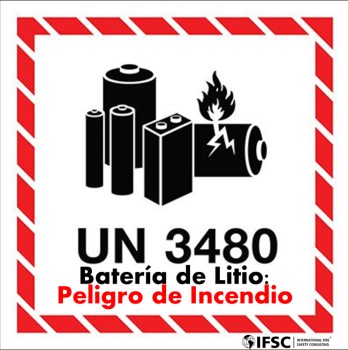
Regarding the use of water as a means of extinguishing I should mention that there is a misconception that water increases the danger in a lithium-ion battery fire. This misconception is due to the confusion of lithium-ion batteries (UN 3480) with lithium metal batteries (UN 3090), which are normally non-rechargeable. Lithium metal batteries contain free lithium metal, and if water is applied during the combustion of the lithium metal, considerable amounts of hydrogen will be released. This gas will burn, intensifying the fire, resulting in a rapid increase in heat and an explosion-like reaction. However, unlike lithium metal batteries, there is no free lithium metal inside a lithium-ion battery, so this phenomenon cannot occur.
Small battery protection
As a result of the growing trend of this type of fire, building codes such as the International Building Code (IBC) and the Fire Prevention Code (NFPA 1), in their latest updates in 2024, have included requirements for the use of batteries in micromobility devices for the first time.
These requirements are applicable when more than five motorized devices are charged within a building or within 3 m of a building or structure, and are summarized below:
1. Devices must be listed in accordance with UL 2272, Electrical Systems for Personal Electric Mobility Devices, or UL 2849, Electric Systems for Electric Bicycles, as applicable.
2. Devices must be charged in accordance with their listing and the manufacturer's instructions using the listed charging equipment supplied by the original equipment manufacturer, or the listed charging equipment specified in the manufacturer's instructions.
3. Devices must be charged in accordance with all of the following:
• The charging equipment for each device must be plugged directly into a listed receptacle.
• Extension cords or relocatable electrical outlets should not be used.
• Combustible materials, combustible wastes or hazardous materials are not allowed to be stored within 3 m of the loading equipment.
• The loading operation must not be located in any exit access corridor or in any means of evacuation.
4. A minimum distance of 46 cm must be maintained between the batteries of each micromobility device during charging operations. The room or indoor area must be protected by a fire alarm system that uses air suction smoke detectors. Note: The City of NY is requiring automatic sprinkler protection in these types of enclosures.
Recommendations to avoid a fire
Consumer safety protection authorities as well as NFPA have indicated the following recommendations:
• Never leave the battery charging at night while you are sleeping. That is, never leave the battery unattended when charging.
• Follow the manufacturer's recommendations. Do not replace the charger or battery with one that is not from the same manufacturer.
• Do not put the battery to charge in the escape route.
• Do not charge the battery near another battery (use a space of 46 cm min.), or an ignition source or combustible elements (use a space of 3 m min.).
• Place the device in a ventilated area such as a terrace, as far away as possible from the living areas of the home.
• Use devices with batteries listed or approved by a suitable fire testing laboratory.
• Do not clean the device with pressurized water. Water could get into the battery cells, causing a short circuit. Also, it is advisable not to charge the device if it is wet or damp.
• Avoid charging the device after a bump in the battery. If you notice damage or breakdowns, do not use it, and take it to a specialized workshop as soon as possible.
 * Jaime A. Moncada, P.E. is a principal of Fire Safety Consulting (IFSC), a Washington, D.C.-based fire protection engineering consulting firm. and with offices in Latin America. He is a fire protection engineer graduated from the University of Maryland, co-editor of the NFPA Fire Protection Handbook, and former Vice President of the Society of Fire Protection Engineers (SFPE). Mr. Moncada's e-mail address is [email protected].