
 International. Héctor Cobo, Regional Director for SAS Mexico, Caribbean and Central America, makes an analysis on how Artificial Intelligence could be a solution against the Coronavirus. Here are his comments:
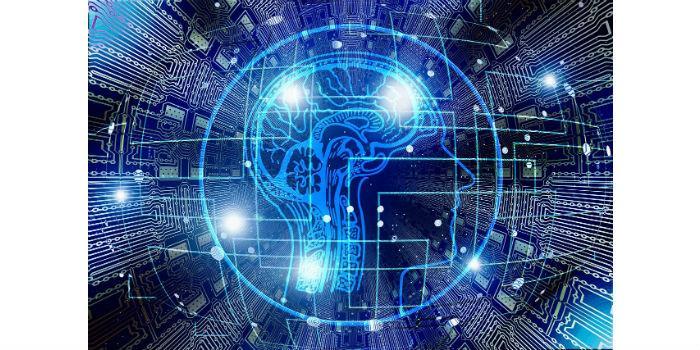
The coronavirus has been a major topic in the news lately: it's a pneumonia-like illness that has claimed the lives of several people. It is believed to have started in China and has spread to several other countries, so we need to be prepared in case it becomes a global health emergency. When preparing we mean to make one of all our resources and the most advanced technology to be able to know and analyze the data. In this case, the help of Artificial Intelligence based on Analytics, can result in a key element for the solution of this contingency.
By making use of Artificial Intelligence to model and predict coronavirus outbreaks, we will get a much clearer picture of how best to treat the virus locally. With the insights offered by Artificial Intelligence, governments can accurately predict the resources needed in specific locations, identify how treatment can be improved at hotspots, and ultimately stop the spread of the virus. By looking at geographic trends in larger areas, we can also create a picture of how it can be treated globally.
In the face of any outbreak of disease, it is essential to be able to understand how it spreads in order to be able to contain it as quickly and efficiently as possible. By using Artificial Intelligence, the vast amount of data that exists on people's movements as they travel can be transformed into a valuable tool to identify the next possible incubation center for the virus, allowing authorities to intervene early and in a timely manner.
Although Artificial Intelligence has not been used massively in medicine and public health, the potential it has is wide because it has already provided several elements, with computer models that can accurately diagnose breast cancer from mammograms and identify Alzheimer's disease from brain scans.
By analyzing a large amount of data from a diverse variety of sources, such as health, location, and climate data, it is possible to develop algorithms that can identify patterns in the data and create predictive models to anticipate future disease outbreaks, allowing experts and authorities to be proactive in responding to future eventualities.
Artificial Intelligence has proven to be effective in outbreaks of other diseases, for example, in 2018, it was used to be able to predict dengue outbreaks. The platform was able to predict where outbreaks of the disease would occur in Malaysia and Brazil three months in advance with more than 80% accuracy.
It is important to note that in addition, the implementation of Artificial Intelligence has proven to be successful in numerous branches of health care, such as in the identification of brain tumors and in the improvement of treatments.
We are convinced that technology exists to combat medical emergencies. Governments have a wealth of data that can be used in the fight against viruses, but they don't always know what to do with it. In this case, technology can deepen and discover information from the huge volumes of data to which they have access and thus be able to have greater knowledge that results in better decision making.
With the use of advanced technology – which is already available – the coronavirus should no longer be an unknown, secret or mysterious matter. The combination of Artificial Intelligence, human expertise and global collaboration is the fastest and most efficient way to end the spread of the coronavirus and any other type of epidemic and health risk.