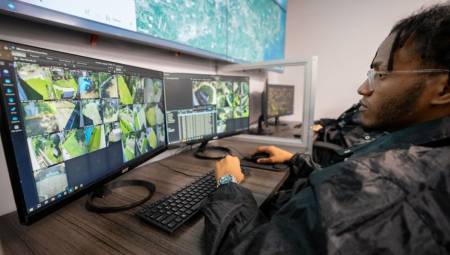
 Colombia. The Constitutional Court set the parameters that must be taken into account to request and deliver videos recorded by security cameras.
The high court said information recorded on cameras installed in a person's home is "indisputably private," unless it is surveillance by a court order.
The same goes for surveillance equipment installed in private establishments that are open to the public (shopping malls, tourist or commercial establishments, for example), which implies that those videos could only be accessed through a court order.
According to the Court, these cameras "are continuously recording information about people who frequent these types of places," which means that their privacy must be protected.
Something different happens with the security devices installed in establishments or public institutions, "since they are capturing images in an open place", so their videos are accessible.
The Court's statement was given when rejecting a guardianship filed by a woman to obtain the videos of the Sociedad Ecotermales San Vicente S. A. de Santa Rosa de Cabal, since her father died after attending that tourist site, in July of last year.
The woman said she wanted to watch the videos because her father was in the hot springs when he "suffered an accident in strange circumstances," which led to his death six days later.
He said that on July 7, 2017, he asked for a copy from the hot springs because in the hospital they needed to know precisely the time that the man was in the hot springs, and on July 11 they responded negatively since "the videos show sensitive data where they are minors and the data protection law prevents them from certifying them."
The Court agrees with the company and assures that the information in these videos is private because "it has personal information of children and adolescents in bathing suits who recreate themselves in the pool, therefore, it can only be obtained and offered by order of judicial authority."