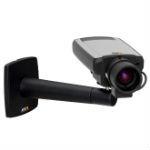
 Latin America. Security cameras have become one of the main instruments of public policy to combat crime in countries such as Brazil, Argentina, Colombia and Venezuela. Axis Communications has been part of several successful cases where the contribution of video surveillance in reducing insecurity and crime is verified.
The island of Margarita, in Venezuela, has just completed the installation of 100 video surveillance cameras to improve the detection of criminal activities. The project, in northern South America, is the latest example of a strategy adopted by more and more governments across the region: video monitoring for citizen security.
In August, the city of Feira de Santana, in the Brazilian state of Bahia, inaugurated a fully HD video monitoring system that covers 80% of its territory through 200 cameras from Axis Communications, creator of the digital security camera. The system was added to radios interconnecting schools, health units and broadband access points, making Feira de Santana one of the largest digital cities in the country.
Maceió, which in 2013 was targeted as Brazil's most violent capital by the Brazilian Center for Latin American Studies' Violence Map, managed to reduce crime by 70% in some areas monitored by Axis cameras, and is already being copied by nearby cities. In that case, HD cameras are even used for reading vehicle patents.
A similar jump was observed in Medellín, Colombia, this city that a few decades ago was known as one of the most violent and dangerous in Latin America, today is cataloged as the most innovative in the world, for being in continuous search for technological answers to the needs of its population. One of those needs was the modernization of the video surveillance system, which migrated from analog to digital cameras, with better benefits and results.
"The authorities are noticing the direct relationship between the installation of cameras and the sense of security in the population. Cities that have adopted high-quality video surveillance cameras see a reduction of at least 30% in crime records, which inspires neighboring cities," explains Andrei Junqueira, Axis' New Business Manager. "It is a positive chain that, in the last two years, has begun to change the image of cities previously seen as dangerous for the local population and tourists," says Junqueira.
The same thing happened in Junín, Buenos Aires, Argentina. The need was to incorporate a surveillance system to lower insecurity rates and control all points of the city in order to offer a safe space to the citizen. In the first stage of the project, 30 Axis cameras were installed at different strategic points, upon noticing positive results they requested to install 10 more cameras.
Axis' commitment to video surveillance technologies for urban monitoring led the company to recently launch the AXIS Q6000-E camera, which maintains a 360° view over a large area, while also offering zoom to specific objects. The result of two years of research and development, the solution allows operators to monitor an area of 20,000m2 (equivalent to 2.5 football fields).
"In 2015, many South American cities will continue to seek advanced security solutions to a problem that still affects their citizens. The good news is that systems are becoming more affordable," says Junqueira.