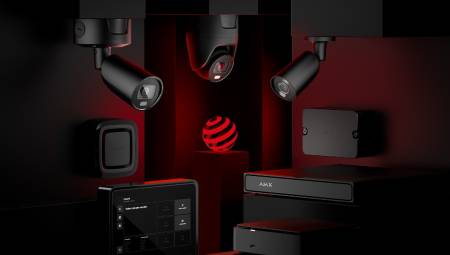
 If you haven't noticed it yet, the alarm industry is in the midst of a major transition, driven by affordable IP video cameras and broadband internet technology, offering new dimensions in this conservative sector.
By Max Gadot*
The popularity of video verification has increased thanks, in part, to efforts to reduce false alarms. However, video verification offers advantages that go beyond the reduction of false alarms. The benefits of video alarm verification reach not only home and business owners, but also law enforcement authorities, monitoring stations, installers and insurance companies.
The advantages of video alarm verification
False alarms account for about 90 percent of all alarm events. Monitoring stations and law enforcement agencies devote a significant amount of time and resources to responding to these types of events. In fact, some law enforcement agencies have been forced to implement a "do not respond without verification" approach due to a shortage of resources and budget. Some countries such as the United Kingdom, Spain and Chile have regulations in place that require the verification of alarms to generate a police response.
Historically, the costs of video verification, which included expensive equipment and a complex installation, made it prohibitive. In addition, when the operators of the monitoring center watched the live video of the sites, the activity displayed did not match the alarm event.
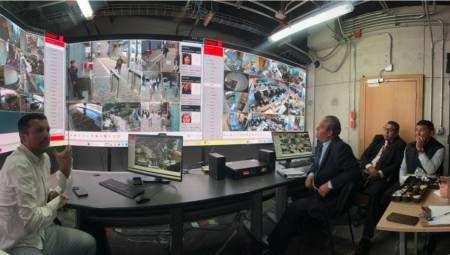
But now, modern technology makes it possible to associate video clips and snapshots with an incoming alarm event so that it can be sent to monitoring stations, and if configured, it can also be sent simultaneously to the home or business owner's smartphone. This process allows the monitoring station operator to visually verify the status of the alarm and determine who or what triggered it, before making the decision to send the police.
The result is an improved and more efficient response from police or security guards. Thanks to video alarm verification, police can deploy their resources more effectively, increase the arrest rate, and offer better situational and safety awareness to emergency teams.
Video verification is now the most popular additional option for alarm systems, which is a fundamental change for the alarm industry. Recurring monthly revenue from the alarm industry is based on alarm system monitoring and video verification is the natural next step as it becomes more affordable. The addition of video verification is an upgrade similar to that of interactive services, additional security devices or maintenance. Clearly, it is also an opportunity to increase recurring monthly income to new and existing accounts.
Taking responsibility point-to-point
Risco Group has recognized that a robust and superior video verification solution can only be achieved if the hardware, software and peripheral devices are rigorously controlled and closely linked. The RISCO ecosystem, a RISCO intrusion alarm system with RISCO IP cameras connected and controlled by RISCO Cloud and the iRISCO smartphone app, gives the customer a superior experience, easy installation and easier synchronization between alarm events and video.
Superior handling of alarm events
 An example of the superior customer experience that provides end-to-end accountability of RISCO's solution is the flow of video and images in an alarm event:
Although RISCO IP cameras record a full HD video clip of the scenes before and after the alarm is triggered, the images that first reach the operator of the alarm monitoring station are images extracted from the video clip referring to the alarm. These images allow operators of monitoring stations to quickly decide, in case of presence of intruders, just by taking a look at their screens and without having to review and analyze a video clip of 20 or 30 seconds, they can define if it is a crime in progress.
Of course, the full HD video clip is perfectly available for deeper analysis at any time, just by double-clicking on any image extracted from the event.
In addition, authorized personnel have perfect access to full HD video from Risco's IP cameras immediately after the alarm event. The two-way audio of IP cameras provides an additional dimension of verification and remote management.
In conclusion, video alarm verification is becoming a general trend at an accelerated pace. Monitoring stations should adopt video verification for the higher monthly recurring income it offers and for the benefits for all stakeholders: homeowners and business owners, police, security guards, and insurance companies.
Those who do not do this will surely be out of competition. For the monitoring station to achieve commercial success with the addition of video verification, it is crucial to select the right partner that offers a robust and affordable point-to-point solution, and with the necessary expertise to assist in all steps of its implementation.
*Max Gadot is Director of Product Marketing at Risco Group. For more information about Risco Group, visit www.riscogroup.com