
 A more demanding regulation by the authorities of each country in the Latin American region is needed to achieve greater use of fire systems in buildings in the region.
by Santiago Jaramillo Hincapié
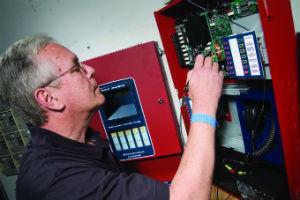
While it is true that fire detection systems have the same components regardless of the property where they are installed, in current buildings, such as offices, hotels, shopping centers, among others, special care must be taken in the design, installation, maintenance and operation of the detectors, since having a temporary population is more likely to have failures due to abuse, obstruction or even vandalism.
On the subject of the rules or local regimes that regulate the detection of fires, as explained by Yosti Mendez, sales director for Latin America and the Caribbean of the company Xtralis Inc., and also president of the Mexico chapter of the NFPA, there are advances, without a doubt, especially in recent times, specific cases are those of Puerto Rico, Dominican Republic, Costa Rica, which overrides having added, in its regulatory framework, the use of NFPA standards in all types of projects, 100%.
"Other countries, such as Mexico, Chile, Colombia have also reinforced their national regulations a bit, accompanying the use of standards such as NFPA, in these fire detection projects. But in most of our countries there are regulations, scarce, confusing and contradictory and with compliance often null in most cases, "emphasizes Mendez, who also warns that "that, in particular, remains the challenge for the sector."
Meanwhile, Ugolino Durán Lara, Independent Consultant specialized in Fire, honorary president of the NFPA Mexico Chapter and Member of the Committee of Honor and Justice Smart Buildings (IMEI), as well as Former Director of GE Latin America, indicates that "in the region we are in a position of very good level compared to countries such as the United States, Canada or some other Europeans. Latin American nations really today care about the issue of security and increasingly increase their standards, and although it is clear that there is still much to be done in terms of regulations, it should also be noted that existing initiatives are on the right track"
On the other hand, and referring specifically to standards such as NFPA 72 and 101 and if these are taken seriously and are complied with by manufacturers, installers and end users in the fire safety segment in Latin America, especially in relation to shopping centers or commercial buildings, Yosti Mendez pointed out that "in recent years and in recent projects in our countries, in these types of properties, better designs and improvements are seen in the facilities, complying with these regulations. But, it is also true, that there are many other projects where the rules are partially complied with and are not taken seriously, "ponders our guest.
He also emphasizes that "we see systems where good smoke detectors are placed, but the notification systems are poorly designed and nothing is heard, or systems where the user, wanting to save money, places detectors of very low quality, made without certification and without being accredited by local or international authorities."
Likewise, Ugolino Durán emphasizes that the rules are serious, and in terms of compliance with them, he assures that "within the manufacturers the fulfillment of these is strict, because otherwise they could not put on the market any of their products. In the specific issue of the NFPA 72 standard, it should be noted that it applies to alarm systems and protection of fire equipment, and NFPA 101 has to do directly with the regulations for the care of human lives in buildings, however it should be noted that these two standards are complementary, in fact there is a large appendix of the 72 within the 101, and it allows us to handle evacuation routes, location of smoke detection devices, audiovisual and so on. Moving on to the specific issue of installers and end users, it is not so strict, and that is where more work must be done on compliance with the rules, since from country to country regulations and controls may vary, and there is no doubt that in our region, despite the efforts, there are still shortcomings in compliance with regulations by these two groups. "
Regarding what are the main risks or problems that must currently be faced in Latin America in terms of fire detection and what is the best way to counteract them, the sales director for Latin America and the Caribbean of the company Xtralis Inc., points out that in Latin America, despite all the difficulties, it grows and builds shopping centers, hotels, hospitals, offices, gyms, nurseries for children and the elderly, restaurants, nightclubs, tens of thousands of square meters, which apparently have nothing to ask of those who are built in Europe, the East or North America. But they are not the same. And they are nothing like in the forecasts in case of fire.
In addition, Mendez points out some specific examples of misfortunes:
2004: 400 dead Ycuá Bolaños supermarket in Asunción, Paraguay
2004: 194 cromañón nightclub deaths in Buenos Aires, Argentina.
2009: 49 children die kindergarten in Hermosillo, Mexico,
2013: 240 young people die, KISS Nightclub in Brazil
In short, Yosti Mendez believes that it is necessary to "adopt stricter codes in each of our countries."
On the other hand, and moving on to the issue of innovation, and what new proposals or developments in the field of legislation or technology can be introduced to the fire detection segment to improve the current situation, the representative of the NFPA Mexico emphasizes that by having stricter codes, the door is opened to offer new solutions to the changing environments in new constructions.
"For example, new data centers have new physiognomies, different designs in their air flows, different spaces and greater challenges for smoke detection. Therefore, the use of standards such as NFPA 75 and 76 is requested to place VEWFD (Very Early Smoke Detection) equipment, which offers Pre-Alarms. The only technologies capable of doing this function are Early Smoke Detection Systems by Aspiration, such as VESDA equipment," he points out.
As for what recommendations they could make so that users and / or integrators of this type of systems obtain optimal results, Mendez emphasizes that education is paramount. Both by the manufacturing companies and by the Associations that can help in the adoption of stricter Codes.
"It is important that in each country, we come together, work together to bring to the authorities, recommendations for the adoption of these new codes," concludes the representative of Xtralis Inc.
For his part, Ugolino Durán emphasizes that it is very important that professionals in the sector join and update themselves with entities such as NFPA (National Fire Protection Association)), IMEI (Mexican Institute of Intelligent Buildings), BOMA (Building Owners and Managers Association), ALAS (Latin American Security Association), and thus, through these keep abreast and updated on news, new regulations, and in general of the activity which will allow them to face their activity with professionalism and responsibility.