 A vaccine for the obsolescence of current access control systems.
By Alan Josué Vázquez Zárraga*
Titanic work is, if we stop for a moment to analyze it, design, plan and build an airport. The thousands of square meters on which numerous rooms, tracks, tunnels, towers, shops and restaurants are distributed are a reflection of a masterful work to erect such a building.
However, as many of us will have noticed when traveling by air transport, even more impressive are the work after the construction of any airport: the management and administration of its processes implies an impeccable coordination of efforts that, due to its complexity, become almost heroic activities.
And it is that a construction designed to house 24 hours a day, 7 days a week, a large number of people in constant movement needs to have a system that facilitates airport personnel to maintain adequate control over the processes that happen inside and, above all, that guarantees the safety of users. That is why the implementation of an access control system is a mandatory measure in the airport industry.
An access control system is a mechanism that, beyond maintaining control over the entrances and exits of the crowds that circulate every day through the different spaces of an airport (including ground, air, commercial areas, etc.), maximizes the experience of users by providing them with a sense of order, efficiency and, above all, protection.
Turnstiles, scanners, arc detectors and video surveillance cameras (CCTV) are some of the security filters currently used in airports to detect and prevent the entry of dangerous objects and identified criminals, as well as airport security personnel who are responsible for verifying the match between the documents required in each access area and the passenger who intends to board.
However, although this type of access control systems have worked without major problem for decades, the unstoppable advance of technology offers day by day a wide and updated range of solutions that respond to the demands of each industry, including the airport. This is why the prevailing model of security and access control implemented in airports begins to border on obsolescence.
Obsolescence in access control
To better understand the above, it is enough to look at the data presented by the International Air Transport Association (IATA) in its 59th communiqué, where it is forecast that by 2035 the number of passengers will amount to 7,200 million, that is, almost double those registered in 2016. So, if it is currently a real challenge for airport administrations to keep their industry going strong in terms of control, management and security, how to envision a future where the same technology is still used for access control purposes?
A reconfiguration in the mechanisms of the Latin American airport industry is more than pertinent, urging the implementation of new technologies that optimize access times at airports and maximize the safety of users. Fortunately, today there is a type of solution that, integrated with the aforementioned access control devices, perfectly meets their demands: identity management systems with biometric technology.
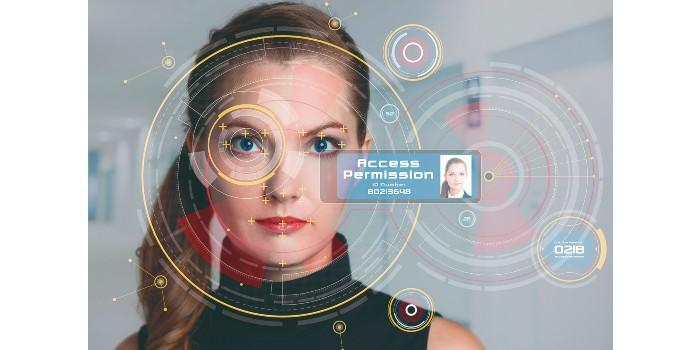
Unlike proximity cards or smart cards, instruments increasingly used for access control at airports worldwide, an identity management system uses biometric technology to control the entry and exit of users and staff of an airport; that is, by means of a biometric reader that records and stores the biometric information of a person (fingerprints, iris capture or capture of facial features) for subsequent identification and authentication in areas of controlled access.
And what does this mean?
That once the biometric information of the passengers has been registered (enrollment phase), they only need to place their fingers, eyes or faces (according to the biometrics enrolled) before a biometric reader to be able to pass through all the security filters corresponding to the boat process without having to stop to verify their identity through identification documents, thus eliminating cumbersome operations that only hinder the flow of passengers.
Similarly, access control systems that integrate an identity management system with biometric technology, specifically address the issue of airport security. In addition to securing the restricted areas of the building, allowing access only to authorized personnel (since the levels of access granted to passengers are not the same as those assigned to personnel), this integration of technologies allows, in coordination with the corresponding instances, the identification and recognition of criminals and possible criminals immediately and with a high degree of reliability.
Such is the proven efficiency of this type of technology that countries such as Spain, Paraguay, Peru, Singapore, the Netherlands and Australia have chosen to replace their old airport security models with access control systems integrated with biometric technology.
It is essential to prioritize, particularly in an industry that involves managing a large number of people as is the case of the airport industry, the impact caused by the solutions implemented on the end user.
That is why Ixmaki, the Identity Management System manufactured and implemented by Sissa Monitoring Integral, aims to maximize the experience of all those who interact with this solution. Its technology successfully tested in Federal Social Readaptation Centers and adaptable to any environment, allows users to obtain a positive and satisfactory impression about their services. Generate a feeling of comfort and tranquility in users will also generate a feeling of acceptance and loyalty.
Access control systems in airports, beyond controlling the entrances and exits of their facilities, have the obligation to meet the needs of users in the first instance, which, as we have already realized, can not be achieved in a better way than with the integration of an identity management system with biometric technology.
* Alan Josué Vázquez Zárraga is a representative of the company Sissa Monitoring Integral.