
 Latin America. This year digital video surveillance technology celebrates its 20th anniversary. Until 1996, all cameras in the world were analog, but today it has become a rule to use IP cameras, which have high-resolution images, live view anywhere, and other advanced features such as reading patent plates to identify patterns of behavior and to recognize people's faces. These technological advances are transforming the way public safety is provided for the population, and there is still much to come.
Therefore, Andrei Junqueira, Sales and New Business Manager at Axis Communications, will help us better understand why these advances are coming at the right time to our region. Research indicates that security is today one of the main concerns of South Americans. The biggest challenge for the coming years is to replace the old analog cameras with high-quality systems, as well as to optimize the use of images in combination with an optimization of police work. In this sense, taking into account the technology currently available and the ongoing projects involving urban surveillance, we have identified five trends that will be the subject of investment in many cities this year, consolidating a modernization process that, well executed, will guarantee the reduction in the rates of homicides, robberies, thefts and other crimes.
Taken together, the following trends show that we are moving towards building urban environments where technologies are adopted based on their effectiveness: not only to generate a momentary sense of security and support the opportunistic discourse of some politicians, but to solve the concrete problems facing society.
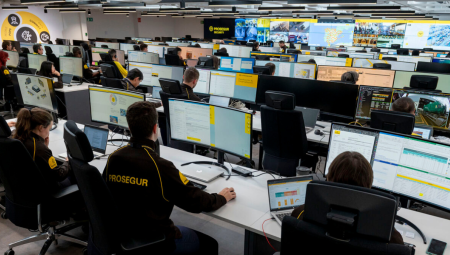
 1. Data Integration in Digital Cities - The term Digital Cities refers to investment in technologies that elevate cities to a new level of information integration and intelligence generation to improve service to citizens. But there is no point in offering public Internet access points, for example, if some of the basic needs are not met. A smart city begins with a safe city, including the integration of data from various public bodies such as SAMU, Fire and Police, with a single purpose: to protect and serve the citizen.
The image of a camera that captured an accident at a junction can be seen in real time by samu, the transport agency and the police, generating parallel actions and an effective response. From the point of view of the citizen, the government has to provide a complete service, regardless of the way it is structured. Between the demand of the population in the streets and the response of aid agencies, there will be more and more cameras.
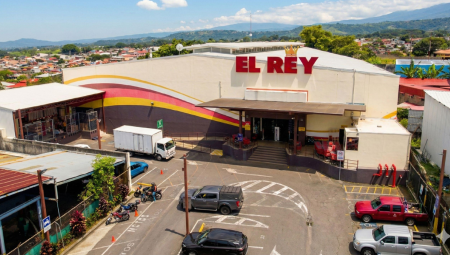
2. Exchange of private images with the public sector - The private cameras of restaurants, shops or banks began to be shared in real time with the state or municipal security agency and became part of the video monitoring coverage area of the city.
Some pioneering programs are already in place in some South American countries. It is a simple way to expand the capacity of police action, and will be adopted by more countries and departments in 2016.
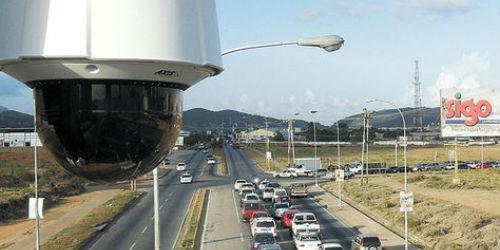
3. The popularization of smart cameras - With the technological leap of recent years, the market now has security cameras capable of recognizing faces and the patents of a vehicle. In addition to pointing out the location of a suspect or a stolen vehicle, these devices contribute to recognizing the method with which criminals act and, thus, support the intelligence work carried out by the police. Projects are also emerging that include cameras that control traffic lights according to the presence or not of vehicles on the street, which optimizes traffic and reduces travel time.
Even large projects should emerge with cameras that generate alerts to control room operators when a vehicle is driving in reverse, when it stops at a prohibited place, or when a newly stolen truck passes through a monitored point. Automatic alerts can also be instantly generated when gunshots are heard nearby. All this already exists and will be more present in the streets, routes and highways during this year.
4. The advancement of cameras on the moveor - With the intention of expanding the vision of the police, one of the trends in technology is the implementation of cameras in means of public transport. The teams can record images throughout the day so that, when necessary, criminal actions can be identified. But you can also visualize everything in real time.
This is possible thanks to technological evolution. Today, IP cameras can be small, with Full HD resolution, resistant to tremors and shocks to maintain a stable image, and are equipped with automatic compensation against light variation, to generate quality images regardless of lighting conditions. To this example are added the so-called "wearable" cameras, which can be placed on the vests of police officers, something essential for security during demonstrations or large events, such as this year's Olympics in Rio de Janeiro.
Police action is also favored with the implementation of cameras inside mobile phones, which guarantees transparency in the daily practice of these professionals, and can generate evidence against suspects.
5. Maturation of the concept of urban monitoring – Some myths and fallacies are only revealed over time. 20 years after the creation of the IP camera, it is natural that there is an evolution in the understanding of the market. It is becoming increasingly clear, for example, that the number of cameras in a city does not guarantee crime reduction. Some cities in which cameras were installed perceived that images alone are not enough. On the other hand, there are cities with a limited number of teams that managed, in a short time, to reduce crime. How? Associating technology with tactical work for the optimization of human resources, the exchange of information and joint action between the public and private sectors, as well as between different public sector organizations.
There are other points that, little by little, begin to be more observed. Some tenders already include, for example, the performance of a test to verify whether the technical characteristics announced by the manufacturer match the actual performance of the equipment. This is beneficial because, many times, the products tendered offer less than they promise, and those brands are automatically excluded from the process. In this way, citizens do not buy one cat per hare.
This maturation is natural as public managers observe the success of some cities in reducing crime, compared to the failure of others. Amid mixed results, 2016 will show that the best experiences for people's safety stem from the combination of advanced technologies and a commitment by managers to optimizing their resources, and the strategic use of available tools.