
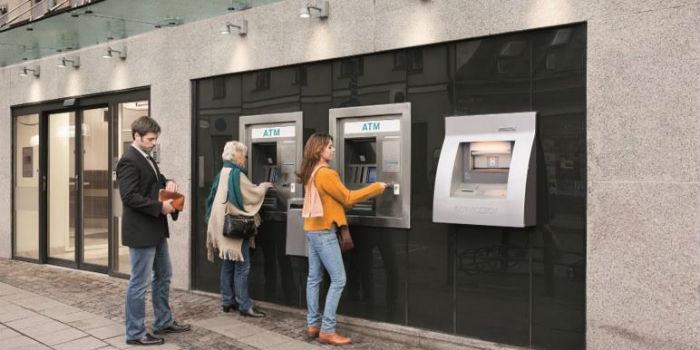
 Latin America. In an increasingly technological world, where financial transactions can be done through a smartphone or with traditional credit or debit cards, people today still feel the need to pay with cash. In this context, the demand for ATMs continues to grow. The number of ATMs worldwide will amount to 3.7 million in 2018[1]. The reality is that they provide several benefits for users and entities such as reducing long queues and facilitating cash handling within branches. However, the implementation of ATMs means more cash in circulation and, consequently, greater risk for customers.
How are users affected?
Copying data stored on the magnetic stripe of the debit or credit card, when placed in the card reader, remains the main problem for ATMs. More than 92% of ATM crimes worldwide are related to copying this information. Other types of attacks focus on criminals making sure that the money is trapped in the cash dispenser so that they can later extract it. Against this backdrop, manufacturers' investment in the development and design of more advanced security features continues, including anti-copying solutions and the use of new hardware that resists attacks with the use of solid explosives or gas.
According to the Undersecretariat for Crime Prevention in Mexico, between the months of January and February of this year, 36 attacks on ATMs occurred. In some states of the Mexican Republic there have been up to 90 attacks on ATMs and bank branches in the first months of the year. In addition to Mexico, entities from different countries such as Colombia, Chile and Venezuela daily receive complaints on the subject and unfortunately the cases stop there, increasing the problem by not having a subsequent investigation.
In all cases, these situations can be prevented in two ways: with cameras installed in the external areas of the ATMs in order to prevent criminals from taking certain actions, but above all with cameras that can be used inside the ATM, to make analysis of suspicious scenes, such as people who have visited the same place more than once, days before a heist.
Axis IP video surveillance as a solution
In the face of these threats, Axis Communications' video surveillance solutions and IP-based systems make it possible to protect ATMs and their users in a comprehensive way. Currently, the trust for traditional analog security cameras incorporated in combination with DVRs has decreased since, usually, they generate low quality video, often useless for forensic use. Therefore, Axis offers the market smaller network cameras which have all the benefits of traditional IP surveillance cameras, with HDTV quality, and which are flexible enough to be installed in ATMs. These devices can also adjust to changing lighting conditions, reduce backlight, and deliver sharp images regardless of the scenario.
With this equipment, banks can also use high-quality video recordings direct from the camera via an SD card – eliminating the need for additional hardware, such as a DVR installed inside the ATM – thus reducing costs. On the other hand, remote access makes it possible to download images from anywhere, shortening the download time to perform research quickly.
In addition, additional smart video applications running on the camera thwart the efforts of criminals. Alerts can be sent when a specific behavior is observed, for example, a person with suspicious movements located near an ATM for a long time without actually making any transactions at the ATM. Similarly, facial recognition technology is used to verify that the cardholder is the same as the person in front of the ATM. The performance of a facial recognition system depends largely on the quality of the images captured, therefore, IP cameras with HDTV quality are the best option.
Any investigation depends on the available evidence to identify criminals, who are increasingly bold. With the cameras you can make an analysis of the behavior of criminals, since there are always more exaggerated gestures and that are typical in this type of crime. And the analysis software is very specific to detect this type of movement, thus offering the possibility of making immediate decisions before a potential criminal act or to report a suspicious case.