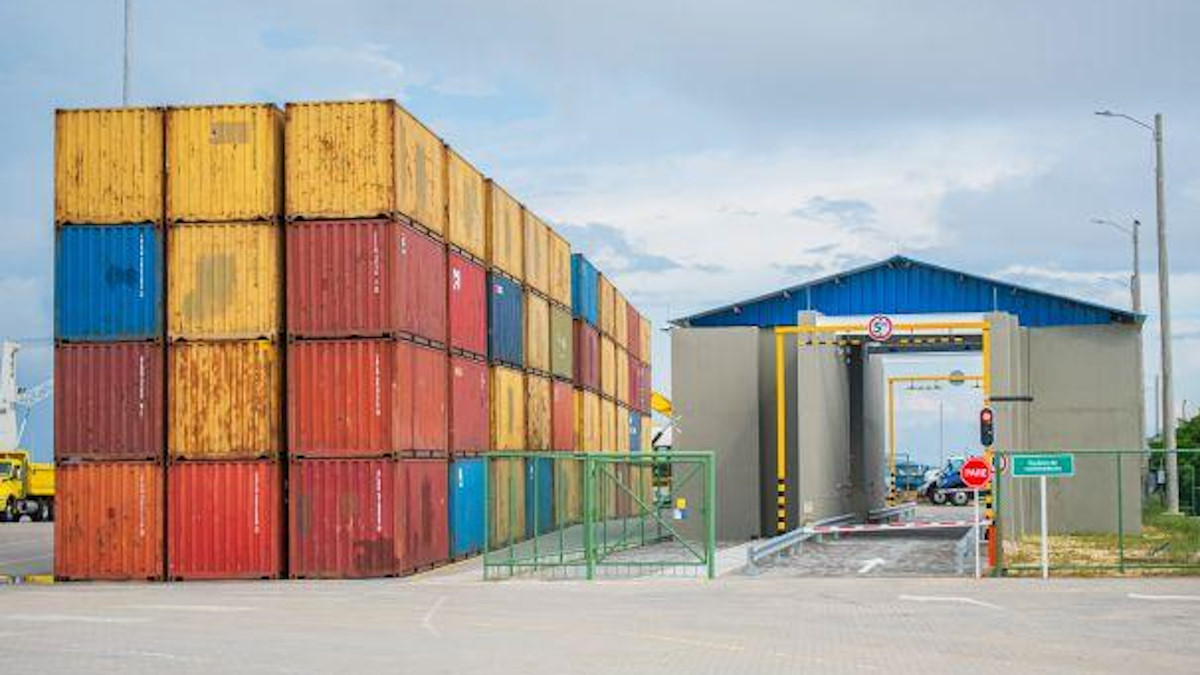
Colombia. Prosegur Security has installed the first state-of-the-art container scanner at Sociedad Portuaria Puerto Bahía (SPPB) in Cartagena, Colombia.
The Economic Commission for Latin America and the Caribbean noted in one of its reports that in Latin America, deficiencies in transport infrastructure have a negative impact on trade flows.
Currently, the differences between countries are very marked in terms of the quantity, efficiency and quality of their transport infrastructure. While countries such as Panama, Mexico and Uruguay exceed 90% of road network paving, others such as Bolivia and Colombia register levels around 20%. In this context, security becomes a crucial element to guarantee the efficient operation of ports and facilitate trade.
For this reason and in an effort to strengthen security in Colombian ports, Prosegur Security has been a strategic ally for the installation of the first container scanner at Sociedad Portuaria Puerto Bahía. This device has cutting-edge technology to detect suspicious materials and improve inspection processes at the port.
In this regard, Luis Fernando Carvajal, general manager of Prosegur Security, highlighted that: "for Prosegur Security, and for Colombia, it is a milestone to have this modern device in operation that will greatly contribute to the security processes at Sociedad Portuaria Puerto Bahía. It is a state-of-the-art equipment, which will be operated, maintained and monitored by Prosegur's human and specialized talent so that we guarantee Hybrid Security - in which the best security professionals interact, with cutting-edge technology and real-time data analysis - to ensure that the port has modern security processes."
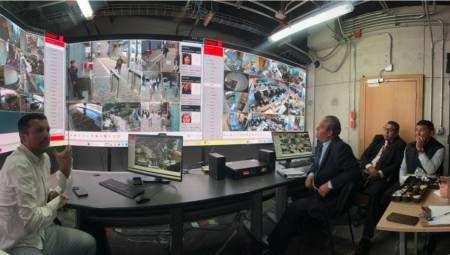
The installation process of this innovative equipment was carried out in accordance with the best methodologies and practices on the market until reaching the final phase of parameterization, configuration, acceptance tests and final delivery to satisfaction. Additionally, Prosegur's Intelligent Security Operations Center (iSOC), located in Bogotá, will carry out support activities and update processes and protocols that ensure the best provision of services. "Our innovative and efficient proposal has been key for Puerto Bahía to strengthen its security controls and optimize its port operations, thus consolidating itself as the most modern multimodal port in Colombia," says Carvajal.
The scanner, known as the Portal Type Container Scanner - The VXP-6, is a comprehensive solution that uses cutting-edge technology to detect suspicious materials and improve inspection processes at the port. With its ability to quickly switch between different energy levels, the scanner can discriminate between organic, mineral and inorganic materials, providing detailed images in different colors for better identification.
 Raúl Pérez Tatis, General Manager of Sociedad Portuaria Puerto Bahía, said that "the installation of this state-of-the-art scanner is a milestone that consolidates our leadership as a multimodal port. This advance, in addition to strengthening our operational capacity, positions us as a strategic reference in the region, guaranteeing agile and safe trade. In an environment where security and efficiency are key to bringing new opportunities, this alliance with Prosegur Security allows us to integrate solutions that safeguard our clients' cargo, attracting new operations of value for the economic development of Colombia and the world."
According to Carvajal, "the implementation of this technology will also contribute to the promotion of safe trade and economic development in the region. With the ability to detect illicit materials such as drugs and contraband, the scanner will guarantee a higher level of protection for the commercial operations of Sociedad Portuaria Puerto Bahía and will help combat criminal activities in the port."
 For his part, Andrés Mendoza, SPPB's HSSE manager, highlighted the development of this scanner in light of the company's security and protection strategy: "By integrating this cutting-edge technology into our processes, we align ourselves with the most demanding international standards, promoting safe, efficient and effective import and export operations for the national and international logistics chain. and we reaffirm our commitment to the protection of people, operations and the port environment.”
This news marks a turning point in the country's port industry, as it introduces innovative technologies and practices to improve inspection processes and strengthen port security activities.
Challenges and risks for ports in Latin America
The reality for ports in the region includes important challenges such as:
- Theft of goods: This threat mainly affects Latin American countries, where cases of theft have been recorded in recent years. In addition, acts of vandalism and sabotage also represent concerns due to the various goods that may be of interest to sectors of the population and radical groups.
- Cyberattacks: Ports are vulnerable to cyberattacks due to the critical information they handle and the amount of data they store on digital devices. This makes them targets for cybercriminal activities by organized groups or individuals intent on obtaining benefits by accessing such information.
- Political risks: These include war conflicts and diplomatic tensions between countries, as well as internal political risks. Given the importance of ports as critical infrastructure, they can become targets in situations of armed conflict or internal unrest.
- Natural vulnerabilities: The geographic location of ports exposes them to climatic risks such as tropical storms, droughts and rainy seasons. In addition, they must be prepared to deal with diseases, viruses and bacteria that can affect their operation.
- Social risks: These can arise from protests near port terminals that disrupt the country's trade flow.