

Latin America. In order to overcome the challenges of low lighting conditions, Dahua Technology developed a recent full-color camera technology that allows to operate under the most difficult light conditions without problems.
Introduced in 2020, Dahua Full-color technology has evolved from Starlight technology, Full-color, to Full-color 2.0 and the future Full-color ∞. With notable offerings such as dual lenses, varifocal lenses, 4K resolution, and artificial intelligence features, this technology offers a wide range of products and solutions that can effectively solve end-user monitoring pain points and provide clear and vivid images of the monitored scene 24/7.
In addition, Dahua Full-color is more than a technology for low-light environments. It offers a large number of specifications that allow it to adapt to different types of scenarios.
Characteristics of Dahua Full-color
Super large aperture F1.0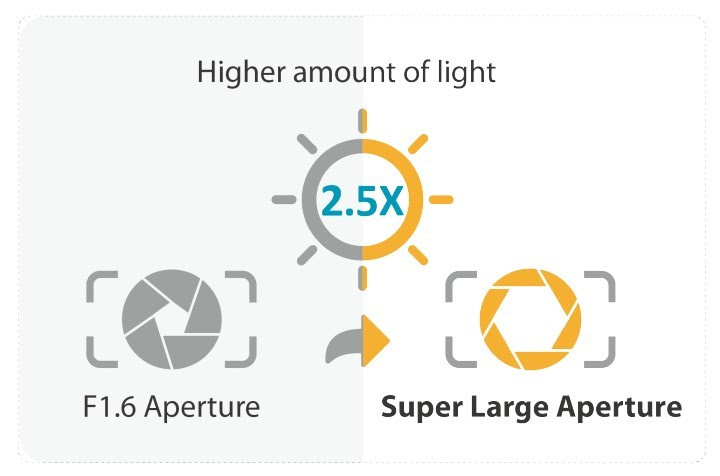
The aperture is used to control the amount of light passing through the lens and into the body of the camera's photosensitive surface. Dahua's full-color cameras adopt an F1.0 large aperture lens that captures 2.5 times the amount of light compared to the typical F1.6 aperture lens. As you receive more light, the brighter the image output you create.
High-performance sensor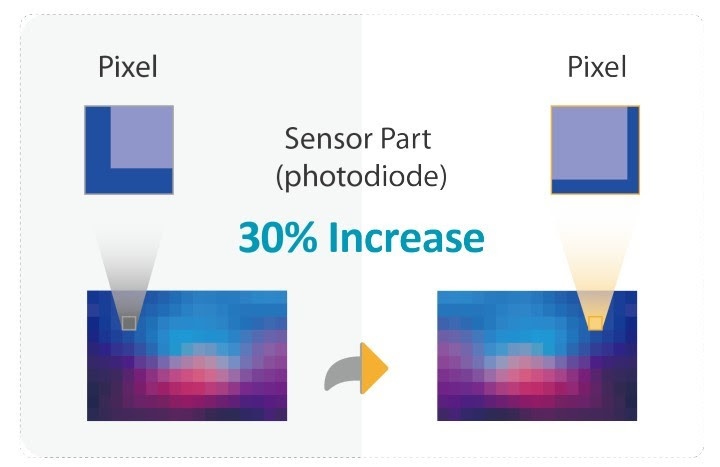
The sensor used in a camera is very important. The more light each individual pixel receives from a sensor, the better the response and sensitivity. Bottom line: the larger the pixel, the better the camera's low-light performance.
Today's Full-Color 2.0 cameras are primarily equipped with a 1/1.8" image sensor that offers 30% more photosensitivity than traditional sensors on the market. In addition, full-color 4K IPCs even have super-large 1/1.2" sensors that provide a 110% pixel size increase compared to the 1/1.8" image sensor.
Warm light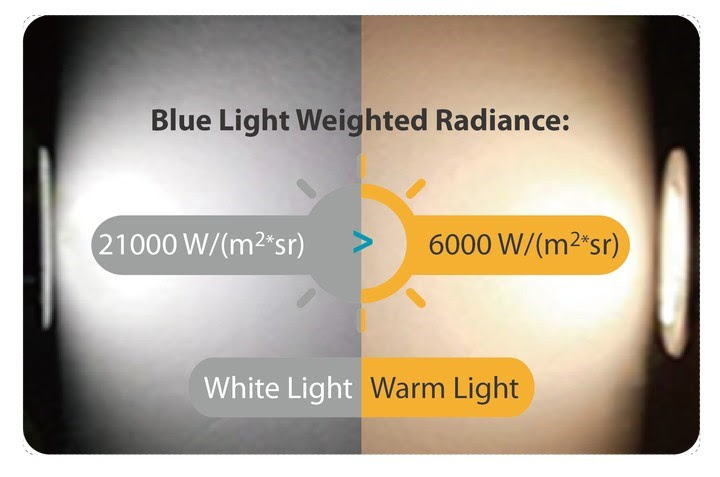
As advancement in modern devices unfolds at an accelerated pace, the potential effects of blue light content within display devices and lighting have become a topic of particular interest and concern. Several laws and regulations were established regarding this matter to promote safe lighting and avoid the "danger of blue light".
Instead of conventional white light, Dahua's full-color cameras use warm light with a blue-light-weighted glare 40% below European Union standards. This means that the extra warm light has less of an effect on human eyes and relatively helps reduce light pollution in the monitored area.
Advanced AI-based image processing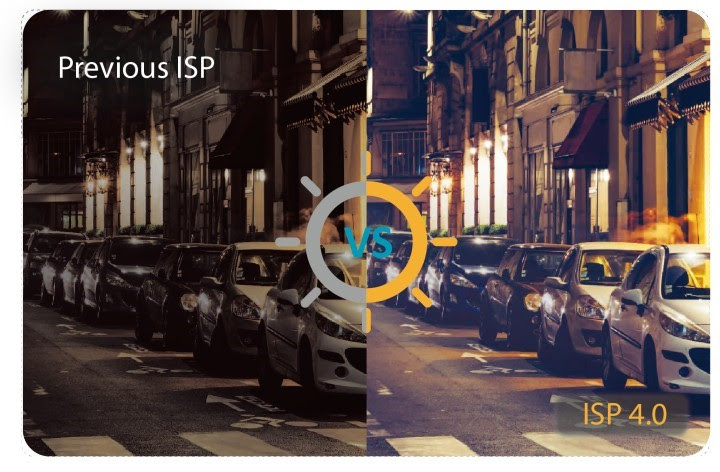
Dahua Full-color uses AI-based image signal processing (ISP) to better enhance your image output in terms of noise, color, sharpness, etc. The ability of full-color technology to capture color details in time and space comes from its powerful hardware, advanced image processing algorithms, and integration with other intelligent functions, leading to a "1+1=∞" advancement of endless possibilities.