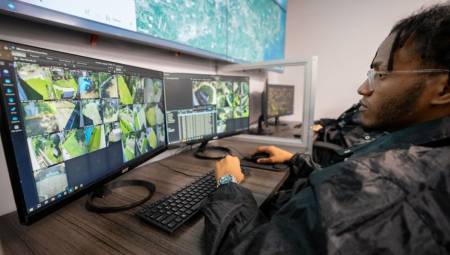
Colombia. The National University of Colombia (UNAL) headquarters Bogotá, in the company of the National Road Safety Agency (ANSV), desarrolló la primera pista de conducción automatizada de Latinoamérica, making use of barrier sensors and 12 tracking cameras.
The purpose of this track, which is supported by devices traditionally used in video surveillance, is to serve as a space to take the practical driving test for cars and motorcycles, which is a requirement to obtain the license for the first time, along with the theoretical exam.
Thus, the importance of this practical exam is that it validates the real driving skills of the candidates. Hence, this proposal for an automated and wired track allows a more rigorous record of what happens during the test.
Operation
Professor Carlos Alberto Moncada, director of the Department of Civil and Agricultural Engineering of the UNAL, as well as in charge of the project, explained:
"We have wired the entire track with cameras and barrier sensors, which are located on the sides of the road, one on each side; when a vehicle bursts the light between them produces a signal that is sent to the control center to monitor the passage of the vehicle."
That is, this interdisciplinary work that was advanced between the faculties of Engineering and Nursing, makes use of a track of more than 250 meters of section, where 12 tracking cameras, a traffic light and conventional traffic signs such as "Stop" or "Stop" are located.
The purpose of using this track is to allow the driving test to obtain the license for the first time or recategorize it, that is, modify the license category to be able to drive a different type of vehicle. This track is located at the entrance of Calle 53 of the CAMPUS of the UNAL Headquarters Bogotá, next to the parking lot of the Building of the Faculty of Biology.
In that sense, the license categories that can be obtained on this new track in Colombia will be A1 and A2 for motorcycles, B1 for light private cars and C1 for small public service cars. Leaving out categories B2, B3, C2 and C3, which correspond to heavier vehicles, as well as public service.
Test driving by car or motorcycle
The practical exam consists of two tests: the first is done on the sensorized track, which consists of three sections that vehicles must pass. While a second one is done on public roads.
In the case of the motorcycle test, the vehicle has a small camera in the front, which detects both the other vehicles and the change of lane and traffic lights; In addition to two front and rear distance sensors, a first sensor is responsible for measuring lateral support and brake use, while the other serves to monitor orientation and inclination.
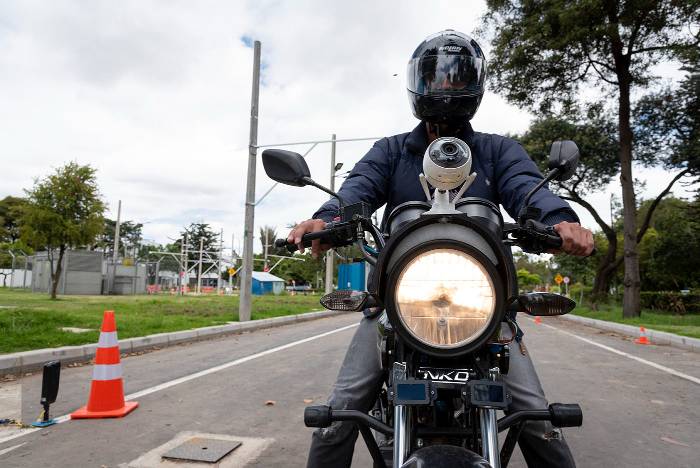
The car has the same sensors as the motorcycle, with the difference that it occupies one more camera in the front, that is, a total of two.
In the trunk of both vehicles there is a computer with all the wiring of the cameras and sensors, an aeronautical GPS, an antenna for the position and a router that allows to have a network to send the information, through Wifi network to the control center, where this information is collected and processed in the ANSV, thanks to software that averages a score based on performance and rates drivers.
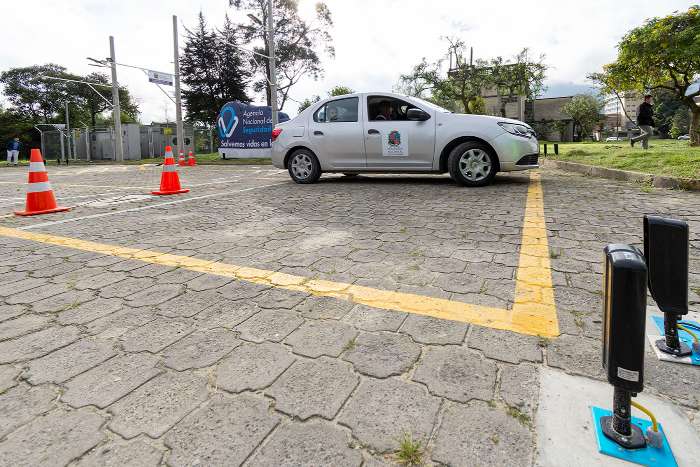
One of the tests in the car is the driving in ascent, reaction and maneuver test are also applied in front of traffic signals and traffic lights, as well as proper management of the lanes and parking. For the motorcycle it is requested to perform high-speed zigzagging, maneuvering and reaction to the signals and the road, as well as the carry test, which is to take the motorcycle walking.
"The controlled test track evaluates very basic driving skills, while the public road track qualifies the abilities to drive in everyday traffic, interacting with other drivers and facing the challenges of day to day," said Professor Moncada.
Other considerations
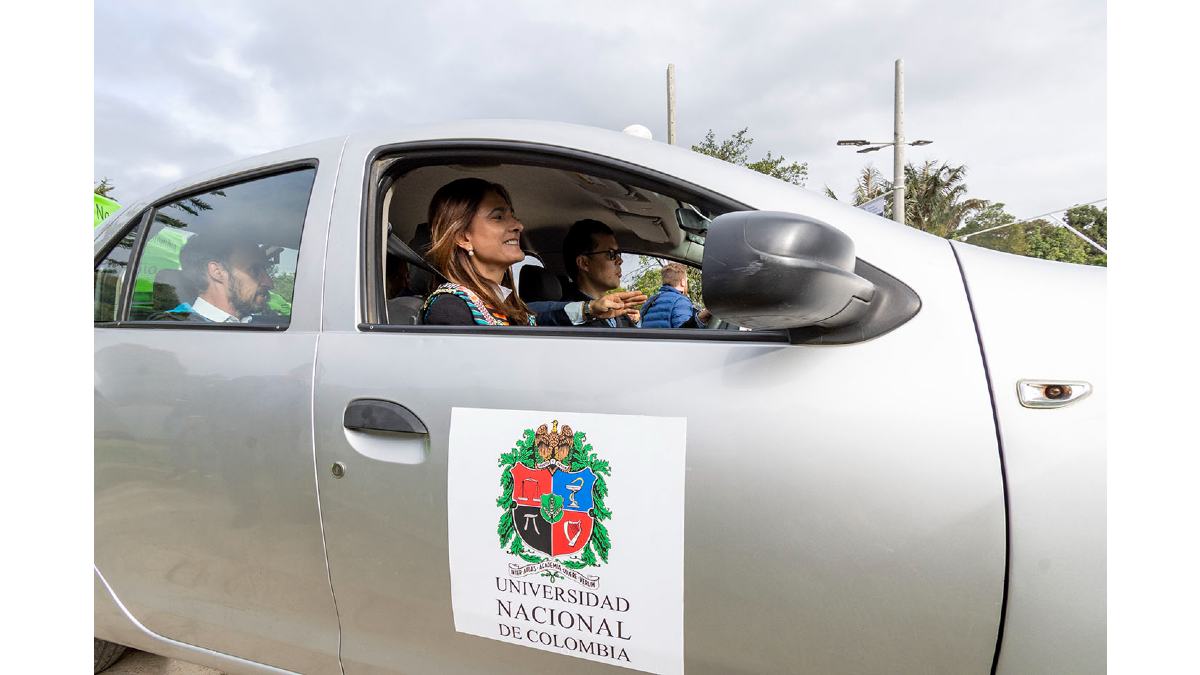
Ángela María Orozco, Minister of Transport and who was accompanying the inauguration of the track last July on the UNAL campus (in Bogotá), said: "Driving licenses, more than a right, are something that one earns and that they have a responsibility with society."
Finally, Luis Felipe Lota, director of the ASNV, gave his opinion on the implementation of technology for these tests: "The idea is that this prototype is the model of any track for driving tests in the country, which is important because in Colombia accidents are one of the main causes of death."