
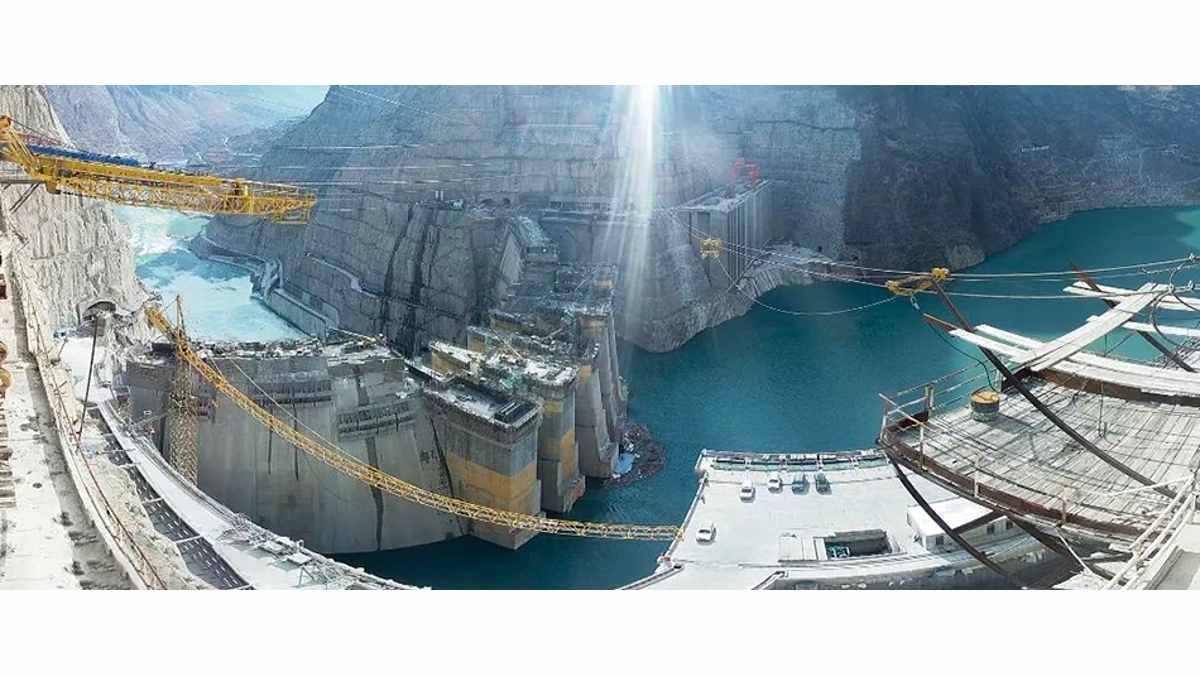
International. The Wudongde hydroelectric plant, the fourth largest in China and the seventh globally, works thanks to the fact that its thin dam was built with a special technique to avoid cracks, this process was successful thanks to the implementation of Artificial Intelligence (AI) of Dahua Technology.
This hydroelectric power plant is located on the upper stretch of the Yangtze River in the Chinese provinces of Sichuan and Yunnan. It has an estimated annual production of 38,910 million kWh and is characterized by the fact that the dam has a double curvature arch design of 300 meters, with a foundation bed of only 51.41 meters thick, making it the thinnest in the world to date. However, this thickness must withstand the water storage of the massive plant, which implied a great challenge in terms of resistance to cracking of the dam.
Construction challenges solved with AI, IoT and AR
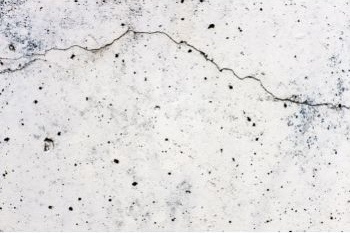
To ensure that the dam did not present cracks, a "low temperature" cement was used for the first time, which has extremely strict requirements. In addition, the station was built with a number of digital and advanced technologies, including real-time temperature monitoring, AI, Internet of Things (IoT) and Augmented Reality (AR), among others.
In that sense, the intelligent video analysis algorithm to digitize the entire process of production, transport, pouring and maintenance of concrete, was based on Dahua's AI, which provided visual control of the concrete compaction process, reducing the demolition and modification of the structure, which resulted in saving time and construction materials.
Likewise, thermal imaging technology added to black body was used to make non-contact temperature measurements, quickly and accurately, throughout the process; from the mixing plant to the storage surface of the dam. This allowed real-time monitoring of the concrete temperature and, when the maximum threshold was reached, provided early warnings, ensuring the temperature control needed to avoid cracks.
In addition, the solution adopted video and IoT detection technology, to obtain real-time data on the condition of the dam. Thanks to this, to date, quality standards, long-term safety and reliable operation are promoted. So Wudongde is known as "the smartest hydroelectric plant in the world".
AI to ensure security
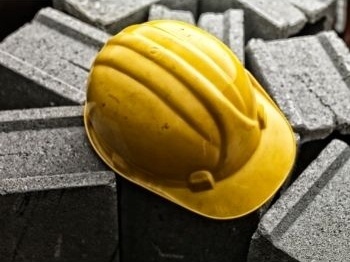
Safety was another challenge in the construction, because added to its importance in any building process, the dam was made on a high and steep rock wall of almost 90 degrees. So, using deep learning-based visual analysis technology, the solution was able to monitor operators on the high, steep slope of the dam's abutment, while keeping an eye on the storage surface. In this case, the AI provided early warnings by identifying unsafe behaviors of workers at the facility, such as lack of safety helmets or unauthorized entry into restricted areas.
Additionally, this system also offered the function of counting people on site, in order to ensure orderly and safe access for each worker, such as data support for security management.
Real-time view of the scene with the AR holographic map
It should be noted that, in this project, Dahua integrated real scenes with virtual 3D panoramas to project the expected final result versus the progress of construction. That is, the actual scene of the dam and the virtual scene of the finished dam were shown simultaneously to monitor the development of the work. This integration, together with the 3D visualization of data from multiple sources, presented every moment of the construction process of the hydroelectric plant. At the same time, through the HOLOGRAPHIC AR map, all the visual and dynamic management could be carried out, which helps to visualize the progress of the hydroelectric plant and improve management strategies.
Management with an intelligent platform
Finally, this Dahua solution broke with the traditional infrastructure management strategy, through the development of an intelligent monitoring platform based on computer vision. In this way, the system implemented in the dam offers several integrated functions with temperature control, output quality identification, site safety control and holographic detection, among others. It was also connected with the customer's smart manufacturing system, which assists in the visualization, standardization, digitization and intelligent control of the entire dam.