
 Latin America. New models of mobility and transport are emerging every day, and more and more vehicles are on the road, both in towns and cities around the world, increasing the complexity of already overloaded urban traffic systems. The effects of excessive traffic adversely affect the quality of life of inhabitants and the sustainability of cities.
The Urban Mobility Observatory report states that Latin American countries face the challenge of enhancing the human and material resources employed in the traffic management of metropolitan areas, given that most of the available resources are dedicated to control.
Meanwhile, a study conducted by the Inter-American Development Bank (IDB), indicates that road safety is today one of the great challenges of humanity: Every year 1.3 million people die from road accidents and it is estimated that another 50 million suffer physical injuries. In the Latin American and Caribbean (LAC) region, the annual rate of deaths in road accidents is 19.2 per 100,000 inhabitants, more than double that of mature economies.1
The report also reports that the use of vehicles for transportation has drastically changed people's lives. On the one hand, vehicles have represented an increase in productivity to move people and goods, while on the other hand they have generated a series of inconveniences, such as premature deaths of people due to road accidents or diseases associated with the respiratory tract. For the IDB, improving security technology accompanies the development and economic growth of all countries in the region.2
Currently around the world, authorities are starting to look for smart technologies to make people have faster and safer journeys. In the countries of Latam, stable and reliable technologies are required to have an Intelligent Transport System (ITS), with functions that alert operators and users about traffic problems in real time to take immediate measures and thus keep the tracks and the fluidity of traffic clear, which will allow the use of road networks to be safer, coordinated and intelligent.
Miguel Arrañaga, Pre-Sales Director of Hikvision, says that the company incorporates several technologies that offer scalable applications to address various transportation scenarios in Latin America, ranging from high-performance dedicated cameras for event capture to centralized video management platforms and comprehensive smart parking systems.
"The ability to identify vehicles can provide significant benefits for local authorities and a variety of other organisations. For example, you can improve the administration of entrance to schools, offices and factories, or implement congestion charging strategies in the central areas of cities. Vehicle recognition technology also supports a wide range of traffic management solutions that keep cars moving in busy urban areas, improve road safety, and accelerate responses to road traffic incidents and crimes. From now on, this technology is mainly reflected in license plate recognition and car feature recognition."
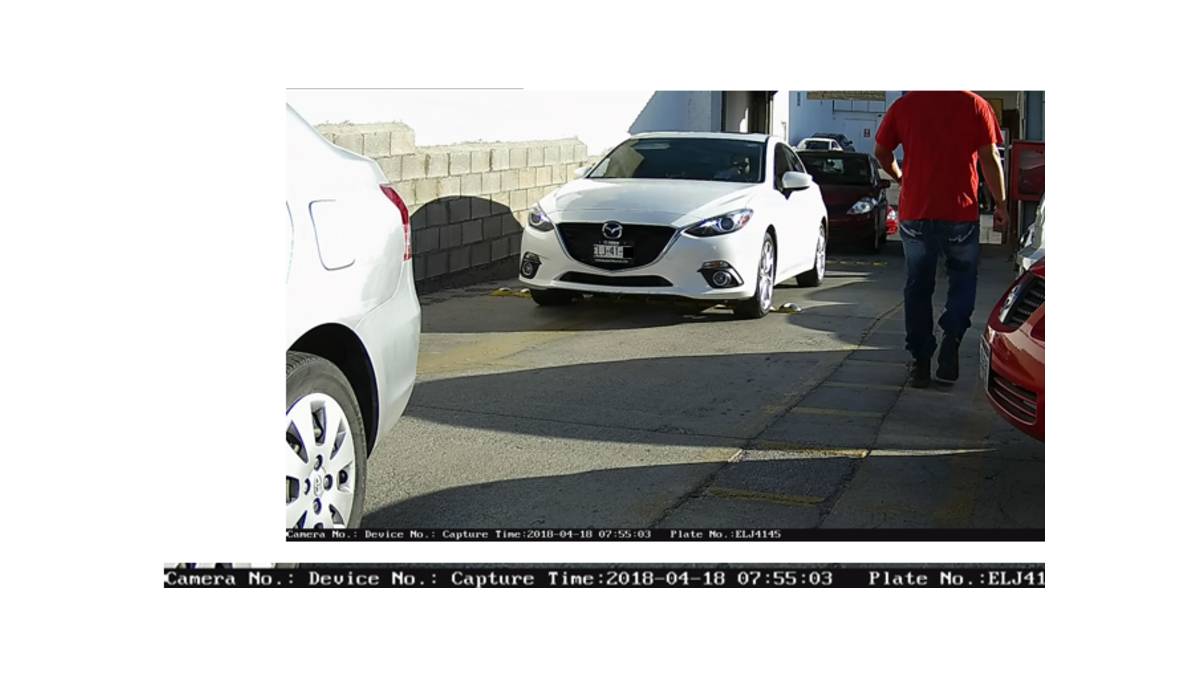
The application of Hikvision's ANPR (Automatic Number Pate Recognition) technology captures the vehicle's license plate in real time and compares it or adds it to a predefined list. Once the license plate number is recognized and stored, an appropriate action is taken, such as opening a door, adding a cost, or generating an alert. They are extremely accurate, recognizing a much larger number of car license plates and with much greater efficiency than conventional systems.
"Our Hikvision car recognition feature uses a deep learning algorithm to distinguish between small and large vehicles, with the added ability to detect make, model and color. The system can be programmed to look for anomalies such as cars traveling in designated bus lanes or vehicles that circulate without license plates, for example."
He comments that for the Latin American market they have solutions that can generate white and black list to be able to segment the input access or, associate the white list with an alarm output to be able to activate the barrier and allow access, with the blacklist we can enable some notification to the IVMS-4200/Hik-Central software. Also the cameras can be operated autonomously without the need for any special NVR, it is only necessary to place a micro SD memory to be able to load the photographs of the plates and perform the integration, through the IVMS-4200 /Hik-Central software you can obtain the information.
For more information about Hikvision products, visit http://www.hikvision.com/ES-LA/.