 International. The incidence of contact center fraud continues to grow rapidly. Gartner estimates that during 2020, 75% of organizations that engage with their customers through various channels will suffer a fraudulent attack in which the contact center will be the main entry point1.
Most contact center voice-based services are often isolated, in their organization and architecture, from other channels, such as web self-service or mobile applications, meaning they are not protected by careful fraud prevention and loss prevention measures geared toward digital channels.
The scope of these attacks is also important. According to a 2018 study by Javelin Strategy & Research:
• The number of victims of identity fraud increased by 8%, reaching 16.7 million consumers in the U.S.
• Scammers garnered 1.3 million more victims in 2017, stealing $16.8 billion from consumers.
• Account appropriation tripled last year, accounting for $5.1 billion in losses.
• Victims paid an average of $290 out of pocket and spent 15 hours of their time fixing these incidents.
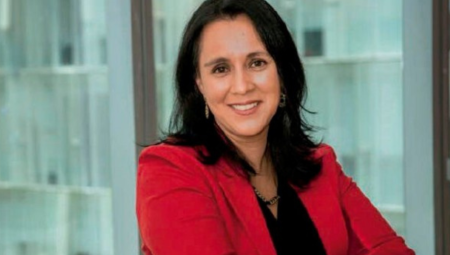
Carlos Vazquez, Nuance Communications' Regional Sales Manager for Latin America, says scammers, like customers, take advantage of various channels using a variety of phones and digital devices. They simply tend to cycle through them much more often than legitimate customers, as they try to evade legacy fraud prevention techniques.
He explains that as with authentication, a biometric approach to fraud prevention makes it possible to identify fraudsters forever, no matter what device they use, where they are located, or what channel they use. He adds that biometrics-based fraud prevention reduces scam losses more than any other approach, but also provides the ability to address the problem by driving the arrest, prosecution, and incarceration of fraudsters.
To strike the balance between customer experience and the need for security, industry experts are increasingly using voice biometrics as an important strategy for verifying identity in numerous security applications.
"Biometrics can play a key role in the contact center and across multiple interaction channels through authentication and fraud prevention. Start with the voice. When the alleged account holder calls the contact center, a biometric system compares their voice to the saved "voiceprint" in order to confirm that the caller is who they say they are. There is no need to provide more information or answer verification questions, so the process is fast and secure. This allows the sales agent to continue with confidence and offer a fully personalized customer experience.
He mentions that the firm has the Nuance Security Suite tool, which is used by security agencies worldwide to solve the problem of fraud. This solution offers extensive authentication and fraud prevention in the digital and voice channels; provides two biometric factors for the voice channel; it delivers three credentials for the voice channel, and is the only solution that uses third-generation deep neural networks to support its algorithms.
"All of these aforementioned capabilities lead to the best authentication, automation, and fraudster identification success rates. Behind the advantages of this technology, Nuance Security Suite is also the only solution that led to the successful arrest, prosecution and imprisonment of fraudsters, and is the solution that became the standard for law enforcement and public safety agencies."
He adds that they also have Nuance Gatekeeper, the most advanced biometrics solution on the market to authenticate customers and detect fraud. Available as a fully scalable cloud service, it allows businesses to confirm the identity of customers and detect potential fraudsters through digital and voice channels.
Carlos Vázquez gave a talk entitled Fraud in the Contact Center and digital channels, where he explained how contact centers have become what Gartner calls "the epicenters of vulnerability in many organizations", during the twenty-fourth edition of the Global ContactForum 2020, recently organized by the Mexican Institute of Teleservices (IMT).
Fountain:
1.- Phillips, Tricia and Care, Jonathan. (March 2, 2017). Don't Let the Contact Center Be Your 'Achines Heel' of Fraud Prevention. Gartner.