 International. As the first commercial deployments of 5G begin to appear, the stage is set for consumers to finally discover what the powerful promises of next-generation mobile standards can bring: an ambitious and far-reaching technological breakthrough that transforms virtually every aspect of human activity. How we experience life, do business, create goods, and build societies.
In its latest companion article, "The Promise and Potential of 5G," enterprise information provider IHS Markit explores the opportunities and challenges surrounding the upcoming global launch of new 5G wireless networks.
Undoubtedly, 5G is helping to set the stage for incredible change, but it remains a confusing landscape, with varied and sometimes conflicting interpretations of what 5G is and what to expect from it. This confusion is affecting not only consumers, but also complicating the industry's ability to measure itself against a standard set of 5G expectations and requirements.
To optimize 5G adoption in the short and long term, it is imperative that clarity is established regarding what 5G is and when each capacity will be available to both consumers and the ecosystem. To that end, IHS Markit follows the official 3GPP definition of 5G, but also believes that this description should be understood within the context of everyday experience and concepts.
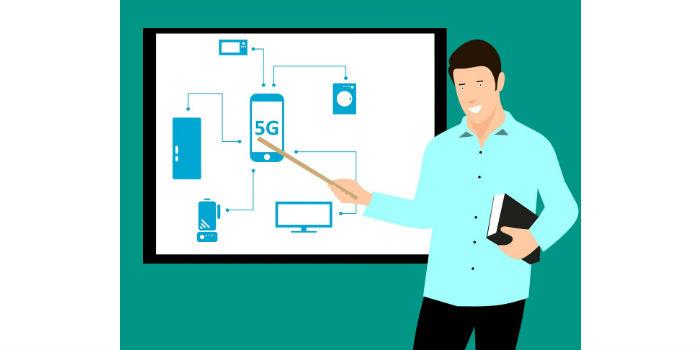
According to the whitepaper, 5G will enhance existing services and enable new use cases, such as driverless cars, immersive entertainment, lag-free virtual reality, seamless video, and latency-free gaming. On the industrial front, 5G will be key to expanding and realizing the full promise of the Internet of Things (IoT), with the impact of technology on smart homes, smart cities and smart industries.
"The market implicitly understands that 5G represents an unprecedented growth opportunity, with the initial launch of the smartphone set to generate record shipping volumes," said Francis Sideco, vice president of technology at IHS Markit. "However, fewer people understand the iterative nature of major technological developments like the one we are going through now with 5G, a process that involves multiple major upgrades that will add new capabilities in the coming years." Each of these updates has the potential to significantly disrupt the competitive dynamics of the market, it is critical for companies to clearly understand the implications of each launch or risk of falling behind the competition."
After initial sales of 37 million first-generation 5G smartphones this year, with initial shipments just beginning, global shipments will rise to 120 million devices in 2020, according to IHS Markit. This launch will be the fastest of all time for a new wireless generation, generating six times more unit shipments than the previous LTE registration holder, in a similar time period. Leveraging strong industry momentum and alignment, global 5G smartphone shipments will continue to increase in the coming years, reaching more than 525 million devices in 2023. "Despite the strong growth, the level of success among individual competitors in the infrastructure and smartphone market will depend on their ability to change their business strategies in parallel with the evolution of 5G," Sideco said.
New 5G technical standards will eventually enable the creation of applications that could open up new opportunities, inform new business models, and transform the daily lives of multiple industries and billions of users around the world. However, many of these capabilities will not be available in initial 5G launches, but will arrive in later versions of the standard that will be implemented in the coming years. Each of the launches will offer new challenges and opportunities not only for the wireless industry, but also for each industry for which the new use cases are envisaged. To take full advantage of the potential of these opportunities, competitors will need to understand and take advantage of new capabilities even before they fully present themselves.
The next version of the 5G standard is already on the horizon, with the planned introduction of version 16 at the end of 2019. The next release will offer highly desirable improvements, including much higher reliability and maximum data rates of 20 gigabits per second (Gbps) downlink and 10 Gbps uplink. "This next phase of deployment and deployment will start a race among mobile network operators to meet and take advantage of these performance improvements," Sideco said. "The winners of this race are likely to gain a competitive advantage as they prepare for the next wave of growth."
Future revisions will generate similar competitive battles, as 5G adds important new capabilities and expands into other markets beyond mobile communications, such as mission-critical applications and massive Internet of Things (IoT) deployments. "For companies along the technology supply chain, from network operators, to smartphone brands, industrial and automotive device manufacturers, and electronics suppliers, it will be increasingly important to understand the changes that occur in each phase of 5G deployment and be ready to capitalize on the latest capabilities to gain a competitive advantage, " Sideco said.
To learn more about managing the complexities of the 5G era, download the free document, "The Promise and Potential of 5G."
Source: IHS Markit.