
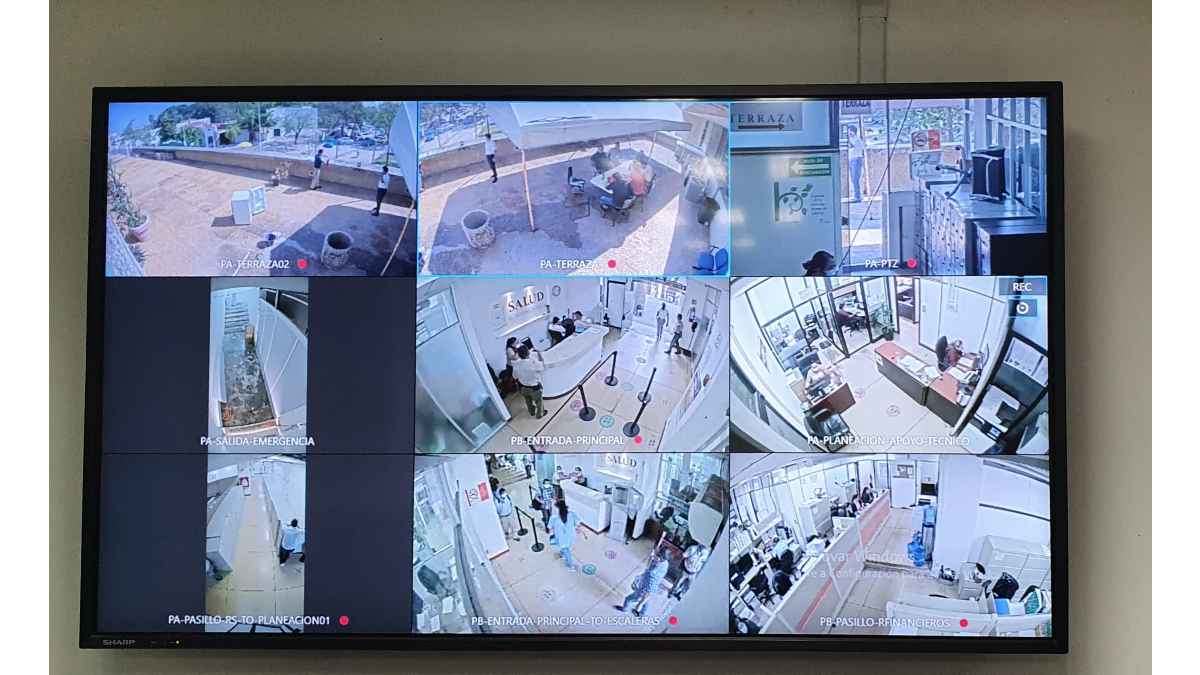
Mexico. The Ministry of Health of the state of Tabasco, whose headquarters include more than 1,200 administrative workers and receives hundreds of visitors daily, had to add to the challenge of guaranteeing biosecurity the updating of its video surveillance systems.
Indeed, the security of spaces, employees and users who enter by diligence is a priority, even more so if the importance of documents, physical and virtual, that this secretary must manage is added to the volume of people. To understand its operational relevance, it is important to note that it is in charge of 625 medical units, which include community hospitals, health centers, general and specialty clinics. Additionally, it is composed of 17 divisions, where each is responsible for governing the jurisdictions of the health sector in each municipality of Tabasco, in Mexico.
The challenge in the Ministry of Health
Due to the high workflow in the building, which stands out for the critical component of the health management of the citizens, the renovation of the video surveillance system could not interrupt the continuity of the operation. In the same way, the control of the flow of people and a reliable record of contact information had to be guaranteed, which in addition to the security data, would allow to report and monitor possible cases of Covid-19 contagion. Meanwhile, the existing CCTV system was analog, so it did not provide quality images or search options.
A tailor-made solution
The company Radikal Systems, together with the experts and products of Axis Communications, responded to these needs by choosing a camera system with IP standards that allows to identify risks in a timely manner to act in advance. Prior to installation, key points were identified where the cameras could take full advantage of their technical characteristics, in order to achieve uninterrupted monitoring regardless of light conditions.
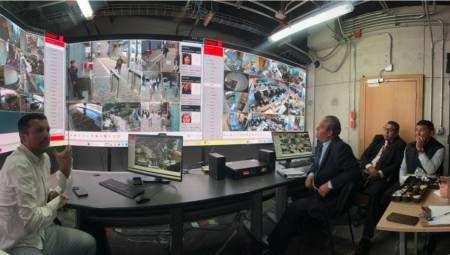
The solution included 24 axis M-line network cameras and AXIS Camera Station video management software, which came in to replace. This change optimized resources and generated a reduction in the number of devices used, since previously there were 60 analog cameras, but these did not provide efficient monitoring.
Jesús Santiago Sánchez, director of the Technological Projects Area of the Ministry of Health, said that "the new system has a broader vision, since it allows us to zoom in with greater definition of the images and cover a larger area of the facilities with fewer devices, which gives us the possibility of seeing more tangible the result of the investment that has been made".
Finally, this renovation, which has better coverage and optimal image quality, gives the secretariat the ability to track the flow of people inside and outside the building, ease of intelligently tracking stored video information reducing investigation times, as well as identifying and preventing incidents.