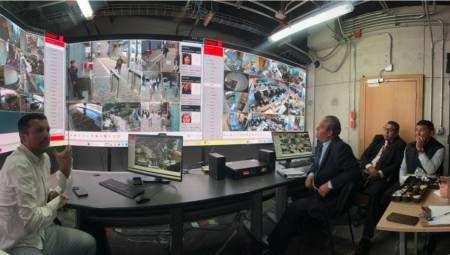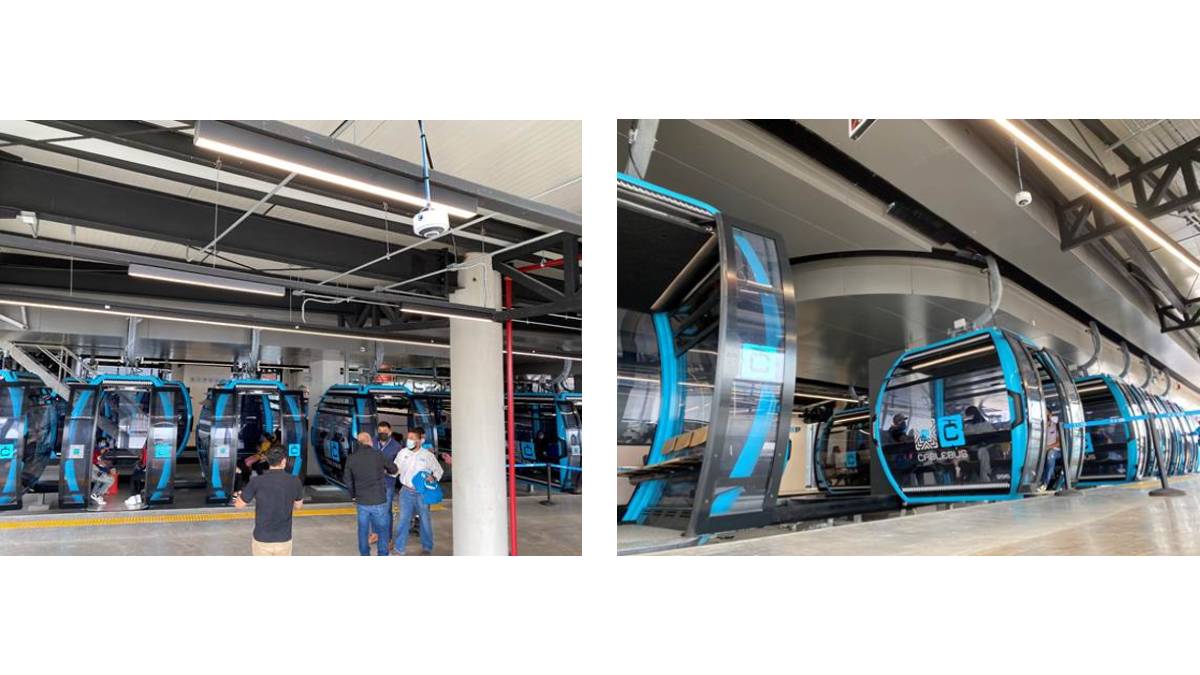
Mexico. Uniview implemented a system to protect the Cablebús, a cable car type transport aimed at improving mobility to and from the periphery areas in Mexico City.
The Cablebus is a project with a social and technological nature, as it meets the travel needs of various areas with high population density, reducing travel times and integrating with various lines of other systems, such as trolleybus and light rail.
Due to the great scope of the services it provides, the mobility of around 144,000 users a day, this system demands a large installed capacity of video recording, to protect the safety of citizens at all times. Such real-time multichannel monitoring obviously requires a professional system to ensure the accuracy and fluidity of the operation.
Key points of the solution implemented by Uniview
In view of the large areas that occupy the entrance and Lobby of each Cablebus station, Uniview saw the need for a system that avoided blind spots. Additionally, it took into account a wide range of adaptability to temperatures, since the cable car is exposed to weather conditions.
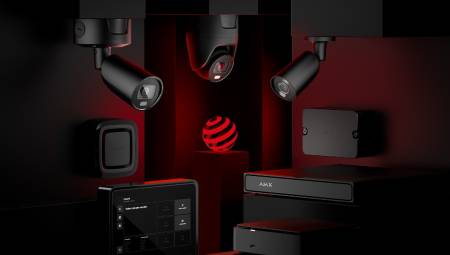
To meet both needs, the panoramic fisheye dome camera 4K VNU IPC868ER-VF18-B was installed. The advantage of this choice is that it offers a 360-degree ultra-wide-angle lens, as well as adaptability to a wide range of temperatures, as it operates from below 31° F to more than 140° F.
Likewise, this panoramic camera has a 1.8 mm lens and a resolution of 12 megapixels. Moreover, it is equipped with MicroSD card slot for onboard recording, so it can be used as redundant video storage to have data saved in case of losing the network connection, once the data is restored it is transferred to the NVR.
Now, for the management of surveillance applications Uniview installed the UNV Unicorn video management server. This decision is due to the volume of work and number of cameras, as this VMS can handle up to 2,000 IP camera connections and 1,000 devices.
Background and perspectives of the Cablebus
This massive mobility project began its construction with line 1, on September 12, 2019. Line that has 377 cabins and 9.4 kilometers of travel, through 6 stations. Which was inaugurated on July 11, 2021.
Line 2 began construction on January 14, 2020; It has 305 cabins and 10.6 kilometers of travel. Its official opening was on Sunday, August 8, 2021.
On the other hand, to better size the service offered by the Cablebus it is relevant to take into account the capacity and comfort offered by the cabins: each one transports a maximum of 10 people, all in an individual seat because it is required that no one goes standing; support a maximum weight of 1,800 kilograms; They are designed with acoustic ceiling, ventilation system and offer Wifi connection, in addition to having internal and external lighting.
To conclude, we wish to emphasize that this is a project that will continue to grow, since a route for the future line 3 has already been planned by the Government of Mexico City. Which would be 5 kilometers long and 4 stations in the Chapultepec area. According to official media in the region, it is expected to start construction in the coming months and may be ready by the end of 2023.