
 Latin America. The return to normality will require industries to adapt to the new health control regulations, this challenge must be accompanied by new safety strategies for both workers, customers and suppliers.
However, despite the measures that governments are taking to rejoin activities, each business, school, hospital, or in any sector, the incorporation of intelligent video technologies must be considered as part of these initiatives, since these solutions will be positioned with a new paradigm to resume their activities. That is, in the face of the global panorama, it will be impossible to imagine facilities that do not have the technological support that allow to make the facilities more efficient and, on the other hand, that help society to guarantee compliance with the rules to be followed in the face of the new social dynamics.
"We know that the countries of Latin America, for the most part, have established traffic lights of reintegration into daily life. However, this important challenge is not the total responsibility of governments, as the global context has revealed a transcendental opportunity for all sectors to seek to renew the way they develop their processes, and this is where network video technology has a significant impact, as the solutions are designed and developed to adapt to the changes that the world is demanding, " commented Mauricio Swain, Business Development Manager for Axis in Latin America.
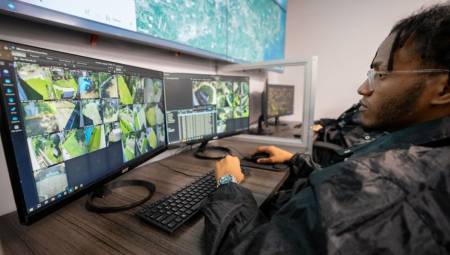
A very clear example of this is the health sector, the current situation showed the need to care for the sick 24 hours a day without physical contact to minimize risks. Network video technologies have been able to help solve this need in hospitals, where solutions have been integrated in the rooms to remotely monitor people from a control room, this has also been able to respond to the shortage of medical personnel and the high number of patients. The venues have benefited because they continuously monitor users and have added value to their services, mainly by:
- Care for patients who need intensive care.
- Live images and two-way communication to intercom systems with nurses.
- Replacement of face-to-face caregivers by virtual surveillance.
- Improved incident detection.
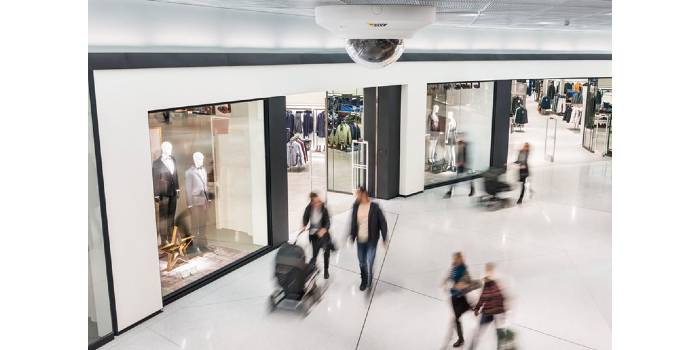
But these benefits are not only limited to the health sector, another great opportunity can be found in retailers. For example, a shopping center is visited by thousands of people a year, projections in Latin America for 2025 position Mexico as the leading country in the construction of these projects, followed by Colombia, Peru and Chile. Being one of the sectors most affected by the situation, due to the confinement, it is also one of those that can find the most opportunity to go ahead, renovate their facilities, optimize processes and improve safety for visitors, guaranteeing a safe return for all.
Intelligent video surveillance solutions are able to adapt to the guidelines of each region in order to reinforce health protocols, for example, to address the public in various areas, by detecting a large number of people inside. The solution allows you to send alert messages to invite you to maintain a predetermined distance, which will undoubtedly improve security inside.
Network video and audio cameras with intelligent analytics also allow the detection of symptoms such as coughing, since they act by identifying the sound that individuals emit when coughing, this will allow to have a control of those who can present these signals and attend to them in a timely manner, as well as the possibility of minimizing the spread of diseases.
"Network video surveillance has scaled over the years and its impact on the world has been so significant that several companies have maximized the possibilities of IP video. Given the future presented by the current situation, it is necessary to have a vision of technology and see it as an important link in the generation of strategies to mitigate the present risks and take a step beyond future needs, not only in health issues or retail, but in the entire amalgam of sectors that make up our society. We seek to join forces between governments and companies hand in hand with technology to ensure a safe return to our activities," concluded Mauricio Swain, Business Development Manager for Axis in Latin America.