 International. Information acquired by Finbold shows that one in five in the critical communications industry had encountered a cybersecurity incident in the past 12 months. In addition, only 36% of them regularly test their cybersecurity systems, and 4.5% confirm that they have a full-time ethical hacker on staff.
The International Wireless Communications Expo (IWCE) surveyed at least 597 professionals working within the critical communication industry to evaluate current technologies. This survey also reviewed technological challenges within the industry.
Interestingly, one in five said they don't have any kind of cybersecurity system in place.
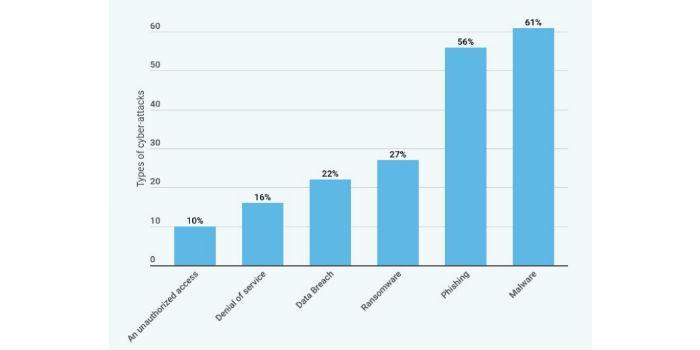
Through this survey, it was found that 61% of participants had encountered malware attacks, while 56% had been victims of phishing. 27% have dealt with ransomware, 22% have had data breaches, while 16% have distributed denial of service.
10% reported that they have advanced threats. In such threats, unauthorized users access and spend a lot of time on your system or network undetected.
Cyber attacks disrupt normal operations and services. They also have financial implications for repairing them. 38% costs less than $100K, 10% costs between $100K and $1,000,000, while 2% costs $1 million - $10 million.
Many companies are implementing data protection and cybersecurity agreements with third-party vendors. They do this from attacks and their implications can come through third parties.
64% of participants said they have third-party cybersecurity agreements with their vendors. On the other hand, 36% said they don't have any cybersecurity for vendors.
44% of critical communications reported using their devices for work. In that context, Stephanie McCall, director of shows at IWCE said:
"While cybersecurity incidents affect every industry in the world, an attack within the critical communications ecosystem, which includes police, fire and emergency services, has the potential to affect people's lives. As hacks become more frequent and sophisticated, any organization working within the ecosystem must have the most sophisticated cybersecurity systems in place to avoid disruption to their crucial services."
As the world moves into the era of smartphones, many organizations now require or allow their staff to use their devices for work. But, this strategy comes with many security and privacy challenges as personal devices have personal and private company information.
Source: Finbold.