

 Latin America. Have you ever heard of 'Fresnel Reflection'? If you've looked out the window at night from a well-lit room, you've observed it. This happens when, for example, being dark outside you can clearly see the reflection in a window because the light travels from one medium to another, in addition to reflecting part of the light that falls on the boundary of the medium.
The amount of reflected light depends on the difference in the refractive index of the two materials, so the Fresnel reflection will not be as noticeable during the day, since the reflected light is much less than the sunlight from outside. The same is usually true for fiber optics and connectors
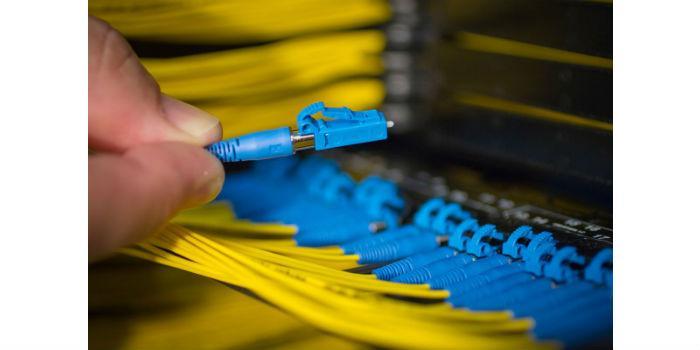
"There are currently two common types of fiber connectors: ultra-physical contact connectors (UPC) and angled physical contact connectors (APCs). Both will have two optical fibers in physical contact with each other to allow for a low-loss connection," said Earl Parsons, Principal Optical Engineer - Fiber Systems and Standards group at CommScope. "In this case, Fresnel's reflections have implications as to which connector to choose to meet your system requirements, depending on your requirements."
UPC connectors are typically of a lower cost, have fewer connection losses, and are commonly used to connect transceivers. However, some transmitters and receivers are designed to use APC connectors. This happens because in certain systems the light reflected back to the transmitter can degrade the optical signal and consequently decrease the overall performance of the system.
An example of this is when the light reflected in the cavity of the transmitting laser can cause the laser to become unstable and distort the data signal. In addition, the reflected light can introduce multi-path interference that cannot be distinguished from the original signal, increasing noise and reducing system performance.
The connector interface at an 8-degree angle on the APC connectors redirects the reflected light out of the fiber, rather than back to the transmitter. Some systems may benefit from reduced reflections, such as those using analog signals or high-power amplifiers, but many other LAN systems are less sensitive to reflected power and may use UPC connectors.
"The choice between UPC ultra-physical contact connectors and APC angled physical contact connectors is an important engineering decision, as this will depend on being able to ensure better performance of your optical network, while meeting application and system requirements," concluded Earl Parsons, Principal Optical Engineer - Fiber Systems and Standards group at CommScope.