Select your language

NFPA Report on Assessment of Building Occupant Reaction to Fire Alarms

International. The NFPA shared an analysisb on assessing the reaction of building occupants to fire alarms: Phase 1. The study includes background of the project, introduction, poor response to alarms, signal recognition, use of mobile technology, selection of stimuli, analysis of deficiencies and their conclusions.

The NFPA Research Foundation's Detection and Alarm Research Council highlighted people who do not respond to alarms in buildings as a high priority at its 2016 research planning meeting. The following questions were proposed to be answered by the research: Why don't people respond to alarms? Is the signal recognizable? How do the different types of voice alerts/warnings compare? How can we take better advantage of mobile technology? Are we using the right stimulus to notify occupants in the event of an emergency in a building?

The overall objective of the project is to develop a guide for best practices on emergency notification of occupants in buildings.

This part of Phase 1 of the overall project collected information from available materials relevant to the topic and identified gaps that lead to the need for further research. Previous research has focused on the ability of auditory signals to effectively convey information to people. This includes determining the effectiveness of the T-3 signal, as well as identifying the information needs of people receiving voice messages. The effectiveness of signals that point to other directions or are based on systems other than those permanently installed in the building have not been studied in detail.

- Publicidad -

Current fire alarm system design practices may be inadequate to trigger the human behaviors needed to accelerate an immediate response to the situation. Properly designed voice messages can lead to better response, but they still have limitations. An occupant of the building will make a decision when they feel they have received all the information they will need. This process can be instantaneous from the start of a T-3 alarm or it may require time for a person to collect and process more information.

The number of factors that affect the speed of decision-making varies greatly from occupation to occupation and from person to person. More research is needed to determine the most effective ways to deliver information that will lead to a rapid evacuation. A technological breakthrough is also needed to develop notification systems that effectively communicate relevant information to each occupant. New and different strategies that lead to the evacuation of people in an earlier and more efficient manner should be investigated.

The report can be viewed by clicking here.

Duván Chaverra Agudelo
Duván Chaverra AgudeloEmail: [email protected]
Editor Jefe
Jefe Editorial en Latin Press, Inc,. Comunicador Social y Periodista con experiencia de más de 13 años en medios de comunicación. Apasionado por la tecnología.

No comments

• If you're already registered, please log in first. Your email will not be published.

Leave your comment

In reply to Some User
Investing in Access Controllers: Why Eliminating Them Can Be a Strategic Mistake

Investing in Access Controllers: Why Eliminating Them Can Be a Strategic Mistake

Thanks to technological evolution, today there are smart readers with the capacity to process credentials, store information and even operate locks autonomously. This has led many organizations to...

Case study: How did a retail chain in Costa Rica reduce fraud by 18%?

Case study: How did a retail chain in Costa Rica reduce fraud by 18%?

Almacenes El Rey is a rapidly expanding department store, with 18 branches nationwide and more than one million customers each year. Thanks to the Avigilon Unity Video solution, the retail chain...

Is storing video no longer enough? Milestone's Sales Director for Latam speaks

Is storing video no longer enough? Milestone's Sales Director for Latam speaks

Latin America. Johana Arias, an executive at Milestone Systems, discusses how the integration of AI, natural language, and open platforms are transforming video into actionable insights for...

Anti-intrusion system described as one of Ajax's largest in South America

Anti-intrusion system described as one of Ajax's largest in South America

Argentina. The Bayron company installed a protection system with more than 85 Ajax wireless devices in the new branch of Autos del Sur S.A., Toyota's official dealership in the country.

Interview with Manuel Carlos, Senior Sales Director for Mexico at Hanwha Vision

Interview with Manuel Carlos, Senior Sales Director for Mexico at Hanwha Vision

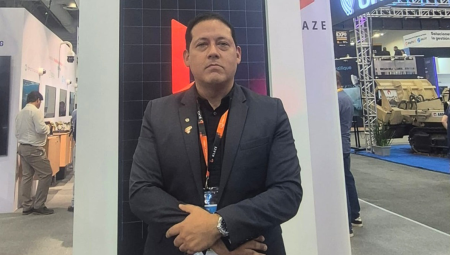
Mexico. Manuel Carlos, an executive at Hanwha Vision, details how the company is revolutionizing electronic security by consolidating generative artificial intelligence and processing at the edge.

Prosegur presents new capabilities in cybersecurity and automation

Prosegur presents new capabilities in cybersecurity and automation

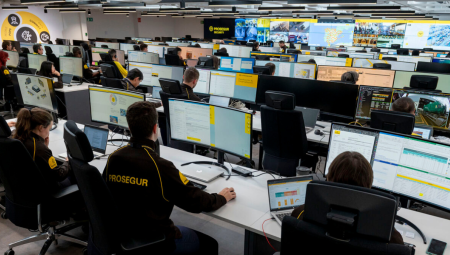
International. Prosegur Security has created two new modules, xCope and xEcute, which aim to provide companies and organizations with a new corporate digital surveillance service and another for...

Access and video platform

Access and video platform

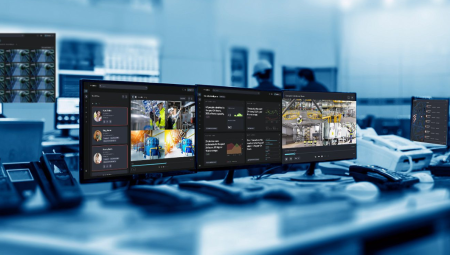
Johnson Controls Designed to take the complexity out of legacy systems, the latest version of C•CURE IQ helps organizations achieve faster response, simplify workflows, and turn safety data into...

SIA presents the new directives of its International Relations Committee

SIA presents the new directives of its International Relations Committee

Latin America. Mariana Ramírez is the new president of the International Relations Committee of the Security Industry Association (SIA), while Vanesa Cabral assumed the role of vice president.

Access management and security in stadiums during the World Cup

Access management and security in stadiums during the World Cup

International. With the World Cup underway, stadium operation and the management of credentials and critical assets become key factors in ensuring security in high-demand environments.

Jovicard modernizes its headquarters with HID access control technology

Jovicard modernizes its headquarters with HID access control technology

Brazil. Jovicard, which specializes in physical access control, secure identity, biometrics and integrated electronic security, completed the modernization of its corporate headquarters with trusted...

Suscribase Gratis
Remember Me
SUBSCRIBE TO OUR ENGLISH NEWSLETTER
DO YOU NEED A SERVICE OR PRODUCT QUOTE?
LATEST INTERVIEWS
SITE SPONSORS


LATEST NEWSLETTER
Latest Newsletter