

 International. According to IHS Market, it is estimated that there are more than 60 million security cameras in the United States, and other reports say that these cameras capture more than four billion hours per week.
Over the past decade, IP camera technology has dominated the conversation as it has provided users with a wide offering of enhanced image quality and features. With a large percentage of existing security systems relying on analog technology, many end users looking for high-definition (HD) video quality have been forced to perform a complete system overhaul.
Infrastructure Review for HD Video
To make the switch, customers would have to change everything from cameras to hardware to wiring, not to mention the lengthy installation process that would follow. IP cameras also require higher internet speeds and more cloud space. Whether it's budget, bandwidth or storage, many end users have not been able to adopt this new method of video surveillance.
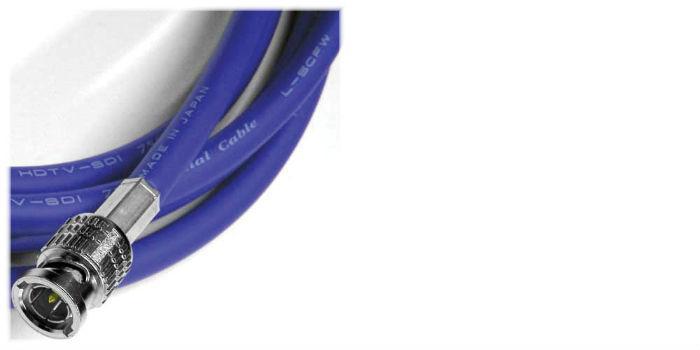
Thanks to technological advances within the security industry, HD over Coax offers a viable solution for both integrators and end users. Using current coaxial cables, this offering produces high-definition video, while requiring minimal infrastructure changes and is an optimal surveillance option for security customers. In addition, with new advances and updates being made frequently to this technology, there is a solution for every security need.
The improved HD alternative over Coax has been very well received in the security industry, thanks to its simple solutions and constantly evolving features. Many new analog HD cameras are plug and play, capable of connecting directly to existing coaxial cables. This eliminates the need for a complete system overhaul, creating cost savings for the end user and an improved video quality offering.
Easy Solutions for HD Video
As a result, integrators can cost-effectively upgrade their customers' surveillance solution while using their legacy infrastructure, making it an attractive option for end users and an easy sell for dealers.
Video latency is another common issue with network-based camera systems, where even the slightest delay in video surveillance can hinder the security response. Coax cameras are always expanding and evolving to meet a wide range of security needs. With the introduction of fisheye and multi-sensor cameras, users now have a multitude of coverage options, not to mention the introduction of 4K resolution options at the same level as IP. Some newer technologies are touting 4K cameras paired with 4K digital video recorders (DVRs) made specifically for analog systems.
Longer cables provide up to 1600 feet of transmission, twice the distance of standard analog solutions and triple the distance of IP systems. This unique cable is capable of transmitting both high-definition video and audio.
Recently, streaming-quality audio over Coax has been available in limited models, a substantial improvement over previous analog technology, which was unable to transmit audio.
Latency
Video latency is another common problem with network-based camera systems. Even the slightest delay in video surveillance can hinder the security response. IP cameras are forced to compress and package their videos for streaming. The result of this is a reduced number of images per video, which in turn causes delay.
HD over Coax, on the other hand, offers an unlimited amount of real-time HD images, with smooth movement and impressive clarity. In addition, peer-to-peer streaming offers uncompressed video without delays.
Another touted advantage is that, unlike IP network cameras, analog systems provide more secure video transmission. With so much sensitive information hosted on a network of businesses, adding another access point to the network via an IP camera can create concerns about cybersecurity risks.