
 International. As Jimmy Dearing, an analyst at IHS Markit, reveals in a recent report, access control will continue to play a huge role in the industry through deeper integrations with video surveillance, business processes and the IoT.
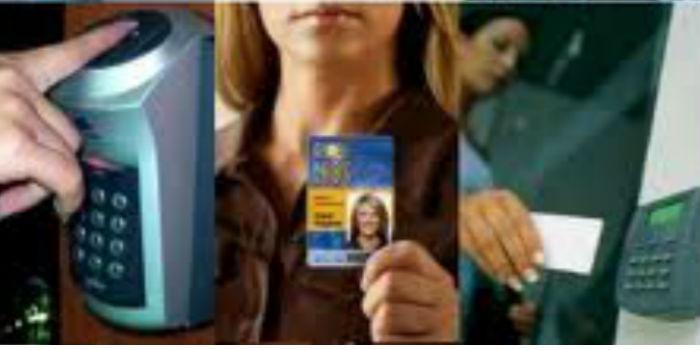
Similarly, the report highlights that mobile credentials and biometrics will be two of the top hardware trends to watch along with logical/physical integrations and remote services, such as Access-control-as-a-service (AcaaS).
Dearing also reveals that approximately 4.5 million credentials were downloaded in 2016. This figure is expected to triple to around 13.5 million in 2017.
Market sentiment believes that, as in other industries, mobile credentials in access control is not only a strong value proposition in itself, but mobile credentials also have the ability to unlock a more integrated and better value system for the end user while allowing providers new avenues of services that can boost current revenues in the future.
In addition, the report published by IHS Markit, states that mobile credentials are not competing against the traditional physical card at the moment and therefore have a potential market equal to that of smart cards.
As far as electronic locks are concerned, Jimmy Dearin's report estimates that growth in emerging countries worldwide will expand by around 9%. Eastern Europe and Africa will lead this section, and the other regions will have an estimated growth of 17% in 2017.
The report also highlights that facial recognition will become the second most popular type of biometric reader. Although fingerprinting will remain the industry standard for biometrics, facial recognition and iris recognition are currently battling for the title of the second most widely used type.
IHS Markit predicts a growing interest in facial recognition over iris recognition. Iris recognition is more accurate and more suitable for its specialized function, but facial recognition is easier to install and has no (unsubstantiated) health concerns.
The market for facial recognition is projected to grow rapidly over the next five years. Although it will not exceed the recognition of the iris of revenue or shipments, although it will have a considerable boost in these segments.
On the other hand, and although China's impact on access control has been much less profound compared to video surveillance, the IHS Markit report estimates that China will begin to have more influence on trends through APAC, as well as the global access control market from 2017.
In China, new factories emerge apparently every month. Each new factory is willing to establish itself in terms of market share and, as a consequence, enters with very competitive prices.
AliExpress and the growing number of English-language freight forwarding companies in Guangdong will also make it easier than ever for Western distributors and integrators to purchase products directly from these factories.
Finally, the report highlights that deliveries of global IP-enabled access controller units will grow at twice the rate of other panel variants in 2017.
The growth of the IP-based dashboard market reflects increased use of web-based and online product-based panels.
As PC-based access control systems move their infrastructures associated with mobile platforms, they are likely to follow the example above.