

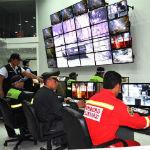
 Peru. The Executive Branch established the mandatory installation of video surveillance cameras in public domain property, public passenger transport service vehicles and commercial establishments open to the public with a capacity of 50 people or more.
The respective legislative decree, published today in the Legal Norms section of the Official Gazette El Peruano, specifies that the use of these cameras is intended to serve as an instrument of citizen surveillance, for the prevention of violence and crime, as well as the control and prosecution of crime or misdemeanor.
When referring to public property, the standard includes beaches, squares, parks, road infrastructure, railways, roads, government and institutional headquarters, schools, hospitals, stadiums, affected assets in use for national defense, prisons, cultural spaces, cemeteries, ports, airports and others.
Natural or legal persons, public or private, who administer such public property must install the cameras with the technical standards established in the regulations of the rule to be issued within 90 days.
Public passenger transport does not escape this obligation, since those who provide this service will also have to install video cameras in their units.
This provision also obliges the owners or possessors of commercial establishments open to the public with a capacity of 50 people or more, to place video surveillance cameras, in order to guarantee the safety of consumers and the prevention and investigation of crime.
The latter includes shopping centers, department stores, financial institutions, educational or cultural institutions, higher institutes, universities, health establishments, among others.
The rule clarifies that video surveillance cameras must not capture or record images, videos or audios of spaces that violate the privacy or intimacy of people.
These equipment must be installed and administered in response to district citizen security plans, integrated into alert systems, alarms, emergency centers, among other electronic devices or applications that contribute to the prevention and fight against citizen security.
The natural or legal person, private or public, owner or possessor of video surveillance cameras that capture or record images, videos or audios that present reasonable indications of the commission of a crime or misdemeanor, must immediately transfer this information to the National Police of Peru and the Public Ministry, as appropriate, which in turn will guarantee the confidentiality of the identity of the person who delivers this information.