
.jpg) Latin America. An online store knows which pages a consumer visited, the section where they stopped the longest, and what customers with that same profile are inclined to buy. In a matter of seconds, she recognizes virtual tracks, analyzes the behavior of Internet users, and gives personalized advice.
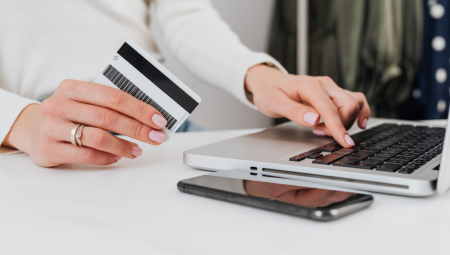
Latin America. An online store knows which pages a consumer visited, the section where they stopped the longest, and what customers with that same profile are inclined to buy. In a matter of seconds, she recognizes virtual tracks, analyzes the behavior of Internet users, and gives personalized advice.
Until recently, this advantage was unique to the internet retailer, but some networks of physical stores and malls are applying the same logic to anyone using the actual shopping cart.
Today, a merchant who has a store on the street or in a shopping center can take a much stronger and more strategic stance in the management of their space to generate results in sales. It sounds far-fetched, but the simple location of a sofa in an appliance and home products store can influence its performance. A retailer in South America realized that recently. They used software that generates heat maps and displays on screen the flow of people in an area, and they saw that a sofa near the entrance of the store served as the diffuser of the flow of customers, practically a barrier that prevented them from accessing the electronics area, products associated with the most impulsive purchases compared to sofas. It's as if a page with great sales potential is hidden in a small menu on the website.
In fact, knowing what the flow of customers is in a store and how many purchase receipts are issued is a very important statistic to understand the profitability of the business and the conversion rate of visits into sales. A people counting app, for example, can generate useful data about the number of customers who enter the store and buy a product. While many store managers and marketing professionals are wondering how to take advantage of virtual advantages in the physical store, the answer may lie in the roof of the store.
In the middle of the aisles and shelves of a traditional place, it is possible to identify how many people come and go, the approximate age of each client, the gender and the areas where he was for the longest time. This data can generate targeted advertising for that customer profile and use this information to reposition products, measure the effectiveness of promotions, and increase sales. How? With the same network cable that transmits data from the web but using network cameras.
In general, the digitalization of systems and mobility are inevitable trends. About 45 million smartphones and 11 million tablets moved the market by the end of 2014. Most people who have smartphones make use of them in-store, 42% give prices, 30% send messages or photos related to the purchase and 25% look for more information about the products they saw. It's a transformative scenario, where retailers pay to innovate and consider technology as a tool for new business opportunities, especially for so-called physical stores that compete with online stores.
This change begins at the moment when consumers in large cities move smoothly between the backstage of clothes and hyperlinks, taking advantage of one or another form of purchase according to their convenience. In short, most large retailers will also see data on the passage of customers in physical stores. As it happens on the Internet, this visualization will be given in real time, anywhere in the world and with a simple click.
*By Marcelo Ponte, Marketing Manager, Axis Communications