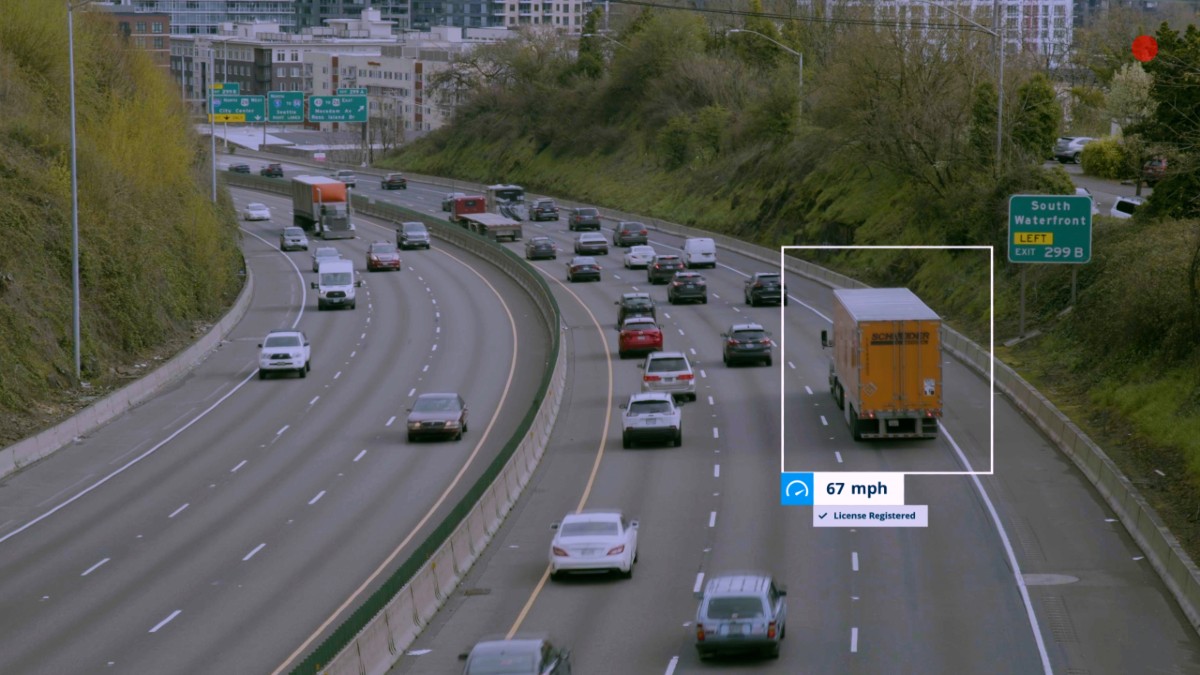
License plate recognition (LPR) technology, also called automatic license plate recognition (ALPR), has the ability to capture images, convert them into text, and other metadata useful to authorities.
By David Sanchez*
Imagine a Latin American city where security and vehicle access control challenges are overcome automatically and efficiently, in an environment where cars enter parking lots seamlessly and where authorities can track and locate them accurately and in record time in case of theft or escape.
To achieve these benefits, the LPR license plate recognition system emerges as a key solution to be considered by IT professionals and security experts. This article will explore how this technology addresses specific challenges, providing insight focused on the demands of security specialists.
Since its inception in 1976, LPR has been used for traffic control in urban environments, its ability to automatically capture images of vehicle license plates, convert them into text or metadata, and provide real-time information has proven to be instrumental in improving vehicular fluidity and facilitating the operations of authorities in identifying vehicles of interest.
However, the application of this technology is currently extended to various areas, such as parking management and toll automation. In addition, it is used to strengthen public security, as in the innovative case of Bogotá, Colombia, where it was implemented to improve the effectiveness of the response to criminal acts.

Combined with a real-time analysis tool, operators or forensic investigators can quickly identify vehicles of interest, as well as assist in the processing of evidence. In addition, they are able to generate reports that account for the movements of a particular vehicle over a specific period of time, including video thumbnails and details about the detection time.
How does LPR work?
The effective reading of a license plate depends crucially on the quality of the image, influenced by various factors such as the type of surveillance camera (sensor, shutter, lens, etc.), the direction and speed of the vehicle, lighting, weather conditions, and possible obstructions. In an ideal scenario, high-quality imaging would be achieved by security cameras with optimal lenses, strategically installed, and operating in well-lit environments.
Adopting robust, open-platform video management software (VMS) becomes critical. Even in the face of substandard images, only the most advanced systems have the ability to integrate analytics from multiple camera manufacturers and can automatically select the most effective frames. These VMSs apply enhancement methods and verify license plate numbers with government databases, thus optimizing access control and parking procedures.
In cases of extreme low quality, machine learning comes into play, a tool that, while demanding in terms of digital resources and time, has proven effective in solving high-profile crimes in real life. This method involves a meticulous process of adjusting image properties, manually analyzing results, and teaching the system about changes that improve its quality.
Advancements in LPR Technology
Cameras and license plate recognition (LPR) technology can be integrated into video management software (VMS) or work as a standalone solution. Integrating LPR into the VMS is preferable, as it allows you to take advantage of the software's capabilities, such as alerts, notifications, maps, etc.
On the other hand, standalone cloud-based LPR solutions may have their own cameras and interface, but they act as a disparate system. The benefit of using LPR in open platform video management software is the ability to run integrated and third-party solutions simultaneously. Incorporating LPR into the VMS takes advantage of its full functionality and avoids siloed systems and disjointed workflows.
The most significant advancements in LPR technology include improved accuracy and the ability to extract additional attributes from vehicles; Accuracy has been improved through the use of deep learning algorithms and increased camera resolution. Additional attributes that can be extracted include vehicle color, vehicle type, and direction of travel.

Some systems can also read other labels and markings, such as hazard plates and shipping/freight labels. This broader scope of readable information, coupled with increased accuracy, gives the industry many robust search and analysis capabilities.
The New Uses of LPR Technology
LPR technology is finding application in a variety of domains and industries. Almost any organization that manages a facility can benefit from incident forensics and proactive mitigation by identifying vehicles of interest. From casinos to banks to large private estates, technology has become universal for managing known versus unknown vehicles.
Beyond traffic management in cities, this technology finds utility, for example, in healthcare facilities for parking management and in educational institutions for access control.
Similarly, transportation and logistics companies use LPR technology to automate billing and tolling, as well as track and manage vehicle fleets. It is also used by parking operators to control access, collect fees, and identify vehicles that have exceeded the allowed time. In the petrol station sector, the solution can be integrated with blacklists and can automatically close pumps in the event that a license plate associated with activities such as non-payment of fuel is detected.
Design Challenges and Requirements
In the Latin American context, the successful implementation of LPR systems faces specific challenges and particular design requirements. A robust and reliable network infrastructure is crucial to ensure efficient operation, and adequate power and lighting supplies for cameras are required to overcome the varying conditions of cities in the region and maximize the effectiveness of the technology.
When deploying systems, integrators must meet specific LPR technology requirements for camera position and illumination and image quality. Sufficient resolution, contrast, and a direct angle are needed to clearly capture the moving plates.
Additionally, the use of infrared or other lighting may be necessary for 24-hour readability. The field of view must be rigorously controlled to meet pixel density requirements by LPR software. Therefore, integrators should not expect this technology to work with existing cameras positioned for general surveillance, often, dedicated cameras are needed to capture high-quality images of the plates at key points. Understanding these factors is critical for integrators to deliver high-performance LPR solutions.
In addition, local and national regulations related to privacy and data protection should be taken into account.
In conclusion, LPR technology has the potential to transform traffic safety and efficiency in Latin America, among other applications. As more cities and businesses adopt this technology, we can expect to see significant improvements in these aspects, with its ability to integrate with existing video management systems and its increasing accuracy and functionality, LPR technology is well-positioned to lead the way to smarter and safer cities.
 * David Sanchez*, Milestone Systems sales manager for the northern region of Mexico.