
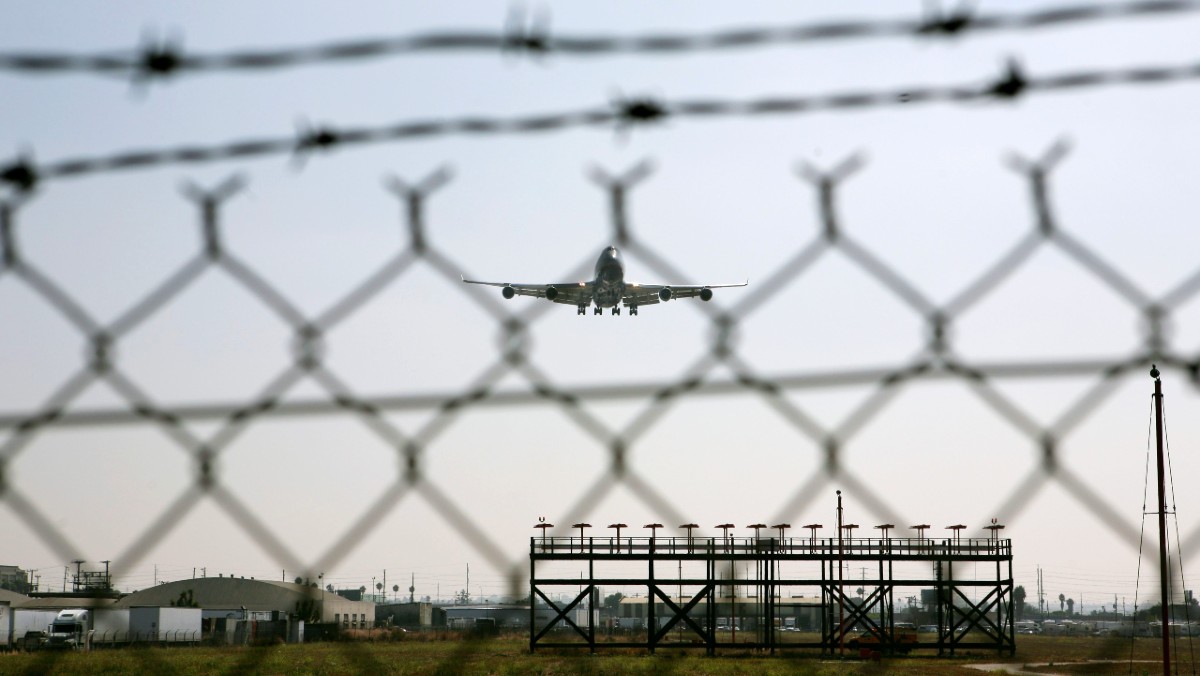
Today's perimeter intrusion detection systems (PIDS) are designed to secure airport perimeters against all threats.
by Fernando Caruso*
Latin America's position as an attractive travel destination for tourists has grown since the beginning of the previous decade. Between 2010 and 2018, there was a 55 percent increase in international tourist arrivals to Latin America. In 2021, about 29 million U.S. tourists spent the night in Mexican territory, more than 70 percent of the total volume of U.S. tourism in Latin America.
That same year, about 6.4 million Americans traveled to the Caribbean. Because airports in Latin America experience such a high volume of commercial traffic and operate as key business points, they need to implement a multi-layered perimeter protection strategy, powered by field-proven security technologies, to prepare for every type of possible threat.
Today's perimeter intrusion detection systems (PIDS) are designed to secure airport perimeters against all threats, protect travelers and business assets, and ensure return on investment for years to come. Specifically designed to prevent and disrupt perimeter intrusions, these end-to-end systems deploy and overlay perimeter surveillance devices, such as thermal and visible cameras, radar, and artificial intelligence (AI-enabled video analytics), to create system redundancy and ensure superior situational awareness.
Why choose a multilayer PIDS?
Recent security events at Latin American airports have emphasized the importance of a more extensive PIDS. On October 14, 2011, masked gunmen dressed as police officers opened fire on car occupants in the parking area of La Mesa International Airport in Honduras, killing six and wounding three others.
On June 27, 2012, at Mexico City's Benito Juarez International Airport, federal police investigated for drug trafficking opened fire on their comrades at Mexico City's international airport, killing three.
In March 2022, at Cancun International Airport, tourists rushed after hearing loud explosions. Flights were suspended for nearly three hours after authorities were alerted to gunfire at the airport. However, the National Guard later said there was no evidence that shots had been fired and said the shots could have occurred after someone tore down three separate vertical display posts at the terminal.
For each of these events, a PIDS designed to detect and classify any intrusion at the airport perimeter and deliver real-time intrusion notifications would have equipped security personnel to address the threat and report a preventive response, in accordance with security procedures. Not only do layered technologies optimize an airport's PIDS to protect against threats, but this strategy also strengthens the airport's PIDS against future threats, ensuring the ROI of a security system and making commercial air travel and international trade safer.
Building a multilayer PIDS
The main focus for multilayer PIDS is to layer various sensors, such as long-range radars, multispectral thermal cameras, and video analytics, with field-proven performance for faster and more reliable threat detection and response.
Layer 1: Radar
The first layer uses long-range radars to provide 360-degree coverage of the airport facilities. State-of-the-art, high-resolution radars that accurately detect personnel and vehicles hundreds of meters away in almost any weather, environment or lighting conditions can scan the entire perimeter every second.
They can also be integrated into an overlapping array with other radar units to adapt to terrain profiles and protect larger areas, depending on the size of an airport's perimeter. Because they can monitor areas far beyond the line of an airport fence, these devices warn in advance of all incoming threats, whether ground or air.
Layer 2: Fixed cameras and multispectral PTZ
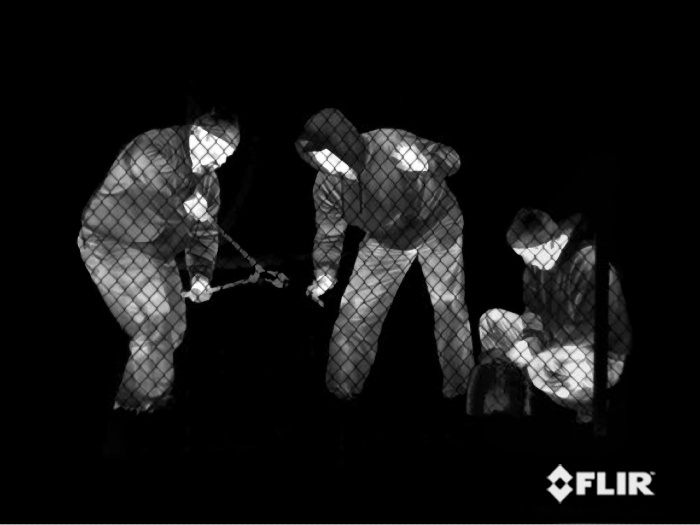
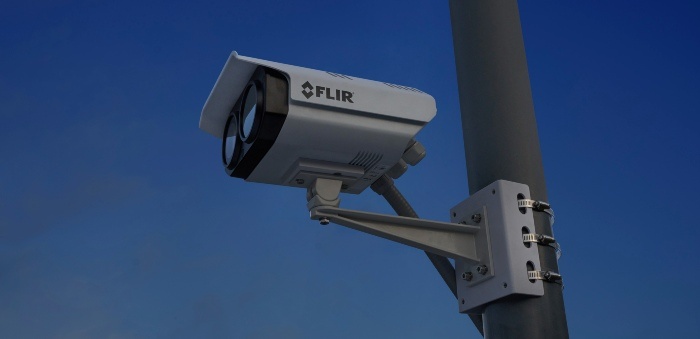
The second layer uses multispectral video surveillance devices, equipped with high-definition thermal sensors and daylight. By protecting large, open areas, multispectral swivel, tilt and zoom (PTZ) cameras combined with a radar provide crucial benefits for airport PIDS operators. The radar detects an object of interest, identifies the coordinates and directs the PTZ camera to turn directly towards that object. With thermal imaging and visible cameras on board, PTZ cameras allow security operators to assess threats detected by radar in any lighting condition or inclement weather.
Layer 3: Video Analytics
The third involves video analytics that allows object classification and goal tracking. While motion-based video analysis detects pixel-level changes in a camera's field of view (FOV), convolutional neural network (CNN)-based analysis learns a camera's environment over time, to determine what types of unusual behavior should be reported to security personnel.
Motion-based analytics are reliable and highly sensitive video analytics to track rapid and minute changes in the fields of vision that security personnel are monitoring. When integrated into a video management system (VMS), CNN software manually analyzes tens of thousands of images of security application datasets, further refining the VMS's ability to accurately classify distinct pixel-level similarities between different types of objects. Depending on the use cases, both motion-based and CNN-based video analytics are efficient and effective implementations within a multi-layerED PIDS.
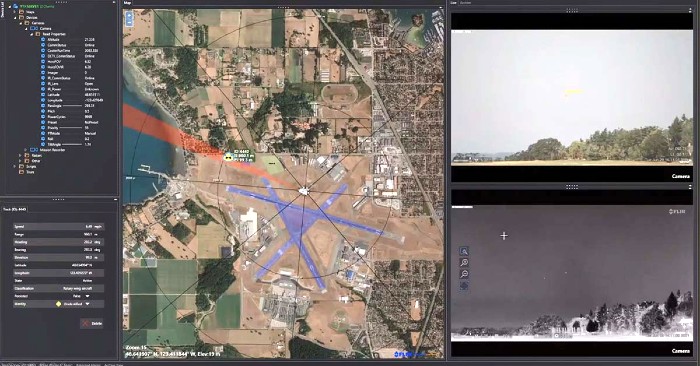
Since threats to an airport's perimeter, such as unmanned aircraft systems (UAS), quickly change position, robust and redundant tracking capabilities are crucial.
Layer 4: C-UAS
By bringing these devices together, end-to-end PIDS implementing a multi-layered approach can also use this expansive and preventative situational awareness to address UAS threats, specifically, using anti-UAS (C-UAS) strategies. While protecting an airport's fence line at ground level is vital, equipping an airport PIDS to detect threats from the air is just as important.
Long-range radars, specially designed to detect unmanned aerial vehicles, integrated with multispectral cameras provide that protection. Employing blockers or counterfeiters designed to intercept adversary drones, remove their RF and GPS communications links, and render them inoperable along with this multi-layered solution optimizes an airport PIDS as a suitable C-UAS solution.
Layer 5: Command and Control Software
To bring all the above devices together, airport PIDS requires a highly customizable and easy-to-use command and control tool, designed to integrate contrast systems (video, radar, sound detection, access control, etc.) knowledge and control over your devices. For video recording and operations, optimal, enterprise-grade IP video management systems enable forensic-quality image review, easy-to-use operations, and enhanced cybersecurity.
To ensure that airport perimeter security is flexible enough to deal with evolving threats over time, end-to-end PIDS implements scalable perimeter intrusion detection software that can control almost any number and combination of analog and IP devices from multiple manufacturers, such as cameras, monitors, switches, DVRs and many other devices with the simplicity of point and click.
Key findings
When these technologies are combined, security operators are better equipped to detect, classify, and mitigate ground or air threats, 24/7. With powerful intrusion detection, reliable performance in all weather conditions, and accurate geolocation capabilities, multilayer PIDS enable optimized target tracking, visual threat verification, and faster reaction time. It's always best to be prepared for anything, before tragedy strikes. *Fernando Caruso, Managing Director, GTM Solutions, Latin America at Teledyne FLIR.