How to transform security from a cost center to a value engine for the business? Ryan Schonfeld of HiveWatch details in this article for SIA, the elements to consider for a successful conversation.
By Ryan Schonfeld*
Today more than ever, physical security leaders are being pressured to do more with less (or more with the same) to optimize their security programs and drive results. This involves a thorough understanding of not only the risk, but also how the company handles that risk and its potential impact on the bottom line.
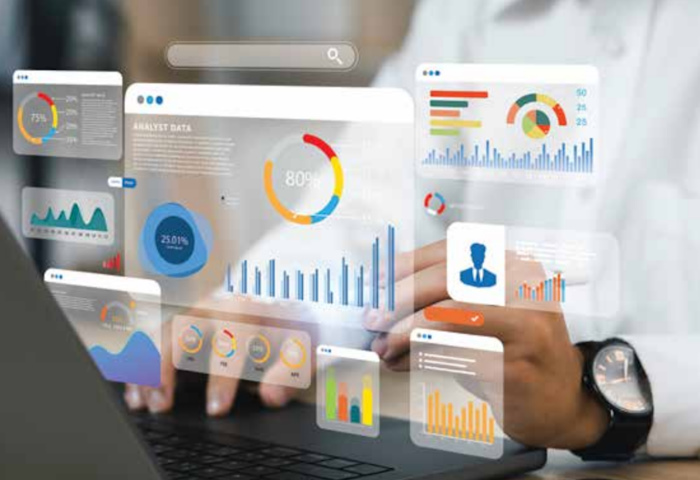
It's no secret that security leaders have traditionally struggled to demonstrate how effective security programs contribute to the company's overall goals. However, one of the key assets that security can bring today is data. For example, using data from a platform that provides a better understanding of the spend on externally contracted security resources, operational efficiencies, device health, and hours spent on false alarms can indicate savings in time and resources. Providing this level of information can enable security leaders to make meaningful operational decisions that save money for the business, transforming security from a cost center to a value driver for the business.
The hours that security operators spend just triaging false alarms, for example, can be too many. If a security leader can calculate this time spend, then they could use the data to persuade senior management to invest in a tool that will be able to remedy the problem. How can this be achieved? There are three key points to consider when preparing a conversation with the company's senior management.
Where to start?
The starting point is to carry out an evaluation. A security program cannot be optimized without first knowing what is currently in place: the data being received, the risks being addressed, and the budget segments that require analysis.
Planning the conversation with the company's leadership
- Start with an assessment to identify the specific needs of each location.
- Engage stakeholders and promote communication at all levels.
- Implement data-driven solutions that maximize technology investments.
- The initial assessment is indeed critical to guide all future decisions and align them with the primary objective of meeting business goals.
In addition, this implies that not all locations in a security program will follow a standard pattern. Program needs will vary depending on the specific requirements of each location and its ultimate goal. For example, in high-crime areas, it might be necessary to increase the presence of guards, cameras, and other technology.
There are ways for security leaders to examine the overall design of each site and determine not only where the expense occurs, but also where there could be savings. Additionally, it's important to examine how spending and needs have changed with the rise of hybrid and remote work. This could free up additional budget that can be used for technology improvements.
Who is involved?
Engaging stakeholders at all levels provides security teams with the ability to identify potential obstacles to success in relation to the implementation of the physical security program. Building community within the safety team by encouraging leaders to listen to operators' concerns and share them with executive management can help boost morale. It can also reduce staff turnover, which can be a drain on resources and budgets at a time when security staff are scarce.
Establishing a baseline with the teams will set leaders up for success, as the group will be able to identify what the security strategy will be. Without this key piece of the puzzle, teams won't be empowered to make cost-cutting decisions that align with business goals. Instead of being a unilateral initiative from above, it becomes a shared community.
Conversations should include teams on the ground, not just senior management. At sites located in high-risk areas, it's important to listen to employees and understand what will make them feel safe going to and from work. Balance is about listening and learning with executable processes and policies.
Another way forward is a risk-based approach. Many successful security leaders collaborate with business continuity teams and crisis management teams to understand their assets' various exposures to risk and link this risk to business interests.
Consider technological improvements
Once a security program collects risk assessments and input from stakeholders, decisions can be made on how to implement more comprehensive, data-driven approaches.
Focusing on implementations that help avoid the "rip and replace" cycle that many security leaders find themselves in can make financial conversations easier. In order to take advantage of technology that is already in operation, investments must be made in platforms and systems that are not dependent on a specific vendor. In addition, organizations can begin to integrate artificial intelligence (AI) technology that enables operators to identify false alarms, find the root cause of alarms, and respond quickly and efficiently to real threats. Technological improvements in security can improve business operations in multiple ways.
- Reduced administrative burdens: Mobile-centric management, such as mobile credentials and advances in remote access technology, can significantly decrease the demand on time and resources.
- Improve data collection: This includes the use of low-cost mobile sensors that are emerging in the market; such as proximity sensors and other cheaper technologies for collecting data that can be an alternative to the "disassemble and replace" cycle. These investments may not be long-term, but they can provide significant value and help security teams collect more data.
- Optimize data: System centralization and integration of various security devices and data from cameras, access control, environmental sensors, and more, allows leaders to visualize incoming data in a meaningful way. This reduces some of the highly manual and time-consuming tasks – such as managing large numbers of false alarms – freeing up operators to do more important work and add more value to the business.
- Security leaders have a monumental responsibility to not only keep people, assets, and the brand safe, but also to ensure that the work they do is aligned with business objectives. This is the only way for physical security to prove its value, put the focus on risk, and generate a positive impact for the company it serves.
 *Ryan Schonfeld is founder and CEO of HiveWatch (www.hivewatch.com). Contact: [email protected].