 Recommendations to implement the most suitable fire protection systems in order to protect a sector in constant growth.
By Jaime A. Moncada*
The traditional "neighborhood store", where the Latin American family bought their necessities, often on credit, and where usually the products were distributed by a merchant while customers waited in front of a counter indicating the items they wanted, was inefficient in itself, since the number of customers who could be served was limited by the number of people employed in the store.
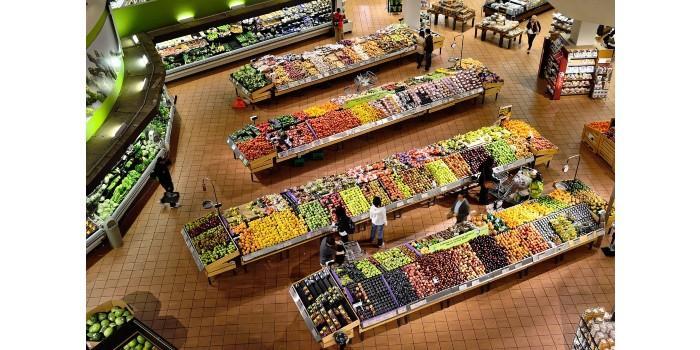
Then there are the automarkets, where customers choose what they want, and this industry is revolutionized. With the interest of offering more options to the consumer, these automarkets have become the modern supermarkets and hypermarkets that now abound in our cities, where you can buy not only groceries but clothes, furniture, tools, and many other things that we need to carry out our daily lives. Many of these shops have restaurants, cafes and bakeries where you can also eat, or offer ready-to-go food, made in industrial kitchens inside the store.
Consequently, the development of these modern stores has created a new fire protection problem for our region. Hundreds of fires have occurred in merchant stores, many of them with total losses and many millions of dollars. The best known is the fire of the Ycua Bolaños Supermarket, in Asunción, Paraguay, which I had the opportunity to document for NFPA1, where in August 2004 it resulted in more than 400 fatalities, and is one of the fires with the most deaths in the modern world. This fire originated in the extraction duct in the industrial kitchen of the supermarket (see image 1).
Automatic sprinklers: The main criterion of fire protection for a supermarket, whether new or existing, is its protection with automatic sprinklers. Although not all stores would have to be protected with sprinklers, the determination of which stores require sprinklers depends on their size and height, as well as the requirements of local regulations. Most supermarkets today are part of a large commercial chain, where typically a fire protection engineering consultant is hired to establish corporate guidelines that define what type of stores merit this protection, how they should be designed, installed and maintained and that other systems should protect the different sizes and styles of stores. A cost-benefit study is carried out in this phase of the analysis.
The typical fire that occurs in commercial and storage areas can be controlled, and therefore the resulting losses limited to a minimum, if a well-designed and properly maintained sprinkler system protects these occupations. The system of automatic sprinklers is not only essential to obtain an adequate minimum level of fire protection, but it is being or will be required in many Latin American countries by the modification of local regulations. I would like to reiterate that without the installation of automatic sprinklers an adequate level of fire protection cannot be achieved.
It should also be understood that a smoke detection system coupled with a hose cabinet system is not a substitute for an automatic sprinkler system. Most catastrophic fires occur after the store has closed. If the fire occurs in an unattended area of the store, and the detection system alerts the brigade to the fire – if the brigade is trained to put out structural fires – quite possibly when the brigade is ready to apply water to the fire with a hose, the sprinklers have already operated and controlled the fire.
Alarm system: Although sprinklers are an essential factor in the fire protection and human safety strategy, the supermarket must also meet other protection criteria. For example, the store must be protected by an alarm system that includes manual pushbuttons, sound and visual notification devices (strobes), and monitoring of the sprinkler system. Although many local regulations continue to require smoke detection systems in these types of occupations, NFPA regulations do not require smoke detection if the store is protected with automatic sprinklers. After all, the sprinkler system is a fire detector as well.
Other fire protection systems: Hose-equipped cabinets are no longer required in almost any type of occupation by the NFPA and a supermarket is no exception. What NFPA requires is the installation of connections for hoses from 2 1/2 inches and reduction to 1 1/2 inches. Each of these connections must have a minimum flow rate of 250 gpm (946 bpm). If there is a brigade, it is recommended that at the site where the brigade collects its protective equipment, sections of hoses with pythons listed for electric risks be ready so that the brigade can quickly attach to the hose connections.
Kitchens with fryers, which are becoming more common in supermarkets, must be protected by a kitchen suppression system, according to NFPA 96. The computer center, the brain of the supermarket, must also be protected by automatic sprinklers instead of a system of clean agents. The fire protection of the substation, garbage areas and cardboard compactors, and natural gas or LPG tanks should be evaluated. The protection with sprinklers of the storage areas and the obstructions in the roof of the commercial area also require special attention by the designer of the fire system.
Another issue that the fire protection engineer advising the supermarket operator must evaluate, is fire protection between the supermarket and the mall, when the supermarket is an anchor store, especially when the mall is not protected by an automatic sprinkler system, or when the installed sprinkler system does not meet minimum protection criteria, as it is unfortunately quite common. The store must be protected with manual extinguishers throughout its extension.
Sectorization and evacuation: The store must also have an evacuation system following the guidelines of the NFPA or, failing that, of the local regulation, and must include the sectorization of the main risks. For example, stairs should be closed by fire elements, floors should also have fire resistance and their openings should be sealed, and the storage area should be sectorized from the store. Tents should be protected with evacuation signage and emergency lighting equipment.
Cost-benefit and effectiveness: finally I would like to emphasize an important point that has to do with the cost-benefit and effectiveness of automatic sprinklers. Understanding that sprinklers are perhaps the most important investment, the design and installation of these systems must be approached with caution and prudence. Mercantile corporations are excellent buyers, where the bidding of any good is an exhaustive process, which always results in a winning tender with very tight prices.
It is still common in many countries that this type of fire installations are tendered as a turnkey project, that is, the installer responsible for the installation also designs the sprinkler system. This means that in a tender of this type the prices of the different bidders have significant deviations, and possibly the lowest price bidder wins the installation. Being the automatic sprinkler system a specialized system it is difficult to discern, for someone not certified in fire protection, what is right or wrong. Under this scenario there is a risk of buying a sprinkler system that does not meet the minimum requirements and on the day of the emergency does not control the fire.
The best way to obtain the highest cost benefit and efficiency in the installation of a sprinkler system, and indeed of any fire protection and human safety system, is to separate the design process from the installation process, not allowing the designer to tender the installation of what he designs. By hiring a firm specializing in fire protection engineering to design the sprinkler system and prepare a tender specification with estimated amounts of work and costs, a more equitable bidding between contractors and easier follow-up to the installation process is allowed. The fire engineering firm could also visit the site a couple of times during installation and commission the fire systems, further increasing the efficiency of the system.
Footnote 1: El Incendio del Ycua Bolaños, NFPA Journal Latinoamericano, Jaime A. Moncada and Eduardo Álvarez, September 2004, Vol. 3, No. 3, pages 24-27. www.articuloscontraincendio.org
* Jaime A. Moncada, PE is a director of International Fire Safety Consulting (IFSC), a fire protection engineering consulting firm based in Washington, DC. and with offices in Latin America. He is a fire protection engineer graduated from the University of Maryland, co-editor of the NFPA Fire Protection Manual. Moncada's email address is [email protected].