 A high-risk sector that requires a rigorous fire assessment and prevention plan.
By Jaime A. Moncada, PE*
Since the conquest, with the mythical search for El Dorado, mining has been an important sector in the economic development of Latin America. Today, Chile and Peru are the most important producers of copper worldwide; and Mexico and Peru, the most important silver producers. Colombia is the most important producer of emeralds and Brazil is the third most important producer of iron ore. The world's largest underground mine, El Teniente, is in Chile, and Chuquicamata, also in Chile, is the largest open-pit mine. Yanacocha in Peru and Pueblo Viejo in the Dominican Republic are among the most important gold mines in the world.
The future of mining in Latin America is once again very positive1 According to the US Geological Survey2, Latin America has the most important reserves in the world in copper, lithium and silver and is the most important producer of copper, silver and gold worldwide. But more importantly, legislation in many countries has made investment in mining more attractive. Although many projects have suffered political setbacks in the recent past, investment, particularly in lithium and copper mines, is attracting multibillion-dollar investments.
Specific risks in mining
Underground mining has been by far the world leader in losses, in terms of fatalities and injuries, relative to all other industries. According to NFPA statistics, more than 100,000 miners died from unintentional injuries, including fires and explosions, 3. The fire with the most deaths worldwide occurred at the El Teniente Mine, 120 km south of Santiago de Chile, a mine that is composed of approximately 2,400 km of underground galleries. This incident, known as "The Tragedy of Smoke", occurred on June 19, 1945 and cost the lives of 355 miners, a third of that day's shift.
As it could be established in the investigations, the tragedy originated due to the emanations of carbon monoxide produced by the fire of a forge located in one of the access portals to mine4.
As I have been mentioning in this column, the definition of fire safety of any installation is circumscribed primarily by the expert interpretation of the reference regulations, such as the NFPA standards, contrasting it with the characteristics and risks of the installation. In the specific case of mining facilities, the reference document is NFPA 122, Standard for Fire Prevention and Control in Metallic/Non-Metallic Mining and Metallic Ore Processing Facilities. There is also another standard similar to NFPA 122, NFPA 120, Standard for the Prevention and Control of Fires in Coal Mines. The Factory Mutual data sheets and XL GAPS are also excellent sources of referential information.
Fire Safety Master Plan
Any mining facility must begin its fire protection engineering process through the evaluation and definition of its fire safety levels with the expert execution of a Fire Safety Master Plan.
Normatively speaking this is required by Chapter 5 – Fire Risk Assessment and Reduction in NFPA 122, which states that "a documented fire risk assessment must be performed." This standard also states that "only personnel qualified in fire risk assessment techniques" are allowed to conduct such assessments. That is to say, the NFPA regulation not only establishes that the first step in the fire protection engineering process of a facility is through this "Fire Risk Assessment", called in English as the "Fire Risk Assessment", but suggests that the evaluation should be executed by a firm specialized in fire protection engineering consulting, who assist those in charge of security and operation of the facility in defining how and where the main risks will be protected. This "Fire Risk Assessment" has been included by leading fire protection engineering consulting firms in the "Fire Safety Master Plan".
According to the NFPA5 Fire Protection Manual, "the best strategy for identifying and mitigating fire risks is the development of a Fire Safety Master Plan, either in an existing facility or in the design process of a new facility."
The Master Plan "is the best guide to adapt, in the most rational and coherent way possible, the installation to an acceptable level of fire safety. Professionals in external fire protection engineering are the most common way to achieve this goal, yes, with the due discussion and review of all those interested in the installation, so that the recommendations are feasible and have the necessary internal support so that they can be carried out."
An acceptable level of fire safety is obtained by analyzing the mine holistically, including the assessment of human safety (means of discharge, signage, lighting); the definition, design and installation of suppression and alarm, detection and notification systems; the specification and limitation of the interior contents; operation of the fire brigade; assessment of exposure to adjacent risks; and the definition, design and construction of the elements that confine a fire.
Fire hazards in a mine
In a mining facility it is also important to evaluate issues such as the protection of larger mobile equipment, the protection of electricity generation systems, the storage and transfer of flammable and combustible liquids, mineral transfer systems, smoke evacuation, and the protection of specific plants such as Solvent Extraction (SX) facilities, among others. In the design process, the earlier all the elements that lead a mining facility to achieve acceptable, more effective and generally economical fire safety are evaluated.
In an underground mine, many pieces of equipment, required for the continuity of operations of the mine, contain both fuel sources, such as diesel fuels, oleo-hydraulic equipment, hoses, cables and tires, as well as ignition sources, among which are diesel engines, transformers, high voltage electrical equipment, conveyor belts, and welding and cutting work.
Many of these teams work automatically and do not require a constant operator, and consequently their risk is worsened by the lack of continuous surveillance that can detect and mitigate the fire. This coupled with the fact that the combustion products of a possible fire can spread through long underground galleries, cutting evacuation routes and putting miners at risk. For example, the heat generated by friction between a conveyor belt and its drive rollers can cause a fire and stop the operation of a mine for a long time.
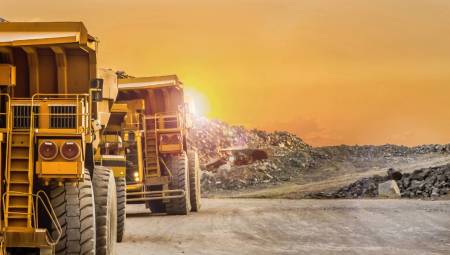
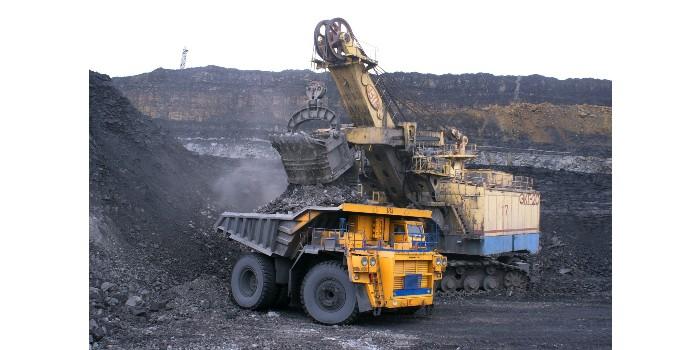
Another topic of recurring interest to the mining operator is the protection of mobile diesel traction equipment. This equipment, such as an ore hauling truck, can cost millions of dollars and can catch fire when hoses or high-pressure oleo-hydraulic lines leak or fail, irrigating the fuel on an ignition source. These types of fires can grow rapidly, even putting the equipment operator at immediate risk. There are also risks of fires in shovels, drills and draglinears, mainly due to their electrical equipment.
In the on-ground facilities between which the ore processing or preparation plants where the ore is sized, dried, cleaned, separated and concentrated, they also have their unique fire protection problems.
NFPA 122 includes, for example, specific fire protection requirements for Extraction Plants called "SX". These facilities are used for hydro-metallurgical processing or refining of ore using combustible organic solvents to extract desirable metals. These plants are typically protected with automatic water-based suppression systems, such as spray water systems designed in accordance with NFPA 15. Another assessment issue is protection from exposure on or along the exterior walls of any critical equipment, which may be affected by radiation from a solvent fire area.
Existing mines
A recurring question is what to do with existing mines, i.e. how to adapt them so that they have a reasonable level of fire safety. The Fire Safety Master Plan is also appropriate for analyzing this type of facility. Many times during mine inspection and testing of existing fire systems, we found that the size of the fire pumps and fire network was not designed correctly, or that for example it cannot properly support new plants or conveyor belts. It is also sometimes found that fire protection equipment, such as installing smoke detectors in production areas, is not the best way to detect a fire and solves a recurring maintenance problem. But perhaps most importantly, this Master Plan irrefutably establishes a comprehensive fire safety strategy. It becomes a map of how, in the best way for an already operational installation, to reach the final goal: the effective and efficient protection of the installation making the best use of the available resources.
Footnote:
1. McKeigue, J., The lure of Latin America: get set for a new mining boom, Money Week, 27 Jun 2019.
2. International Mineral Exploration Activities From 1995 Through 2004, USGS, www.usgs.gov.
3. Fire Protection Manual, Fifth Edition in Spanish, pp. 11-214, NFPA, Quincy, MA, USA, 2012.
4. Baros M.C., El Teniente, Los Hombres del Mineral: Tomo II, 1945 - 1995. Institute of Mining Engineers of Chile. Santiago, Chile, 1999
5. Manual of Fire Protection, Fifth Edition in Spanish, pages xxi to xxii, NFPA, Quincy, MA, USA, 2012.
* Jaime A. Moncada, PE is a director of International Fire Safety Consulting (IFSC), a fire protection engineering consulting firm based in Washington, DC. and with offices in Latin America. He is a fire protection engineer graduated from the University of Maryland, co-editor of the NFPA Fire Protection Manual, former vice president of the Society of Fire Protection Engineers (SFPE), who for 15 years directed NFPA's professional development programs in Latin America. Moncada's email address is [email protected].