

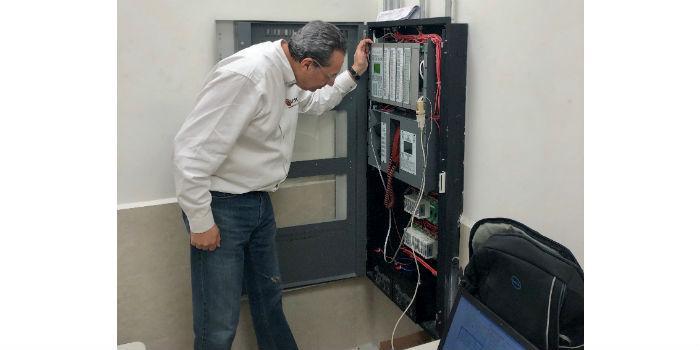
We present a series of steps that are necessary to develop fire safety tests that must be carried out before the opening of a hotel.
By Jaime A. Moncada, PE*
In 2018, in this magazine (Vol. 22 No. 4, pages 85 and 85) I wrote a column about the requirements of human safety and fire protection, called Fire & Life Safety Requirements in the lingo of hotel chains, that a hotel must meet. These requirements were based mainly on the requirements of NFPA 101, which, with few exceptions, are similar to the criteria required by the corporate standards of international hotel chains, such as Hilton, Marriott, Holiday Inn or international banks, such as the World Bank.
In this column I want to focus on the process of opening the hotel, where acceptance tests of fire systems are necessary. It should be very clear to any hotel operator that opening doors to the public without Fire & Life Safety systems being properly installed and operational is irresponsible and possibly illegal.
It is also important that during the design and construction process there has been a peer review, by a fire protection engineering consultant, of fire & life safety systems and that those designs have been approved. But that same consultant, or a representative of the hotel chain, before a property is occupied, must certify that the fire protection and human safety systems are fully operational and certified to the satisfaction of a representative of the owner of the property or the chain that will operate it. I would therefore like to summarise generically the acceptance tests for human safety and fire protection systems.
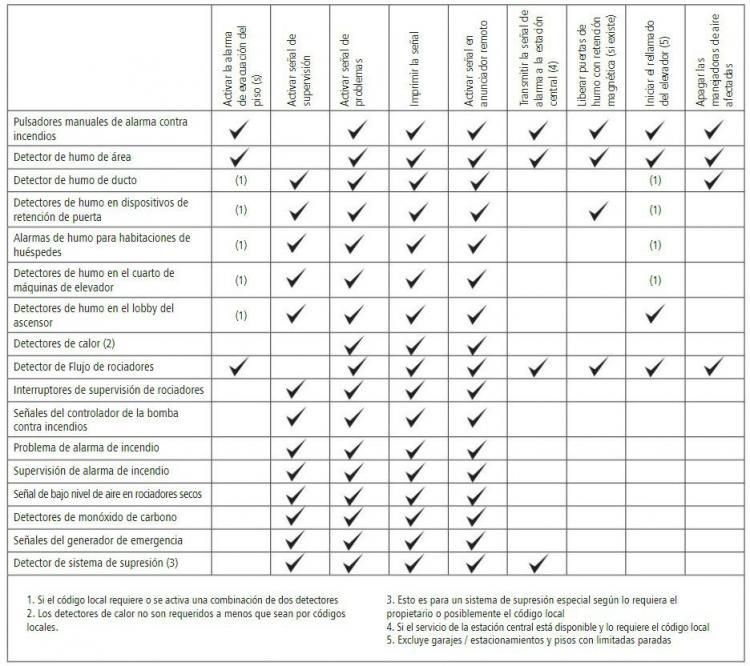
Figure 1.
Cause/Effect Matrix: Perhaps the most important document during acceptance testing is the cause and effect matrix, called the Input/Output Matrix by NFPA 72. This matrix establishes the sequence of operation of the hotel's human safety and fire protection systems. It should be clear that each hotel chain has slightly different criteria than the others and that each project has unique characteristics, so no two matrices are the same. But the matrix is important because it sets the programming criteria for the panel. That is, as the attached generic matrix shows, for example when operating a smoke detector in public areas, the panel should receive this alarm, the evacuation alarm should sound, elevators should be sent to the primary floor, and air conditioning units on the affected floor should be turned off, among others.
Alarm and Voice System: The alarm, either through voice messages or tone, depends on the decision regarding the evacuation method. On the other hand, evacuation can be by floors, by group of floors, or total throughout the building. Each notification unit must be tested, including its strobes in public areas and disabled rooms. The voice alarm must be intelligible and the alarm tone must be able to be heard 15 dBA above the average ambient noise level.
Smoke Alarms: NFPA requires the installation of smoke alarms in each room and areas adjacent to a suite. A 'smoke alarm' is similar to a 'smoke detector', but unlike this one, it is not connected to the alarm panel. The smoke alarm is a single station detector, which is connected to an electrical source and includes a battery as secondary energy, which when operating initiates an internal low-frequency alarm, designed to wake the occupants of the room. This smoke alarm must be tested with aerosol smoke and when operating must have a minimum sound level of 75 dBA at the level of the pillow, so as to be able to wake an occupant sleeping.
Smoke Detectors: NFPA regulations only require smoke detection in the elevator lobby, elevator room and depending on the design of the air conditioning system, it is very likely that smoke detectors will be required in the air ducts. In addition to the above, some hotel chain guides require smoke detection in the internal corridors of the floors with rooms, electrical and mechanical rooms, unattended warehouses and computer rooms. Smoke detectors are tested with aerosol smoke, certifying that they report to the panel and that they operate the notification equipment; and removing the detector, so that the panel recognizes a monitoring alarm.
CO detectors: NFPA requires the installation of co detectors, with sound base, in places where fuels are burned, such as kitchens, mechanical rooms, and rooms where there are fireplaces or gas stoves. These can be tested with compressed CO or some other gas that has carbon monoxide.
Control Valves and Flow Switches in Automatic Sprinklers: All hotels, without exception, have to be protected with automatic sprinkler systems, zoned per floor. The control system is tested by closing the valve and certifying that the panel receives a monitoring alarm, and operating the inspection valve, which replicates the operation of a sprinkler, certifying that the "outputs" set in the cause/effect matrix are working properly.
Automatic Sprinklers: The entire hotel must be protected with automatic quick response sprinklers. During the inspection it must be certified, at a minimum, that the hotel is protected with the right type of sprinklers, that there are no areas without coverage, that the sprinklers are not far from the ceiling or with obstructions, and that the sprinklers are free of paint or plaster.
Photo Test Sprinkler.
Fire Pump Test: In coordination with the installer of the fire pump(s), the acceptance test of this equipment and the jockey pump should be done. It must be documented that this test has been performed, that a curve of the pump was made and that the system is installed in accordance with NFPA 20.
Elevator Phase I and Elevator Re-Call Phase: Because an elevator could stop on the fire floor or combustion products enter the elevator shaft, NFPA requires that a re-call of the elevators be initiated after, at a minimum, the operation of smoke detectors in the elevator lobbies, or in the elevator engine room. This is called Phase I Emergency Re-call Operation and allows elevators to automatically be out of normal service in a fire, and through Phase II to be available only for the operation of firefighters. Both Primary and Secondary Phase I and Phase II must be tested on all elevators.
Kitchen Hood Suppression Systems: Kitchen hoods must be protected with a UL 300-listed suppression system, which must be tested so that its activation is certified to show that the nozzles are not clogged, that all electrical energy under the hood (lights and electrical connections to electrical equipment working on the hood) is removed, and that the gas supply be cut off.
Pressurization of Stairs: Contrary to popular convention, deeply rooted in Latin American building codes, NFPA does not require the pressurization of stairs in any type of building, including hotels. However, some hotel chains require pressurization of stairs. When pressurization is required, the test must certify that the differential pressure between the ladder and the corridor must be 0.5 inches of water head (12.5 N/m2) and the torque to open the door must not exceed 30 lb ft (133 N).
Fire Sectorization: The fire sectorization of room floors is of special attention. Here it is important to certify that each room is separated from other rooms with walls of 1 hour of fire resistance, the wall towards the corridor must have at least 1/2 hour of fire resistance and the door of the room must have a resistance of 20 minutes. Stairs should have two hours of fire resistance with 1 1/2 hour doors. Openings between floors, such as vertical gaps for installations, should also be compartmentalized and inspected.
Evacuation: Evacuation is a complex issue and requires a specific study of the hotel, in which, through evacuation analysis, the specific criteria for the design of evacuation routes (location, quantity, width, distance) are established. On the other hand, hotels are required to be protected by an emergency lighting system in the means of evacuation and to have signage of the evacuation routes. During the final inspection, the entire hotel evacuation system should be checked.
Laundry Duct: During the inspection it must be certified that the laundry duct is sectorized against fire and that it is internally protected with automatic sprinklers.
Emergency Generator: High-rise hotels require backup power systems connected to equipment critical to human safety. The emergency generation system must be tested to come into operation within 10 seconds.
Final Comment
Many hotels, perhaps the majority, come into operation without an independent entity with competence in this type of fire safety acceptance tests having been contracted. The systems that serve the hotel, such as the lighting, water, drainage, waterproofing, computer, physical security system, etc., even if they have not had a formal acceptance process, are in a certain way tested in the start-up of the hotel, and without exception often have hundreds of deficiencies, which are corrected before the opening of the hotel.
However, the human safety and fire protection systems, unlike these other hotel systems, do not have to be operational for the hotel to come into operation. Its operational test, unfortunately, usually occurs on the day of an emergency.
* Jaime A. Moncada, PE is a director of International Fire Safety Consulting (IFSC), a fire protection engineering consulting firm based in Washington, DC. and with offices in Latin America. He is a fire protection engineer graduated from the University of Maryland, co-editor of the NFPA Fire Protection Manual, former vice president of the Society of Fire Protection Engineers (SFPE), who for 15 years directed NFPA's professional development programs in Latin America. Moncada's email address is [email protected]






Buenas tardes:
Quisiera informes de sistemas de protección para incendios para un hotel boutique.
Les dejo mi celular por si me pueden contactar por whats app +52 (55) 5419-3345