 Trusted ID technologies enable system integrators to create smarter connected experiences for their customers.
By Edson Yano*
Trusted IDs are becoming one of the fundamental elements in creating environments that more effectively connect the people, places, and things of an organization. Integrators who embrace the advantages of trusted IDs will help their customers redefine the user experience using a combination of ioT (internet of things) cloud and mobile technologies.
A mobile turning point
Mobile access control is gaining popularity as solutions mature and integrate with other systems. Until recently, the concept of a credential hosted on a mobile device constituted a niche for a small segment of the market. However, its contribution to greater operational efficiency, a better user experience and a better level of security, as well as the ability to integrate with other systems, has positioned mobile access as an excellent option for many organizations in the consumer market. The demand will be greater in the following operations: opening doors with a smartphone, using a mobile device as a means of authentication in applications – such as identity verification to protect its use in online banking or access to a digital network – or carrying an IDENTIFICATION (such as a driver's license) on a phone.
The more mobile physical means there are to carry reliable IDs, the better; in this way, organizations will be able to use this solution in the widest range of practical cases. Smart watches and personal biometric devices are the most commonly used electronic garments in today's business environment. The increase in the use of electronic garments and accessories in business access solutions continues to be the order of the day. These devices are getting smarter and their use more frequently in an increasingly wide number of applications.
Likewise, the migration to the verification of identifications through mobile phones will also reveal a trend towards digital cohesion, in which everything is interconnected and available in an application; from verifying the login to a bank account or virtual private network (RVP) to using a phone as a mobile driver's license or to verify the authenticity of a physical credential.
Adoption of these technological advances has not been limited to mobile credentials; the de facto migration from the Wiegand protocol to the Supervised Open Device Protocol (OSDP) standard is also on track to become an important factor in access control. The notorious exposure of the vulnerabilities of the old Weigand protocol, together with the desire to achieve a more connected experience in the management of readers, has driven the demand for the OSDP standard.
Although near-field communication (NFC) is an attractive alternative worth considering in the future for access control, Bluetooth remains the only predominant communication standard that is compatible with various platforms for mobile access today. However, organizations that today invest in infrastructure are considering acquiring readers that support both communication standards so that they can be prepared to adopt new experiences as changes occur in the mobile device industry. Access control reader technology will also be adapted to harness the power of mobile technology and cloud platforms. Organizations will use a mobile device to provision readers, inspect installed readers and detect their current configuration, update them with new features, and/or revoke access to them.
Increasing cloud adoption
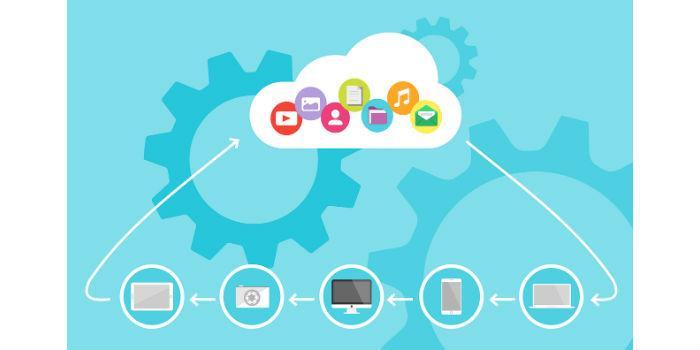
One of the aspects driving cloud adoption is that its security has achieved a significant improvement. As trust in these platforms grows, the demand for trusted identification solutions in the cloud and the exploitation of their many advantages increases. Adoption will increase as knowledge about the ease of deployment, flexibility, connectivity options, and productivity benefits that the cloud brings becomes more widespread.
Cloud platforms will form the backbone for incorporating new and emerging technologies, while improving the way identification solutions are delivered. They will also give organizations greater flexibility to upgrade their security infrastructure, scale it with organizational growth, improve efficiency, and adopt new, lower-cost managed service models.
Cloud platforms will encourage the use of new solutions that expand the range of options for organizations to make the most of their investments. Among the most attractive options are solutions that offer location services to track assets and for organizations to have more information about how their buildings are used to optimize the workplace. Organizations are adopting technologies that expand the possibilities of interaction and work of building occupants and tenants into new smart workspaces. In addition, these innovations enable companies' physical plant managers to proactively provide a safer work environment, achieve a smarter experience in maintaining building equipment, and comply with a myriad of local and federal inspection regulations.
An added benefit of the cloud is that it creates the opportunity to implement new managed service models. For example, there are already cloud id card issuance platforms on the market that offer users the option of leasing hardware, software and other resources, the costs of which are grouped into a service offering that is billed in annual or monthly installments. The service model not only reduces various levels of program costs, but also allows administrators to easily scale the ID issuance office to adapt to the performance of future technologies or changing volume demands. Administrators have the option to commission commercial printing agencies to produce large batches of cards during periods of peak demand. Overall, cloud services offer all the benefits of centralized control and visualization of the broadcast process, plus the option to make distributed or batch prints while improving user comfort.
This model is particularly attractive for large health centers and university campuses. In the university sector, campus ID cards have long allowed users to buy meals, lend library books, and open dormitory doors, among many other uses. However, these institutions are understanding the benefits of adopting the cloud to update the way they issue IDs for the university population. Instead of issuing cards using one or more PC workstations, each of which is connected to a nearby printer, universities are migrating to cloud solutions for a new remote card issuance experience. This shift is also transforming ID card printers into peripheral devices within the Internet of Trusted Things (IoTT).
*Edson Yano is sales manager of HID Global's IDT unit for Latin America.