 A couple of decades ago, when the Security sector was almost born, its different subsystems that made it up (Intrusion Subsystem, CCTV, Access Control, Intercom, etc.) coexisted among them without any interrelation.
By Juan José Hernández Cabello
At the end of the 90s, coinciding with the arrival of the explosion of the Internet and the "IP world", this solution became what today we can call an Integrated Security System (hereinafter let me call it SIS).
Thanks to this technological evolution, sis was also able to achieve an evolution whose limits are not yet known. After all, before this technological leap, the integration of Systems was limited to interconnecting different equipment (Intrusion Centers, Video Recorders / Video Matrices, etc.) to a PC through different serial ports.
Present
The first thing to keep in mind is to reflect on the SIS concept. In today's world you can find different definitions (Control System, SCADA System, Monitoring System, Integration Platform, etc.). For security control center applications, the definition could be expressed as follows:
- It is a software product for the supervision, control and interrelation of the necessary systems to guarantee the optimal surveillance of security, such as: Intrusion and Fire Detection, Access Control, CCTV Video, Intercom, Data Networks, Energy .....
- An SIS can be applied to a wide variety of control and/or surveillance centres, so it is important to study where its use is advisable and how. In any Control Center where signals can be received from the different Security systems, it would be convenient to use an SIS. We are talking about Local Surveillance Centers, Remote Surveillance Center, Civil Protection and Security Center...
- The next thing to keep in mind when considering the implementation of an SIS is when it is necessary. Without going into much detail, some guidelines are proposed for when an SIS is necessary:
- In any Control Center where the installation is complex and signals can be received from the different Security systems. We are talking about Local Surveillance Centers, Remote Surveillance Center, Civil Protection and Security Center.
- Where multiple control posts are required, the operation is to be simplified due to the high turnover of the guards, a staggered integration of buildings / facilities is required and / or there are several control areas (Control Center, Reception, Surveillance Gate) it will be convenient and possibly necessary to implement an SIS.
- It must be supported by a flexible Architecture (Centralized, Distributed, Proprietary Solutions...). It must have a great capacity of integration of the devices used in Security, in its different areas of: Intrusion, CCTV, Access Control, Intercom, Fire, Automation and Technical Services ...
- Another important feature of a SIS is the Graphical Interface, which can combine data, drawings, and Image; must be customizable by workstation and operator. For this purpose it must contain a complete Graphic Editor (Zoom/Views, Layers, Icons, Classes, Groups, Instructions, Models, Counters...).
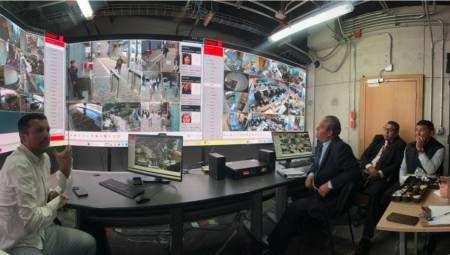
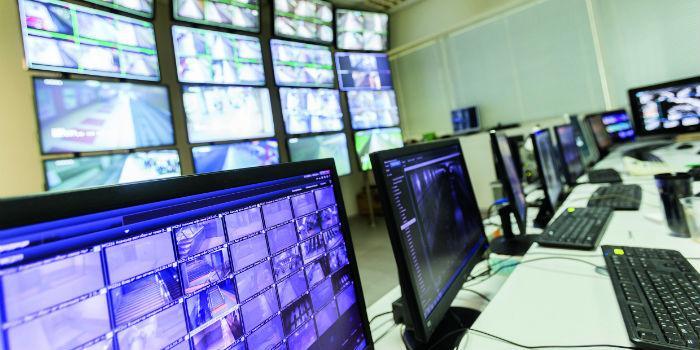
- A very important subsystem within the management of an SIS is that of CCTV. An adequate integration and management of the same will result in achieving a monitoring and surveillance system of greater capacities. Of vital importance will be that the system allows the generation of surveillance scenarios with multi-screen technology for scenario definition, forming a "Virtual Matrix " of monitors, with intelligent viewers for presentation in VideoWall mode.
Case Study: Vigiplus
A clear success story of what a SIS should be is the Vigiplus system, developed by the company Desico; as relevant data, the developer is a company of Integrative Engineering of Security Systems, whose objective is the realization of security control projects. In this line of coherence, the Vigiplus product was born to offer the ideal level of quality, performance and price in all those projects that participate.
One of the important characteristics of an SIS, in this case Vigiplus, is modularity. As a summary, the different modules available to this tool are detailed below:
- System Access Protection
- Alarm and event management
- Graphical User Interface
- Item management
- Project Configuration Tools
- Automatic Updates
- Technical signal management
- Network Services
- Server Backup
- Access Control
- Control of Visits
- Vigiplus PSIM
*Juan José Hernández Cabello is Corporate Director of Business Development of the company CASMAR.